
24/7 Customer Support

Free returns

Same-day & Next-day Delivery

Quality Guaranteed

Unlock Your Welcome Offers: FREE Delivery | Up to 80% OFF | Free 30-day JoyPlus trial
Download the APP
Whether you are organising a rented flat, clearing a garage or creating more cupboard space in the kitchen, the right shelving units can make unused space practical. The wrong choice, however, may become unstable, overcrowded or difficult to adapt.
This guide explains which specifications matter, how to avoid common buying traps and which storage shelves match different UK households and use cases.
A large weight figure can look reassuring, but it may refer to a maximum static load per shelf rather than a moving or uneven load. The rating may also assume that the weight is evenly distributed across the surface.
Paint tins, tools and kitchen appliances often create concentrated pressure. Before buying, check:
A 5-tier shelving unit with a high stated capacity still needs to be loaded sensibly, with heavier items placed low down.
A shelving unit may fit on paper but leave insufficient clearance for skirting boards, doors, pipes or cupboard openings. This is particularly relevant for garage shelving, utility rooms and narrow bathrooms.
Measure the available width, depth and height, then allow additional room for assembly. For corner installations, check whether the back shape and shelf depth will sit flush against both walls.
Adjustable shelving is useful only when the shelf positions provide enough range for your items. Some designs use fixed slots, while others allow the unit to be divided into two sections. Confirm how the shelves are repositioned and whether removing a shelf affects structural stability.
Also check the material. Steel shelving with MDF shelves may offer a practical balance of strength and cost, but MDF should generally be kept away from persistent damp or standing water.
Record the largest items you plan to store before choosing a unit. For books, calculate the required shelf width; for storage boxes, measure their height and depth; for bottles or appliances, allow clearance above each item.
Useful questions include:
For small areas, a corner shelf or narrow vertical unit can use otherwise wasted space. A worktop organiser may be more suitable than full-height storage for sauces, condiments or coffee supplies.
A powder-coated or painted steel frame can provide a firm structure for household, garage or workshop storage. Inspect the product specification for the shelf material rather than relying on lifestyle photographs. MDF shelves are commonly used because they are relatively light and provide a flat surface, but they are not a substitute for waterproof shelving in areas exposed to regular moisture.
For a bathroom shelf, look for a stated rust-resistant finish and keep the unit ventilated. Do not place a freestanding shelf where water can collect around its base.
Tall or heavily loaded furniture can present a tipping risk, particularly in homes with children or pets. An anti-tip shelving kit is a useful inclusion, but it must be installed into a suitable wall or fixing point using appropriate hardware for the wall type.
Follow the assembly instructions, keep heavier objects on lower shelves and avoid climbing on the unit. If the product instructions advise wearing gloves, follow that guidance during assembly.
The following options are selected by practical use case rather than by a universal ranking. Check the current product listing for availability, delivery details and the latest specifications before ordering.
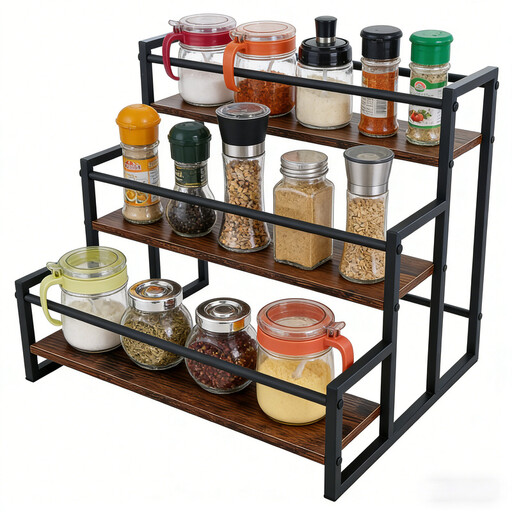
Why This Fits Their Persona: A compact option for renters, shared households and anyone wanting to organise sauces, bottles or coffee supplies without adding a floor-standing unit.
It avoids paying for unused vertical capacity when the storage problem is limited to a kitchen worktop or pantry shelf.
Tiered levels improve visibility and use a small worktop footprint.
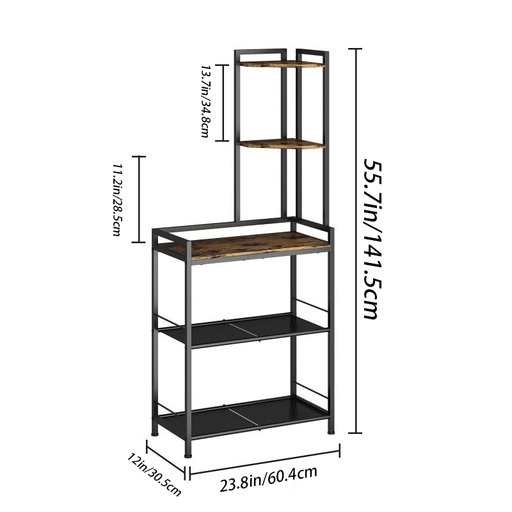
Why This Fits Their Persona: Its 90-degree design is suited to unused corners in a bathroom, kitchen, bedroom, living room or home office.
The corner format helps prevent wasted floor area, while the included anti-tip kit addresses stability better than relying on appearance alone.
Five MDF shelves; stated capacity of up to 10 kg per shelf; metal frame; anti-tip kit included.
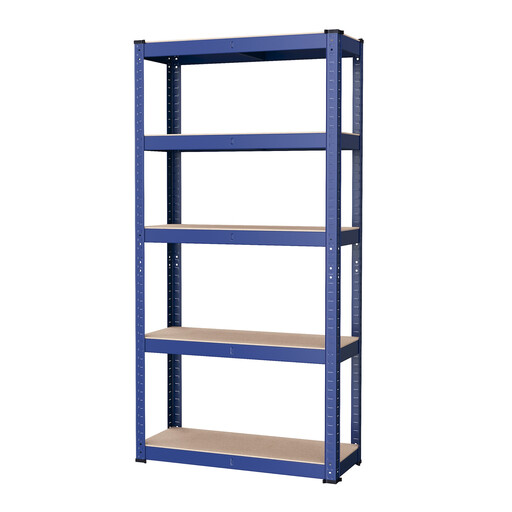
Why This Fits Their Persona: This five-tier unit can suit books, equipment, tools or household storage where shelf height may need to change over time.
Its adjustable shelves and optional division into two parts provide more practical flexibility than a fixed-height bookcase.
Steel frame, MDF shelves, cross braces, adjustable tiers and stated static capacity of up to 130 kg per shelf.
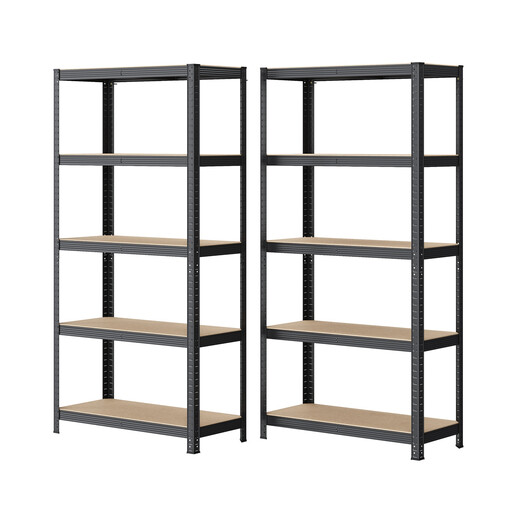
Why This Fits Their Persona: A set of two is suited to garages, sheds, workshops and utility areas that need separate zones for tools, seasonal equipment or stock.
The units can be configured separately, helping avoid a single oversized run that may block access or make the room difficult to use.
Powder-coated steel frame, adjustable shelves, two units, anti-tip kits and stated static capacity of up to 175 kg per tier.
Assemble the unit on a level surface and check that every connector, brace and shelf support is properly seated. For tall freestanding bookcases and heavy-duty shelving, use the supplied anti-tip hardware where advised.
Keep shelves dry and wipe dust or spills promptly. In a garage or shed, allow ventilation and inspect painted steel for chips or corrosion. Avoid exceeding the stated load rating, even if a shelf appears physically capable of holding more.
We have compiled a complete, real-time list of products that fully satisfy these strict selection criteria and UK safety regulations.
They can be worthwhile if your storage needs change or you plan to store items of different heights. Check the adjustment increments, usable shelf dimensions and whether the structure remains secure when shelves are repositioned.
Place it on a level surface, keep heavy items low, avoid overloading and attach it to the wall with the supplied anti-tip kit where instructed. Select fixings suitable for the wall material and follow the manufacturer’s installation guidance.