
24/7 Customer Support

Free returns

Same-day & Next-day Delivery

Quality Guaranteed

Unlock Your Welcome Offers: FREE Delivery | Up to 80% OFF | Free 30-day JoyPlus trial
Download the APP
Tripping over a mountain of trainers, boots and sandals in the entryway is a familiar frustration in many UK homes. A cluttered hallway not only looks untidy but can make leaving the house feel chaotic. A well-chosen shoe storage cabinet can transform this high-traffic area into a calm, organised space.
As the Joybuy Product Recommendation Officer, my role is to help you navigate the options. This guide offers practical advice on selecting a shoe storage unit that fits your space, style and needs, followed by a few recommendations to get you started.
Before you start browsing, considering a few key factors will ensure you find a solution that genuinely works for your home.
The first step is to measure the area where you plan to place the cabinet. In many UK homes, hallways are narrow, making every centimetre count. Note the maximum width, depth and height available. If you have a particularly tight corridor, a slim shoe cabinet is specifically designed with a shallow depth to provide ample storage without obstructing the walkway. Always leave a little extra room for opening doors or pull-down drawers.
Consider how many pairs of shoes your household owns and what types they are. A simple shoe organiser might suffice for a small collection of flats and trainers, but you will need a more substantial shoe storage unit for a family's worth of footwear. Look at the internal compartment dimensions. Are they tall enough for ankle boots or wide enough for larger shoe sizes? Some cabinets offer adjustable shelves, providing the flexibility to store everything from walking boots to high heels.
A shoe storage cabinet is a piece of furniture, so it should complement your home's decor. A modern shoe cabinet with clean lines and a neutral finish can blend seamlessly into a contemporary setting. Materials play a big role in both look and durability. Engineered wood with a melamine finish offers a polished look and is easy to clean, while modular plastic and steel units provide a more industrial and customisable feel. Consider whether you prefer a shoe cabinet with doors to conceal the clutter or open shelving for easy access.
Based on functionality, design and user needs, here are our recommendations for getting your footwear in order.
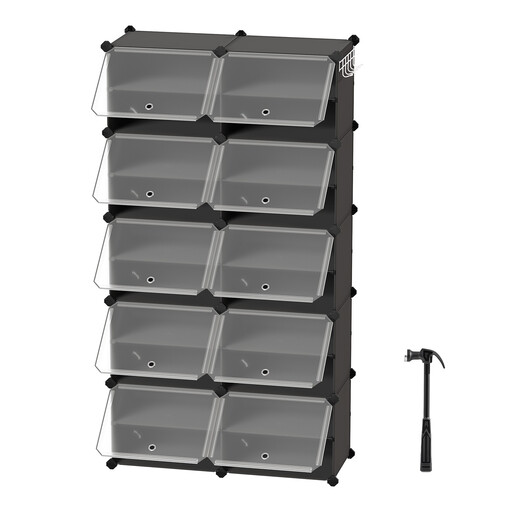
Why It Stands Out This modular unit offers exceptional flexibility. Its design allows you to assemble the compartments in various configurations to fit your specific space, whether you need a tall tower or a wider, lower unit. The combination of PP plastic panels and a steel frame creates a lightweight yet sturdy structure.
Pros
Who is it for? This is an excellent choice for renters, students or anyone who needs a scalable storage solution that can adapt to different living spaces over time.
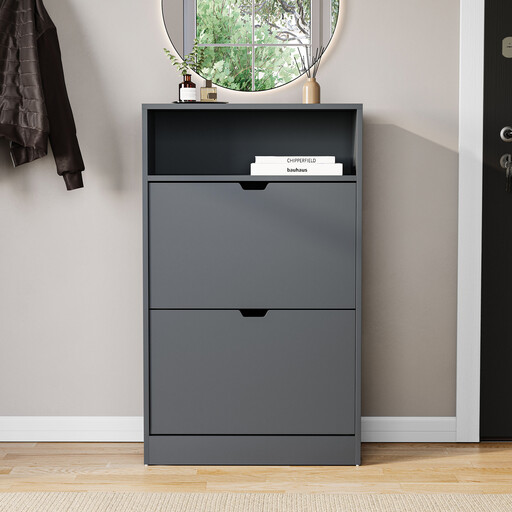
Why It Stands Out Engineered for tight spaces, this cabinet is a prime example of effective hallway shoe storage. With a depth of only 24 cm, it sits almost flush against the wall. The pull-down drawers cleverly conceal shoes, while the open top shelf provides a convenient spot for keys, post or a decorative plant.
Pros
Who is it for? Perfect for those in flats or homes with limited hallway space who want a discreet and stylish way to hide shoe clutter.
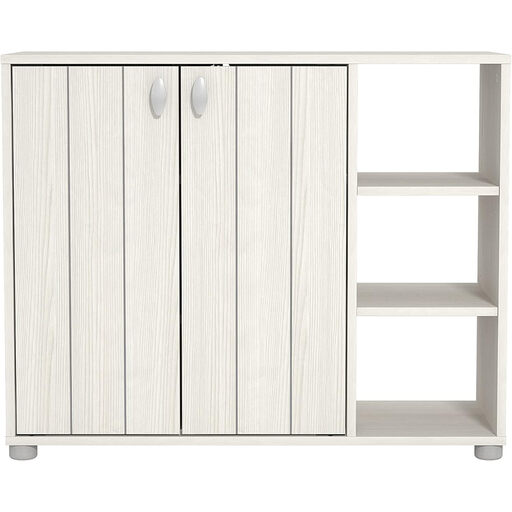
Why It Stands Out This substantial cabinet combines high capacity with elegant design. It can hold up to 24 pairs of shoes within its two-door cabinet and open shelves, making it a fantastic family-sized solution. The Cream Oak finish and elevated legs give it the appearance of a classic piece of furniture rather than just a storage box.
Pros
Who is it for? Homeowners seeking a permanent, high-capacity furniture piece that offers robust organisation without compromising on style.
If a freestanding cabinet isn't quite right for your home, or if floor space is at an absolute premium, other options are available. Over-the-door organisers can be a clever way to use vertical space without taking up any footprint at all.
For more space-saving ideas, explore our range of shoe storage door racks.
How do I choose the right shoe cabinet? To choose the right cabinet, start by measuring your available space, paying close attention to the depth. Next, count how many pairs of shoes you need to store and consider their types (boots, heels, etc.). Finally, select a style and material that matches your home's interior design.
Are shoe cabinets with doors a good idea? A shoe cabinet with doors is excellent for creating a neat, uncluttered look, as it hides your footwear from view and protects it from dust. The main consideration is ventilation. Look for models with air vents or gaps in the design to ensure your shoes can breathe, preventing moisture and odours from building up.
What's the most effective way to organise shoes in a small hallway? In a small hallway, the key is to think vertically and minimise footprint. A slim shoe cabinet with pull-down drawers is often the most effective solution, as it offers good capacity with a very shallow depth. Alternatively, a tall, narrow shoe organiser or an over-the-door rack can maximise storage without blocking the walkway.