
24/7 Customer Support

Free returns

Same-day & Next-day Delivery

Quality Guaranteed

Unlock Your Welcome Offers: FREE Delivery | Up to 80% OFF | Free 30-day JoyPlus trial
Download the APP
A tidy entrance sets the tone for a calm and organised home, but a pile of shoes by the door can quickly create clutter and chaos. For many UK households, finding a practical and stylish way to store footwear is a constant challenge. A well-chosen shoe storage cabinet not only clears the floor but also protects your shoes and enhances your home's decor.
This guide is designed to help you navigate the options. We will explore key features to consider before buying, from size and capacity to materials and style. Whether you need a slim shoe cabinet for a narrow hallway or a large, modular footwear organiser for a growing collection, we will provide practical advice to help you find a solution that fits your space and lifestyle.
Choosing the right unit involves more than just picking a design you like. Here are a few practical points to consider to ensure your new furniture meets your needs.
The most common location for a shoe cabinet is the hallway, which can often be a narrow and high-traffic area. Before you start browsing, measure the height, width and depth of the space you have available. For tight corridors, a slim shoe cabinet with a depth of 25cm or less is often an ideal choice. This provides valuable entryway shoe storage without obstructing the walkway. Also, consider vertical space—a taller unit can double your storage capacity without taking up more floor area.
Think about how many pairs of shoes your household owns and what types they are. Do you need to store bulky walking boots and high heels, or mostly trainers and flat shoes? Some cabinets feature pull-down drawers designed for standard shoes, while others offer larger, cube-shaped compartments suitable for boots or shoeboxes. A shoe organiser with doors is excellent for keeping everything neatly concealed, whereas a modular shoe storage system offers the flexibility to add or reconfigure sections as your collection grows.
A shoe storage cabinet should function as a cohesive piece of furniture that complements your interior design. Finishes like a classic oak shoe cabinet can add warmth and a traditional feel, while a sleek black shoe cabinet or a minimalist white shoe cabinet can create a modern, clean look. Consider the material's durability and maintenance. MDF with a melamine finish is a popular choice as it is sturdy and easy to wipe clean, while plastic modular units are lightweight and resistant to moisture.
Here are a few recommendations that balance style, function and practicality for different types of homes.
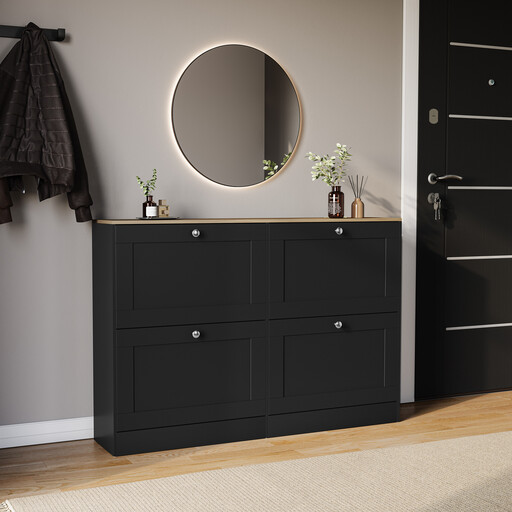
Why It Stands Out This unit combines the appearance of a traditional sideboard with the function of a dedicated shoe organiser. Its slim profile (D: 24 cm) makes it an excellent shoe cabinet for hallway spaces, while the oak-effect top provides a useful surface for keys, post or decorative items. The concealed pull-down drawers keep footwear out of sight, maintaining a clean and uncluttered aesthetic.
Pros
Who is it for? This is a great option for those who want a discreet and elegant storage solution that looks more like a piece of furniture than a simple shoe rack.
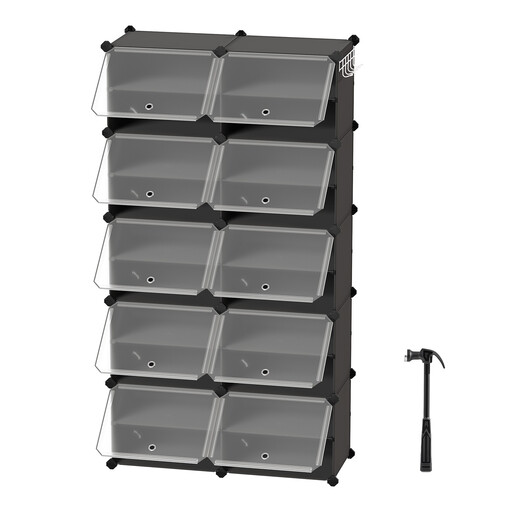
Why It Stands Out For those who need flexibility and ample capacity, this modular shoe storage system is a practical choice. It can be assembled in various configurations to fit your specific space, whether stacked vertically in a cupboard or arranged horizontally under the stairs. The semi-transparent doors protect shoes from dust while allowing you to see what is inside and the plastic panels are easy to clean.
Pros
Who is it for? Ideal for families, renters or anyone with a large shoe collection who needs a versatile and high-capacity footwear organiser.
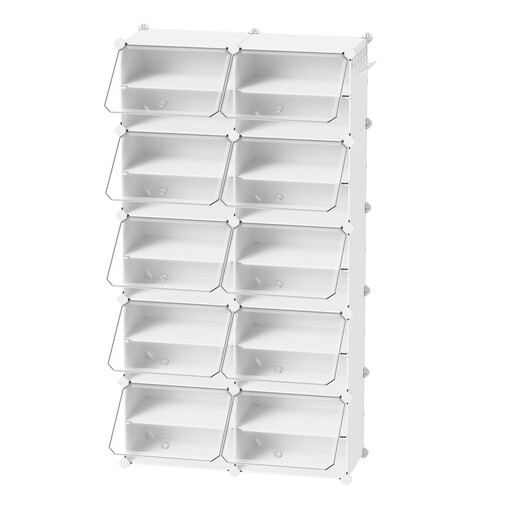
Why It Stands Out Offering the same customisable functionality as its black counterpart, this white shoe cabinet provides a lighter, airier aesthetic. It is perfect for brightening up dark hallways or complementing minimalist decor. The modular design allows you to create a storage solution tailored to your needs, while the durable steel frame and plastic panels ensure stability.
Pros
Who is it for? A suitable choice for individuals seeking a modern and adaptable storage system that helps make a space feel brighter and more open.
If these recommendations aren't quite what you're looking for, there are many other styles available. From different finishes to various sizes and configurations, finding the right fit is key to creating an organised home.
Explore our wider range of door cabinets to discover more solutions for your storage needs.
A typical slim shoe cabinet designed for UK homes has a depth ranging from 17cm to 25cm. This allows it to fit neatly into narrow hallways without causing an obstruction. It is always a good idea to check the internal compartment dimensions to ensure they can accommodate your shoe size, particularly if you wear a larger size.
A shoe organiser with doors offers distinct advantages, including concealing clutter for a tidier appearance and protecting your footwear from dust and sunlight. It can also be useful in households with pets. On the other hand, open shelving provides better air circulation and faster access. The better choice depends on whether your priority is a clean aesthetic or quick convenience.
To maintain a fresh-smelling cabinet, always ensure your shoes are completely dry before storing them. You can place natural deodorisers like charcoal bags, cedar balls or scented sachets inside each compartment. For enclosed cabinets, it helps to occasionally leave the doors ajar to allow air to circulate. Some modern units also feature small ventilation holes in the back panel to help with airflow.