
24/7 Customer Support

Free returns

Same-day & Next-day Delivery

Quality Guaranteed

Unlock Your Welcome Offers: FREE Delivery | Up to 80% OFF | Free 30-day JoyPlus trial
Download the APP
Is the entryway to your home becoming an obstacle course of stray trainers, boots and sandals? For many UK households, especially those in modern flats or houses with limited space, the daily pile-up of footwear by the door is a constant source of clutter. A well-chosen shoe storage cabinet can transform a chaotic hallway into a welcoming and organised space.
This guide is designed to help you navigate the options. We will walk through the key considerations for selecting a practical and stylish footwear storage unit and present a few recommendations that cater to different needs and spaces.
Finding the ideal shoe organiser involves more than just picking one that looks good. To ensure it meets your needs, consider these practical points.
Before you start browsing, measure the exact area where the cabinet will go—paying attention to height, width and especially depth. In many UK homes, hallways are notoriously tight. A slim shoe cabinet or a narrow shoe cabinet is often essential to maintain a clear walkway. Look for designs with a depth of around 25-30 cm, which are specifically created for these compact areas. Also, consider door-opening clearance; pull-down drawers or sliding doors are excellent space-savers compared to traditional hinged doors.
Think about how many pairs of shoes your household owns and what types they are. Do you have bulky walking boots and wellies, or mostly trainers and flat shoes? This will determine the capacity and type of storage you need. A modular shoe storage system offers great flexibility, allowing you to customise compartment sizes for different footwear. For a more uniform collection, a cabinet with standard-sized shelves might suffice. Always check the internal dimensions of compartments to ensure your shoes will fit comfortably.
The right hallway shoe storage should be both functional and a seamless addition to your decor. A shoe rack with doors is an excellent choice for creating a clean, minimalist look, as it hides footwear from view and protects it from dust. Consider the material and finish. Engineered wood (MDF) with a melamine finish offers a classic, durable furniture look, while plastic and metal systems provide a modern, lightweight and often customisable alternative.
Here are a few carefully selected options that address common storage challenges in UK homes.
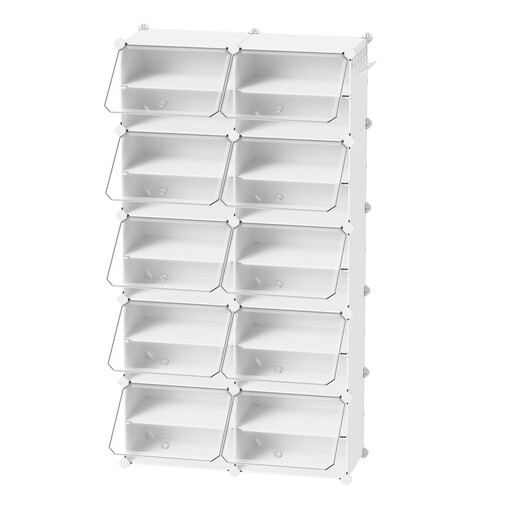
Why It Stands Out: This modular shoe organiser is all about flexibility. It is constructed from lightweight plastic panels and a steel frame, allowing you to assemble it in various configurations to suit your space. You can build it tall and narrow or split it into smaller units. The clear doors keep shoes visible yet protected, and built-in vents help with airflow. Each compartment is generously sized at 30 x 40 x 30 cm, making it suitable for bulkier items like boots or for storing multiple pairs of smaller shoes.
Pros:
Who is it for?
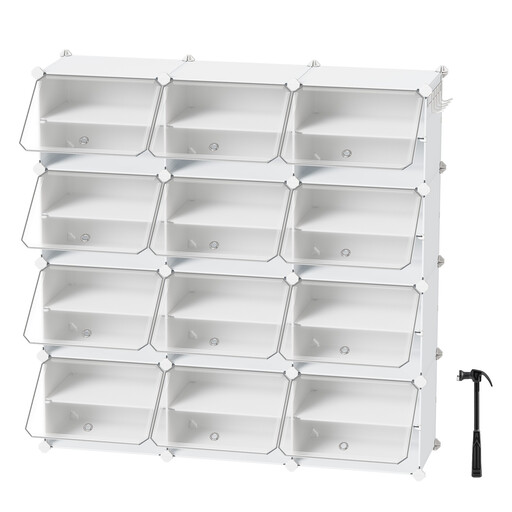
Why It Stands Out: Building on the same flexible principles as the 10-compartment model, this version offers even more storage capacity. With 12 compartments, it's designed for those with a larger footwear collection. The sturdy construction, featuring ABS plastic connectors, PP plastic panels and a steel frame, ensures stability. It also comes with an anti-tip kit for added safety, which is particularly important for taller furniture in a busy household. The transparent doors and modular design provide the same benefits of visibility, protection and customisation.
Pros:
Who is it for?
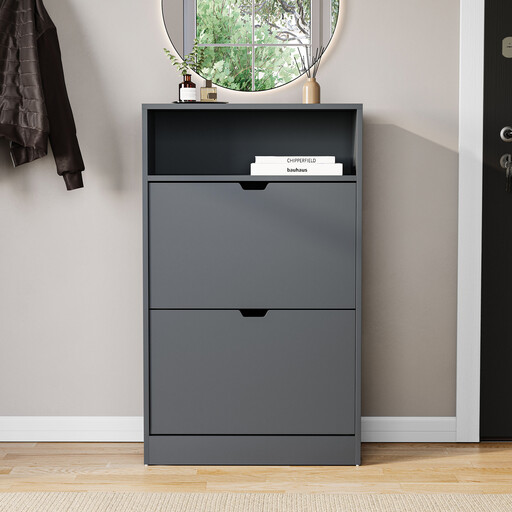
Why It Stands Out: This cabinet is a prime example of a slim shoe cabinet designed for modern living. With a depth of just 24 cm, it is exceptionally well-suited for narrow hallways where every centimetre counts. The unit features two pull-down drawers, each with internal dividers to neatly store shoes, keeping them completely out of sight. Its minimalist design, with a sleek grey melamine finish and recessed grips, complements contemporary decor. The open top shelf is a practical touch, providing a convenient spot for keys, post or a small decorative plant.
Pros:
Who is it for?
If these specific models aren't quite what you're looking for, don't worry. Every home has unique requirements, and the right solution is out there. For a wider selection of styles, materials and sizes, you can explore our full range of shoe rack with doors to find the perfect fit for your space.
A shoe rack is typically an open-shelf storage unit, which keeps shoes easily accessible and allows for good air circulation. A shoe cabinet, on the other hand, is an enclosed piece of furniture with doors or drawers. Cabinets are often preferred for hallways as they conceal shoes, creating a tidier appearance and protecting footwear from dust and dirt.
Good ventilation is key. If your cabinet doesn't have built-in vents, you can air it out regularly. Ensure shoes are completely dry before storing them. You can also use odour absorbers, such as charcoal bags or scented sachets, inside the compartments to help maintain freshness.
Absolutely. Many manufacturers design narrow shoe cabinet models specifically for this purpose. Look for units with a shallow depth (under 30 cm) and space-saving features like pull-down drawers or sliding doors. Always measure your hallway's width and subtract the cabinet's depth to ensure there is still plenty of room to walk past comfortably.