
24/7 Customer Support

Free returns

Same-day & Next-day Delivery

Quality Guaranteed

Unlock Your Welcome Offers: FREE Delivery | Up to 80% OFF | Free 30-day JoyPlus trial
Download the APP
An entryway cluttered with shoes, a wardrobe floor you can no longer see or a prized sneaker collection gathering dust—these are common frustrations in many UK homes. Finding a practical and tidy way to organise footwear can transform a space from chaotic to calm. As a Joybuy Product Recommendation Officer, my role is to help you navigate the options and find a solution that fits your home, collection and lifestyle.
This guide offers practical advice on what to look for in a shoe storage solution and presents a few recommendations to help you get started on decluttering your space for good.
Before you decide, consider these key factors. A little planning ensures you choose a shoe organiser that you’ll be happy with for years to come.
First, take stock of your footwear. How many pairs do you own? Are they mostly trainers, heels, boots or a mix? The type of shoes you have will influence the type of storage you need. For instance, ankle boots require more height than sandals. Next, measure the area where you plan to place your shoe storage unit—be it a hallway, a bedroom or inside a wardrobe. This will determine whether a tall, narrow shoe rack or a wider, low-profile unit is more suitable.
Think about how you want to interact with your shoes. Do you want them visible and ready to grab or concealed and protected from dust? For everyday shoes, an open rack offers convenience. For valuable footwear or long-term storage, stackable shoe boxes are an excellent choice. Clear shoe boxes in particular offer the best of both worlds: they protect your shoes while still allowing you to see what’s inside, making them a popular choice for sneaker storage.
The material of your shoe storage affects its appearance, longevity and ease of cleaning.
Here are a few distinct shoe storage options that cater to different needs, from simple organisation to collection display.
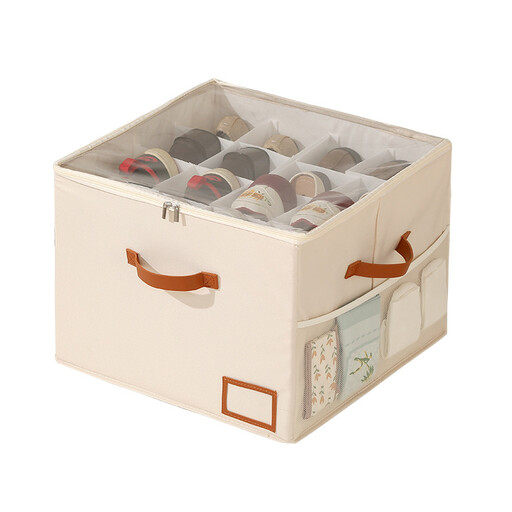
JORDAN&JUDY Beige Fabric Foldable Shoe Box with Lid
Why It Stands Out: This product focuses on discreet, protective storage. The fabric construction is gentle on shoes, preventing scratches, while the lid offers excellent dust protection. Its key feature is its foldable design, allowing you to collapse the boxes and store them flat when not in use.
Pros:
Who is it for? This is a great choice for individuals looking to organise shoes within a wardrobe or on a shelf. It’s particularly useful for storing seasonal footwear like sandals or winter boots, keeping them protected and out of sight until they are needed again.
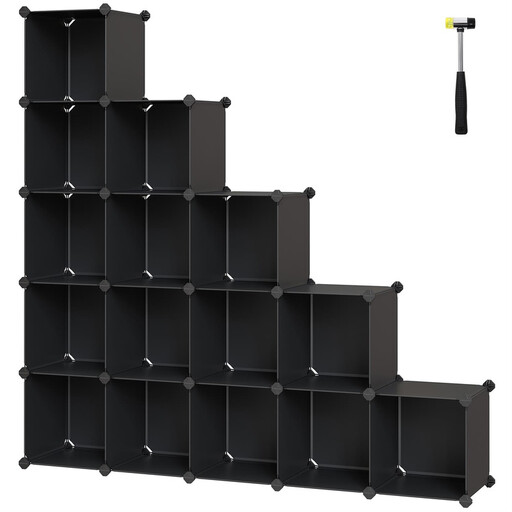
Ochama 16-Cube Storage Unit, DIY Shelving System
Why It Stands Out: Versatility is the main strength of this modular system. With 16 individual cubes, this shoe storage unit can be assembled in various configurations to fit your specific space—as a tall tower, a wide horizontal rack or even a stepped unit under the stairs.
Pros:
Who is it for? Families with a large and varied shoe collection will find this unit incredibly practical. It’s also perfect for renters or homeowners who want a flexible shoe rack that can be reconfigured if they move or reorganise a room.
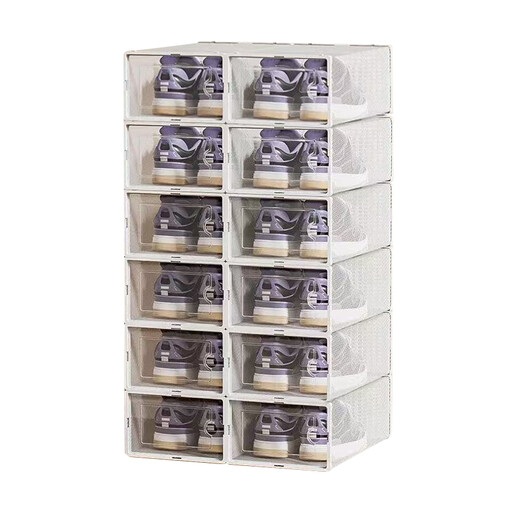
Vilscijon Extra-Large Shoe Storage Box with Self-Closing Door - 12-Pack
Why It Stands Out: This is more than just storage; it’s a display system. Designed specifically for sneaker storage, these clear shoe boxes allow you to showcase your collection while protecting it. The front-facing, self-closing door provides easy access without needing to unstack the boxes.
Pros:
Who is it for? This is the ideal solution for sneaker collectors and footwear enthusiasts who view their shoes as items to be displayed. If you want to protect your investment while keeping it visible and accessible, these stackable boxes are an excellent fit.
The products above represent just a few of the many ways to tackle shoe clutter. If you're interested in a compact and uniform look, a modular cube system might be exactly what you need.
? Explore our full range of shoe storage cube solutions to find the perfect fit for your space.
Q: What is the best way to store shoes to keep their shape?
A: To help shoes maintain their shape, it's advisable to use storage that supports their structure. For leather shoes or delicate heels, storing them in individual boxes with shoe trees inside is a good practice. For everyday trainers and flats, a rack or cube that allows them to sit flat without being crushed is sufficient. Avoid piling shoes on top of each other, as this can cause permanent creasing and damage.
Q: How can I organise shoes in a small UK flat?
A: In smaller living spaces, maximising vertical space is key. Consider over-the-door hanging shoe organisers, tall and narrow shoe racks that have a small footprint or under-bed storage containers. Stackable shoe boxes are also highly effective, as they allow you to build your storage upwards in a wardrobe or a corner, keeping the floor clear.
Q: Is it better to store shoes in boxes or on an open rack?
A: This depends on your priorities. An open shoe rack offers excellent ventilation and makes it easy to see and grab your most-worn pairs. However, it also exposes shoes to dust. Storing shoes in boxes—especially clear shoe boxes—provides protection from dust and sunlight, which is better for long-term preservation and for shoes you don't wear often. Many people use a combination: a rack for daily shoes and boxes for their wider collection.