
24/7 Customer Support

Free returns

Same-day & Next-day Delivery

Quality Guaranteed

Unlock Your Welcome Offers: FREE Delivery | Up to 80% OFF | Free 30-day JoyPlus trial
Download the APP
A pile of shoes by the front door is a familiar sight in many UK homes. It’s not just untidy; it’s a daily obstacle course. Finding the right shoe storage solution can transform a cluttered hallway into a welcoming entryway. However, the market is flooded with options that look promising online but fail to deliver in practice.
As a Joybuy Product Recommendation Officer, my role is to help you navigate these choices. We've seen where people commonly go wrong and end up with a product that doesn't last or fit their needs. Before you buy, be aware of these common pitfalls.
To avoid disappointment, focus on a few key parameters that determine a product's true value and suitability for your home.
The materials dictate the durability of your shoe storage.
Don't just measure the space in your hallway.
Your choice of style impacts daily use.
We've matched some practical options to common household needs, focusing on designs that address the pitfalls mentioned earlier.
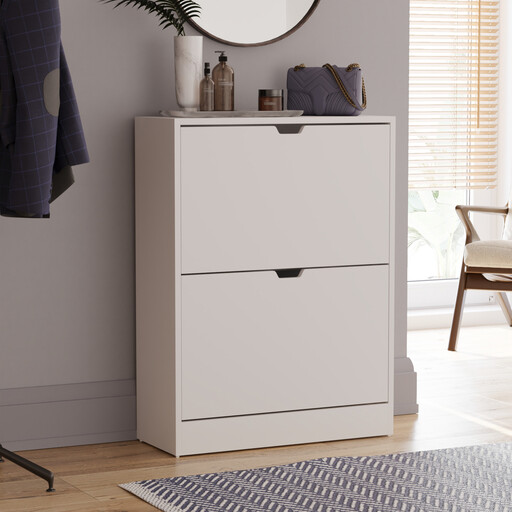
Why This Fits Their Persona: Living in a UK flat or modern terraced house often means a narrow hallway. This cabinet's slim profile provides substantial storage without blocking the walkway, keeping the entrance tidy and functional.
Its 24 cm depth is a clear specification that avoids the "impractical dimensions" trap, allowing you to check if it fits your shoe size before buying. The sturdy particleboard construction offers a stable alternative to flimsy, open racks.
The pull-down drawer design conceals footwear for a clean, minimalist aesthetic. It's a practical piece of furniture, not just a storage rack.
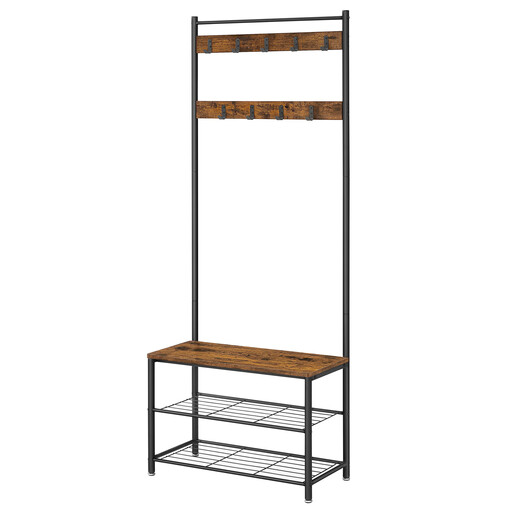
Why This Fits Their Persona: For a family, the entryway is a high-traffic zone for school bags, coats and a mountain of shoes. This 3-in-1 unit acts as a central entryway organiser, providing a spot for everything and encouraging tidiness.
It directly counters the "flimsy frame" trap with a robust steel frame and an anti-tip kit for safety. The bench has a stated max weight capacity of 136 kg, ensuring it can withstand daily family use.
The combination of coat hooks, a sturdy bench and two shoe shelves consolidates clutter into one efficient footprint. The open-shelf design ensures good air circulation for shoes.
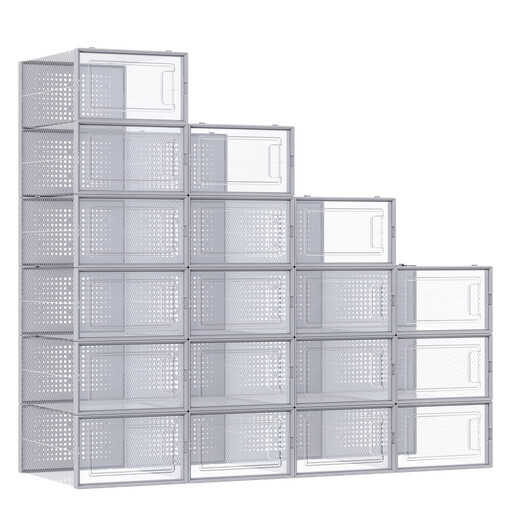
Why This Fits Their Persona: A true collector wants to protect and display their footwear. These individual boxes keep valuable trainers and heels dust-free and organised, while the transparent doors make it easy to find the perfect pair.
This system directly solves the "stale air" problem with built-in ventilation holes in each box. The modular, stackable design also bypasses the "one-size-fits-none" issue of fixed racks, allowing for custom configurations.
It offers superior protection from dust and crushing compared to open racks. The stackable nature means your storage can grow with your collection.
We have compiled a complete, real-time list of products that fully satisfy these strict selection criteria and UK safety regulations.
For enclosed cabinets, ventilation is key. If the unit doesn't have built-in vents, you can leave the doors slightly ajar periodically. Using odour absorbers like charcoal bags or cedar blocks inside each compartment can also help. For open racks, ensure shoes are dry before storing them to prevent mustiness.
The lifespan depends heavily on the material quality and usage. A well-made MDF or particleboard cabinet used correctly can last for many years. The most common points of failure are drawer runners and hinges from overuse, or panel damage from moisture. Look for units with metal hardware and a water-resistant finish to prolong their life.
A typical two-person shoe storage bench is around 80-100 cm wide and 30-40 cm deep. Before buying, it's a good idea to mark out the dimensions on the floor with masking tape. This helps you visualise how much space it will occupy and whether it will obstruct the walkway or prevent a door from opening fully.