
24/7 Customer Support

Free returns

Same-day & Next-day Delivery

Quality Guaranteed

Unlock Your Welcome Offers: FREE Delivery | Up to 80% OFF | Free 30-day JoyPlus trial
Download the APP
A tidy entrance sets the tone for a calm and organised home, but for many of us in the UK, the hallway is a constant battleground against a mountain of shoes. Finding the right shoe storage solution can feel overwhelming. It’s not just about hiding the clutter; it’s about protecting your footwear, optimising your space and investing in a product that lasts.
As a Product Recommendation Officer at Joybuy, I see where many purchases go wrong. Before you buy, let’s look at the common pitfalls that lead to buyer's remorse and how you can sidestep them.
shoe cabinet, assemble it, and discover it won't fit your size 10 walking boots or your partner's heels. Many designs are based on smaller shoe sizes, and manufacturers often fail to list the crucial internal compartment dimensions, leading to a unit that’s only half-useful.To ensure your new shoe organiser is a long-term solution rather than a short-term fix, focus on these three non-negotiable factors.
The material dictates the durability and stability of your storage.
shoe cabinet.stackable shoe boxes. Look for thicker, less brittle plastic. The key here is the stacking mechanism; a good interlocking design ensures the column remains stable as you add more boxes.This is where a tape measure is your most important tool.
hallway shoe storage, depth is critical. Many UK homes have narrow corridors, making a slim shoe storage unit (typically under 25 cm deep) an ideal choice. Measure your available width, depth and height before you even start browsing.How you access your shoes and how they are preserved are just as important as how they are stored.
shoe rack offers maximum ventilation, which is great for everyday shoes that need to air out. The downside is exposure to dust and a less tidy appearance.Based on these practical criteria, here are three different types of shoe storage solutions suited to distinct needs and UK homes.
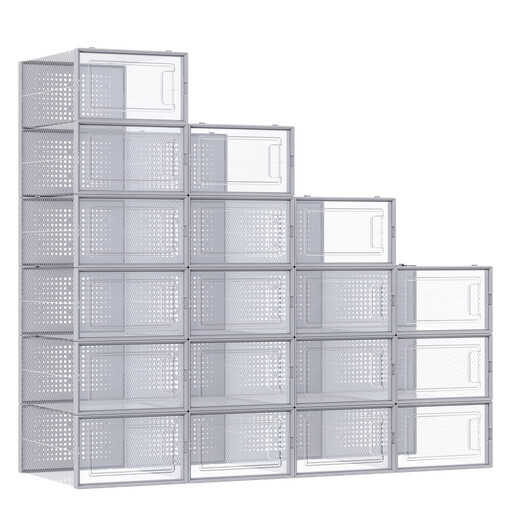
Why This Fits Their Persona: Perfect for the trainer enthusiast or fashion lover who wants to protect and display their footwear. The transparent doors make it easy to see the entire collection at a glance, turning storage into a display.
Each box is a self-contained unit, avoiding the sagging associated with flimsy racks. Built-in ventilation holes directly counter the "sealed box" trap by allowing air to circulate and keep shoes fresh.
The modular, stackable design allows for custom configurations to fit inside wardrobes or under stairs. It also provides excellent dust protection for valuable footwear.
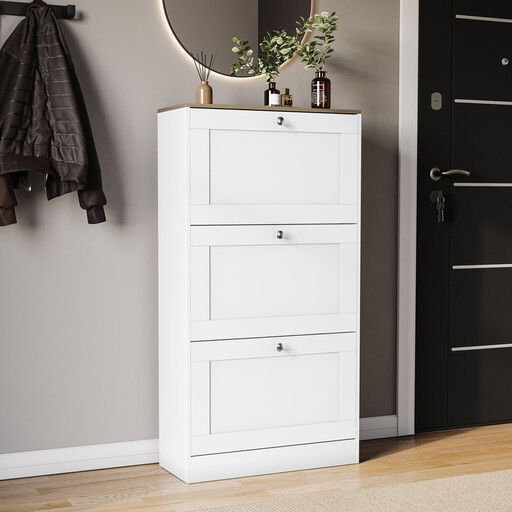
Why This Fits Their Persona: For those who want storage that blends in as a piece of furniture. This cabinet conceals shoes completely, maintaining a clean, minimalist aesthetic in a hallway or living space.
Its slim 24 cm depth is designed for narrow UK hallways, avoiding the "wrong dimensions" trap. The sturdy MDF construction with a melamine finish provides far greater durability than flimsy, low-cost alternatives.
The pull-down drawers keep footwear out of sight for a completely uncluttered look. The oak-effect top surface adds a stylish touch and provides a handy spot for keys and mail.
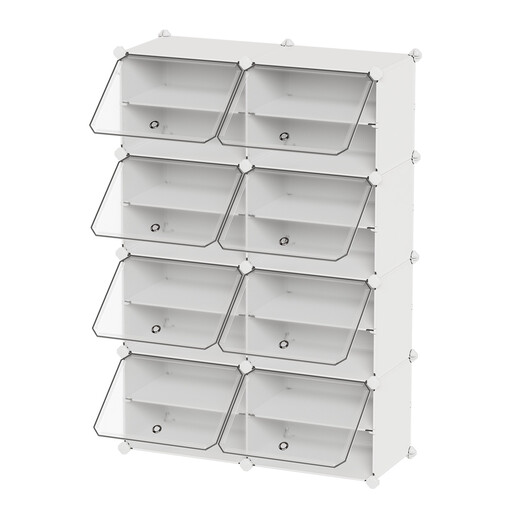
Why This Fits Their Persona: Ideal for families, renters, or anyone needing a high-capacity, adaptable solution. It can be built in various configurations to fit different spaces and can be easily disassembled when moving.
The steel frame and robust connectors offer much better stability than basic all-plastic racks, avoiding the flimsy frame trap. The generous compartment size can accommodate boots and even bags, solving the "one size fits none" issue.