
24/7 全天候客户支持

免费退货

当日/次日达

品质保障

开启新人专享福利: 全场免邮 | 低至 2 折 | 免费试用 30 天 JoyPlus 会员
下载 Joybuy
Carrying heavy bags from the supermarket, navigating stairs with the weekly shop or hauling gear to a festival can be a real strain. A shopping trolley seems like the obvious solution, but the market is flooded with options that often disappoint. Many promise convenience but deliver frustration.
As the Joybuy Product Recommendation Officer, my role is to help you see past the marketing jargon. Before you buy, it's crucial to understand the common design flaws that can make a seemingly good trolley unusable within months.
To find a reliable grocery cart or festival trolley, focus on the core construction rather than flashy but flimsy features. Here are the key parameters to check.
The type of wheels determines where and how you can use your trolley.
The frame is the skeleton of your trolley. Its material and construction dictate its durability and how much it can safely carry.
Based on these practical criteria, here are a few options matched to different needs.
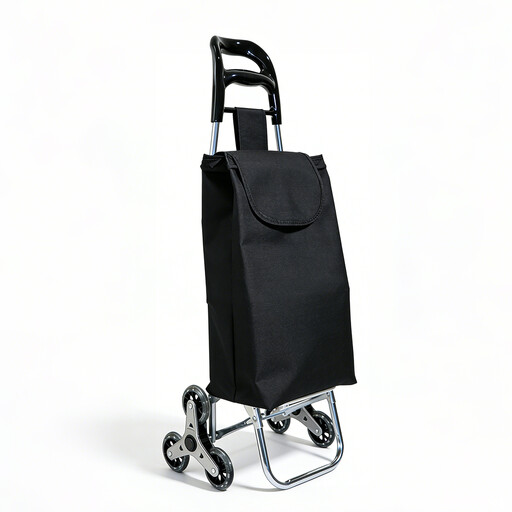
Why This Fits Their Persona: Specifically designed for those living in buildings without a lift. Getting a heavy weekly shop up several flights of stairs is no longer a daunting task, making it a practical aid for independent living in a city.
It directly solves the "wobbly wheel" problem for users with stairs. The purpose-built tri-wheel system is engineered for climbing, offering far more stability and function on steps than a standard two-wheel trolley.
The primary advantage is the stair-climbing wheel system. It also features a heavy-duty frame and a large capacity Oxford fabric bag, combining durability with its specialised function.
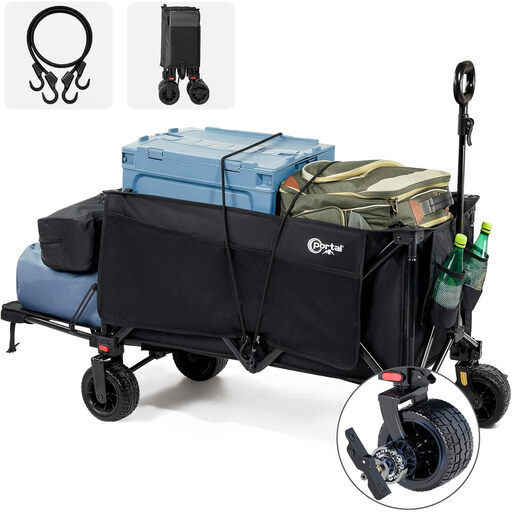
Why This Fits Their Persona: Ideal for anyone needing to transport bulky equipment. Whether it's camping gear, festival supplies or everything for a family day at the beach, this wagon's large volume and high weight limit handle it all in one trip.
This wagon directly counters the "misleading capacity" trap. It boasts a clear and substantial 132 KG load capacity, supported by a heavy-duty alloy steel frame, ensuring it can handle the heavy loads its large size invites.
Its key advantages are the massive 300-litre capacity and robust build. The all-terrain PU wheels with bearings provide a smoother pull over grass and gravel compared to standard plastic wheels.
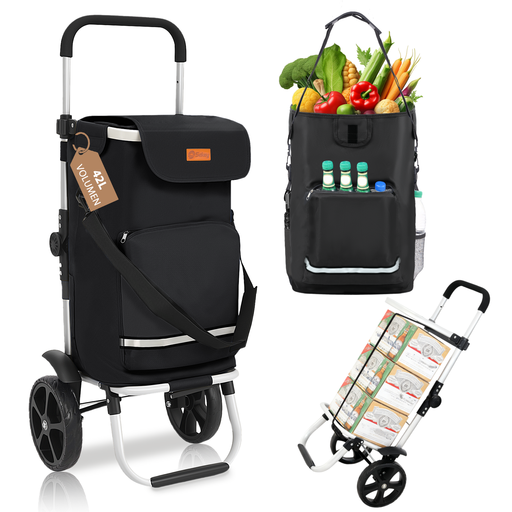
Why This Fits Their Persona: This is for the practical weekly shopper who appreciates thoughtful features. It's a reliable grocery cart for getting items home, with the added benefit of keeping chilled or frozen goods cool on the journey.
This model avoids the "wobbly wheel" and flimsy frame issues of basic trolleys by using a stable, lightweight aluminium frame and higher-quality PVC wheels, offering a more dependable and smooth experience.
The standout feature is the integrated cooler compartment with aluminium insulation. It's a 3-in-1 design that also functions as a sack truck and has a detachable shoulder bag for extra versatility.
We have compiled a complete, real-time list of products that fully satisfy these strict selection criteria and UK safety regulations.
A standard 2-wheel trolley is designed for rolling on flat ground. A stair-climbing trolley has three wheels on each side, arranged in a triangle. This mechanism allows the wheels to rotate as they hit the edge of a stair, enabling the trolley to "walk" up the steps as you pull it, which requires much less physical effort than lifting.
Proper care is simple and can significantly extend your trolley's life. After use, wipe the frame and bag with a damp cloth to remove dirt. Ensure the trolley is completely dry before folding it for storage to prevent rust on metal parts. Periodically check that the wheels are free of debris and that any screws on the frame are tight.
While a folding wagon offers excellent capacity, it may not be the most practical choice for a typical supermarket run. Their wider base can be difficult to manoeuvre through narrow aisles or busy checkouts. They are better suited for open-air markets, bulk shopping at warehouse clubs or outdoor activities where space is not a constraint.