Who is each format for?
The useful distinction is whether guests need a sealed treat to take away or shortbread to share at the table.
Hosts preparing individual favours
Look for one finger in each wrapper, then count wrappers rather than relying on the case weight. Walker's lists a 240-packet single-finger case; its separate twin-pack product gives each guest two fingers in one wrapper.
Hosts serving a shared tea table
A shared pack works when guests do not need sealed individual portions. Keep its packaging available for ingredient information and follow the storage instructions after opening.
Hosts checking food allergies
Check every chosen product’s current label, not just its brand or description as all-butter. The examined products list wheat and milk, while their nut-related warnings differ.
Brand and pack references
These examples show why a pack of shortbread fingers is not necessarily a pack of individually wrapped fingers.
Walker's
Walker's Shortbread documents both a single wrapped finger and a different twin-pack format.
- Its single-finger case contains 240 individually wrapped 20 g fingers; the separate display box contains 24 packs of two fingers.
- The single-finger product may contain nuts, and Walker's says its UK online shop does not deliver to Northern Ireland.
Dean's
Dean's lists an individually wrapped 17 g shortbread finger for foodservice orders.
- Its case is described as containing approximately 80 packets.
- Dean's marked the item unavailable on its listing. Its published ingredients include wheat and milk.
M&S
The examined 210 g Scottish all-butter shortbread fingers are a shared-pack option, not a documented one-finger wrapper.
- The listed ingredients include wheat and milk; the pack is marked unsuitable for people with nut or peanut allergies. Check the current label before serving.
Waitrose
The examined 200 g pack contains ten shortbread fingers for shared serving.
- Its product information lists wheat and milk and says it may contain nuts. Waitrose advises airtight storage once opened.
Sainsbury's
The examined 200 g all-butter finger pack is intended for shared serving.
- Its product information lists wheat and milk and says the product is unsuitable for customers allergic to nuts or oats. Sainsbury's advises airtight storage after opening.
Tesco
Tesco's shortbread category lists a 165 g Tesco Finest Scottish Shortbread Fingers pack as a shared-pack option.
- Check the chosen pack itself for wrappers, ingredients and allergen information before using it for the party.
Joybuy shortbread option
This shortbread option is relevant to planning one separately packaged favour per guest; confirm the wrapping and count the individual portions needed before ordering.
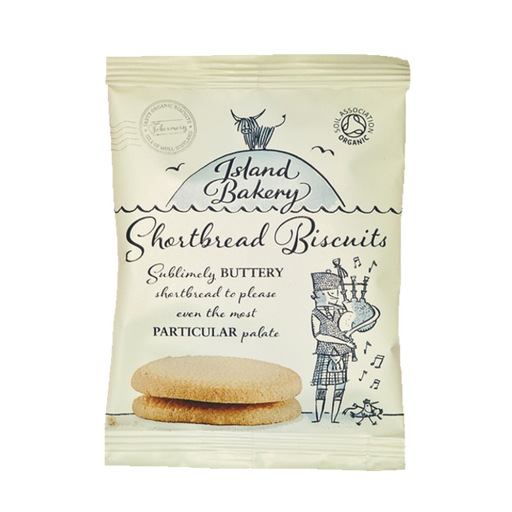 No image available
Island Bakery Organic Shortbread 25g
This 25g portion is listed as individually wrapped for a single favour; count one item for each guest who will receive it. Its product information identifies wheat and milk, so check the current packaging for full allergen and precautionary warning details before serving.
Joybuy
Questions about serving shortbread
Does a pack of shortbread fingers mean each finger is wrapped?
No. Walker's specifies one finger per packet in its 240-packet case, but two fingers per packet in its separate 24-pack display box. The examined M&S, Waitrose and Sainsbury's shared packs do not establish that each finger has its own wrapper.
Can I give a wrapped shortbread finger to a baby?
An individual wrapper does not establish whether the food is suitable for a baby. NHS guidance advises considering a baby’s or young child’s stage of development and the food’s size, shape and texture, and supervising them while they eat.
Will a UK seller deliver a catering case anywhere in the UK?
Not necessarily. Walker's says its UK online shop does not deliver to Northern Ireland, and Dean's marked its individually wrapped case unavailable on its listing. Check availability and delivery for the event address before relying on a particular case.
Do HFSS or school-food rules automatically apply to a christening?
A christening alone does not establish that it is a school-food setting. Department for Education guidance concerns food provided in state-funded schools in England, while Department of Health & Social Care guidance on specified HFSS restrictions addresses retail promotions and placement by businesses selling to England. If the event involves food provided in a state-funded school, check the arrangements with the organiser.


