People comparing sugars on the label
You want a shortbread-style biscuit with less labelled sugar and are willing to check sweeteners, ingredients and the current packet.


If sugar in the biscuit is your main concern, compare the current packets per 100g: UK retailer Nutz4Nuts lists Gullón Sugar Free Shortbread at less than 0.5g sugars per 100g, but it uses sweeteners rather than a conventional all-butter recipe. If you want all-butter shortbread, the per-biscuit figure helps you judge the portion you plan to eat. If the bedtime timing matters most, Lancashire and South Cumbria NHS Foundation Trust advises avoiding sugary foods at bedtime.
You want a shortbread-style biscuit with less labelled sugar and are willing to check sweeteners, ingredients and the current packet.
You prefer a familiar butter recipe and want to know the sugars in one finger as well as per 100g before deciding how many to have.
You are deciding whether to have shortbread at bedtime at all. Lancashire and South Cumbria NHS Foundation Trust advises avoiding sugary foods then because saliva's protective effect is lower.
Decide whether your priority is the biscuit's labelled sugar, the all-butter recipe or avoiding a sugary snack at bedtime; then check the exact packet and portion.
Consider it when: lowering labelled sugars matters more to you than keeping an all-butter recipe; Nutz4Nuts lists Gullón Sugar Free Shortbread at less than 0.5g sugars per 100g.
Trade-off: its sweetener-based ingredients differ from conventional shortbread, so check the current UK packet, particularly if ingredients or allergens matter to you.
Consider it when: the butter recipe matters more than choosing a sugar-free biscuit; Waitrose and Sainsbury's each list 3.0g sugars per finger for the products examined.
Trade-off: a smaller portion changes how much you eat, not the recipe's sugars per 100g.
Consider it when: avoiding a sugary bedtime snack takes priority; Lancashire and South Cumbria NHS Foundation Trust advises avoiding sugary foods at bedtime.
Trade-off: another snack will not provide the same shortbread taste or texture.
| Priority | What to check | Your needs |
|---|---|---|
| Sugars on the label | Compare sugars in grams per 100g on the current packets. Nutritional figures for a single biscuit answer a different question: how much that portion contains. | I want to distinguish a biscuit with less labelled sugar from an ordinary shortbread finger that happens to be small. |
| Ingredients | Read the ingredients and sweeteners, then check energy and fat separately from sugars. Nutz4Nuts lists maltitol and isomalt for its Gullón shortbread. | The butter recipe matters to me, or I want to know what is used instead of sugar. The NHS cautions that substantial intake of polyol sweeteners can have a laxative effect. |
| Portion | Check the biscuit weight and sugars per biscuit, or work out the amount for the number you intend to eat. Waitrose lists 14.9g sugars per 100g and 3.0g per finger; Sainsbury's lists 14.8g per 100g and 3.0g per finger for its Highland all-butter fingers. | If I choose conventional shortbread, I want the figure for the portion I might actually have. |
| Bedtime timing | Decide whether the snack needs to be shortbread. Lancashire and South Cumbria NHS Foundation Trust advises avoiding sugary foods at bedtime. | I may decide against a sugary biscuit late at night rather than change biscuits. |
| Allergens and recipe | Check the exact product's current ingredients and precautionary allergen wording, especially when changing to a sweetener-based recipe. | If I am choosing for someone with an allergy, a sugar-free or all-butter description is not enough to establish which ingredients they can have. |
Waitrose and Sainsbury's each list 3.0g sugars per finger for the products examined, alongside 14.9g and 14.8g respectively per 100g.
Use the per-100g figures to compare recipes, then use the per-biscuit figure for the portion you plan to eat.
Nutz4Nuts lists maltitol and isomalt in its Gullón shortbread, rather than the butter-and-sugar ingredient combination Walker's lists for its fingers. NHS information cautions that substantial polyol intake can have a laxative effect.
Read the current UK packet's ingredients and allergen information, particularly if you intend to eat several biscuits.
M&S lists 20.3g sugars per 100g for its Made Without Wheat shortbread rounds and 15.6g per 100g for its different all-butter petticoat tails. The range names describe different characteristics.
Check the sugars and allergens on the exact variant rather than inferring either from its range name.
These are references for comparing particular shortbread labels, not a list of brands whose entire ranges have the same recipe or sugar content.
Nutz4Nuts lists a Gullón Sugar Free Shortbread for readers considering a sweetener-based alternative.
Its 250g Shortbread Fingers provide an all-butter recipe to compare with sweetener-based biscuits.
Its Traditional Shortbread Fingers offer another recipe to inspect alongside all-butter fingers.
Its 200g Shortbread Fingers give both per-100g and per-biscuit figures.
Its 200g Highland All Butter Shortbread Finger Biscuits have a stated one-biscuit serving.
Its all-butter and Made Without Wheat shortbreads address different ingredient needs.
Tesco's shortbread category includes own-label and other biscuits whose individual labels can be compared.
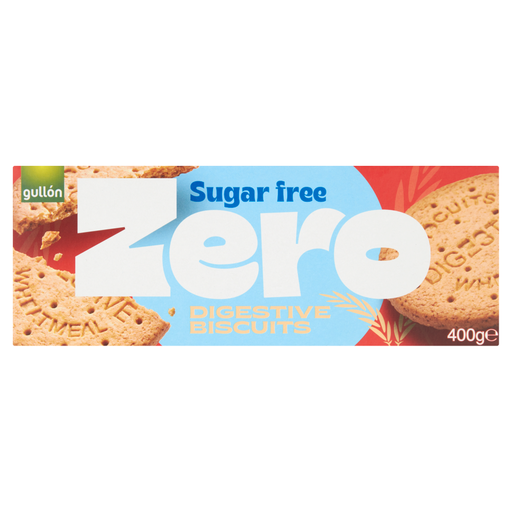
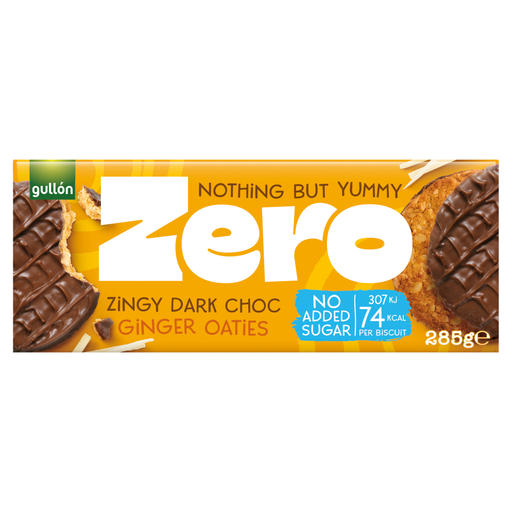
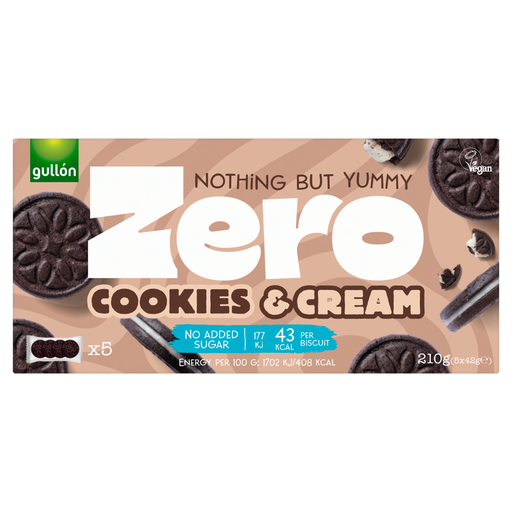
These Joybuy options are Gullon Zero digestives, oaties and cookies for readers considering a different biscuit instead of shortbread. None is an all-butter shortbread finger; compare each packet's ingredients and nutrition with the shortbread you had in mind.
 No image available
A digestive rather than shortbread, for someone willing to change biscuit type while comparing sugar labels. Check the current packet for sugars per 100g, sweeteners and allergen information; the product's stated limitations flag a warning about excessive sweetener consumption.
 No image available
An oat and ginger biscuit with dark chocolate, not a shortbread substitute with the same recipe or flavour. Compare its current sugars per 100g and ingredients with other biscuits; check the packet for sweetener and allergen warnings.
 No image available
A cookies-and-cream biscuit rather than shortbread. “No added sugar” does not replace the sugars figure on the packet: compare that figure per 100g and check the current ingredients, sweetener warning and allergen wording.
No. Gullón describes its UK Zero range as having no added sugar while sugars can occur naturally in ingredients. Check the particular packet's “of which sugars” figure rather than treating the phrases as interchangeable.
Not necessarily. Biscuits with different recipes need separate comparisons of energy and fat as well as sugars. Read those figures on the current packets on the same per-100g basis, then consider the portion you intend to eat.
Check the exact biscuit's current ingredients and precautionary allergen information, including the delivered packet. Walker's lists wheat and milk for its shortbread fingers and says they may contain nuts; Sainsbury's Highland fingers carry a manufacturing warning concerning nuts or oats. “Sugar-free” does not establish allergen suitability.
No automatic claim follows from a comparison between two packets. UK government food-labelling guidance says nutrition claims are regulated. You can compare the labelled sugars per 100g of specified products without assuming either qualifies for a “reduced sugars” claim.