If you want a less-sugary choice for an office biscuit tin, compare the sugar figures on the exact packs per 100g, then check the figures per biscuit and the intended portion. A biscuit made with sweeteners is a different recipe choice from conventional all-butter shortbread, while a smaller sugar figure alone does not establish a reduced-sugars claim. Keep each biscuit’s ingredient and allergen information accessible when colleagues share a tin.
Who is choosing for the tin?
Buyers comparing sugar figures
Compare the current packs per 100g, then look at the sugar and energy figures for the biscuit you intend to serve. A conventional shortbread is not automatically a reduced-sugars product because its figure is smaller than another pack’s.
People stocking a shared tin
Pack size, after-opening instructions and biscuit identity matter when several colleagues share a supply. Keep the original ingredient and allergen information with each type, particularly if biscuits are transferred out of their packaging.
Buyers considering sweetener-based biscuits
A sugar-free shortbread-style biscuit may be worth comparing with conventional shortbread if a different recipe is acceptable. Check the ingredients, nutrition and allergens on the actual pack offered to the office.
What should you compare?
Start with the biscuit’s labelled sugar figure, then consider its recipe and how colleagues will identify and store it.
| Priority |
What to check |
Your needs |
| Sugar and portions |
Compare sugars in g per 100g on the exact packs. Then check sugars and energy per biscuit, taking account of biscuit size; a lower sugar figure does not establish lower energy or a reduced-sugars claim. |
I want a less-sugary choice without assuming that two differently sized biscuits make the same serving. |
| Recipe |
Read the ingredient list to distinguish all-butter shortbread from a biscuit made with sweeteners. Check nutrition and allergens on the actual UK pack rather than treating different Gullón listings as the same formulation. |
A familiar butter shortbread may matter more to our office than a sweetener-based alternative, or we may want to offer both as clearly identified choices. |
| Shared-tin use |
Compare pack size and stated servings with expected use. Follow the chosen pack’s after-opening instructions and retain its ingredient and allergen details; consider individual packs if separation matters. |
I need colleagues to know which biscuit they are taking and to be able to check its ingredients before eating it. |
Common buying mistakes
-
Calling ordinary shortbread “reduced sugars” after comparing two figures
A per-100g comparison tells you which of those packs lists less sugar, but not whether either supports a reduced-sugars claim. It also says nothing by itself about energy per biscuit.
Use the exact labelled figures when describing the choice, and check serving size and energy separately.
-
Emptying different packs into an unlabelled tin
Colleagues may no longer be able to tell which ingredients, allergens or storage instructions apply to a biscuit.
Keep each type identifiable and its current packaging information accessible; avoid mixing biscuits whose identity cannot be distinguished.
-
Assuming every listing of a sugar-free biscuit has the same recipe
The consulted Gullón manufacturer page and UK retailer listing describe differing ingredients, so one description cannot establish the contents of another pack.
Check the offered pack’s ingredients, sweeteners, allergens and nutrition before putting it in the office tin.
Brand and product references
These figures describe the named products on their cited listings, not every shortbread made or sold by each brand.
M&S
Its Scottish All Butter Shortbread Rounds provide a conventional shortbread figure for comparing labels.
- Marks & Spencer lists 14.3g sugars and 531kcal per 100g for these rounds.
- Those product-specific figures do not establish a reduced-sugars claim or describe the wider range.
Sainsbury’s
Its Highland All Butter Shortbread Fingers give both per-100g and per-biscuit figures.
- Sainsbury’s lists 14.8g sugars per 100g and 3.0g per biscuit for the cited 200g pack.
- The listing identifies wheat and milk; check the pack offered to colleagues rather than applying its details to other products.
Waitrose
Its cited tin and finger pack show why format and recipe should be checked separately.
- Waitrose lists 30 servings and 18.0g sugars per 100g for its 500g All Butter Shortbread Tin.
- Waitrose recommends consuming that tin’s contents within seven days of opening for best quality. Its separate 200g finger pack lists 14.9g sugars per 100g.
Dean’s
Traditional fingers and individually wrapped foodservice fingers serve different office-sharing needs.
- Dean’s lists 17.1g sugars per 100g for its Traditional Shortbread Fingers and describes its foodservice fingers as individually wrapped.
- Its cited foodservice case is marked unavailable; neither cited product is established here as reduced sugars.
Walker’s
Its Shortbread Fingers offer another conventional recipe and label for comparison.
- Walker’s lists wheat flour, butter, sugar and salt, with 16.2g sugars per 100g for the cited fingers.
- That nutrition figure does not establish a reduced-sugars claim.
Gullón
Its cited sugar-free shortbread-style biscuit represents a sweetener-based recipe alternative.
- Gullón’s consulted manufacturer listing names maltitol and isomalt as sweeteners.
- That listing and a UK retailer’s 330g listing describe differing ingredients. Check the actual pack before relying on either description for nutrition or allergens.
Joybuy options for this choice
These options cover a cookies-and-cream alternative and a small pack of conventional shortbread. Compare their current labels before choosing either for a less-sugary office selection.
 No image available
Gullon Zero No Added Sugar Cookies and Cream 210g
This cookies-and-cream biscuit is an alternative to conventional shortbread, not the Gullón shortbread-style product discussed above. Check this pack’s sugar and energy figures, ingredients and allergens before offering it as an office choice.
View on Joybuy
 No image available
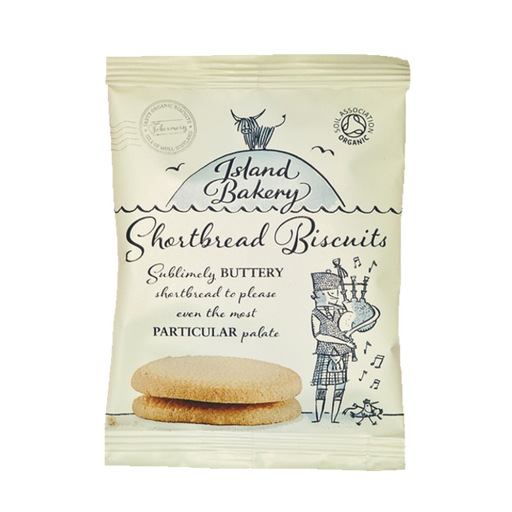
Island Bakery Organic Shortbread 25g
The 25g pack offers a defined quantity of conventional shortbread for sharing. Check its own per-100g and pack nutrition figures, ingredients and allergens rather than assuming it has less sugar than another shortbread.
View on Joybuy
Questions about sharing shortbread
Does a smaller sugar figure make a shortbread “reduced sugars”?
No. Comparing sugars per 100g helps you choose between the named packs, but a smaller figure than another biscuit’s does not by itself substantiate a reduced-sugars claim. Describe what the labels state and check the portion figures as well.
Is a sugar-free biscuit necessarily lower in energy than shortbread?
No conclusion about energy follows from “sugar-free” alone. Compare energy on the actual packs using the same basis, then check the ingredients and allergens. The consulted Gullón shortbread-style listings describe differing ingredients, so they cannot substitute for the pack offered to colleagues.
What information should stay with biscuits moved into an office tin?
Keep each biscuit type identifiable and its current ingredient, allergen and storage information accessible. Do not mix unidentified biscuits: the people sharing the tin need to know which pack’s details apply to what they take.
How should I store an opened shortbread tin?
Follow the instructions for that tin. Waitrose recommends storing its cited All Butter Shortbread Tin contents in an airtight container after opening and consuming them within seven days for best quality; that guidance is specific to that product.


