Parents packing treats to take out
Decide whether you need one wrapped biscuit, a bag of several mini fingers or a serving divided from a larger pack. Those formats differ even when each is described as shortbread fingers.


If each half-term treat needs its own wrapper, choose shortbread whose listing specifies individually wrapped fingers or inner bags: a finger-shaped biscuit or a single-serving weight does not establish wrapping. A bag of mini fingers gives several biscuits in one portion, while a standard pack makes sense when you can divide and store it yourself. Check the number of servings, the ingredients and the current pack label before buying.
Decide whether you need one wrapped biscuit, a bag of several mini fingers or a serving divided from a larger pack. Those formats differ even when each is described as shortbread fingers.
Check the number of wrapped units in the outer pack against the number of servings you need. Manufacturer-listed cases can contain substantially more biscuits than a household multipack.
Compare the exact product’s current ingredients and precautionary warnings. A product described as made without wheat can still contain milk or carry a nut-allergy warning.
Choose the serving format first, then check whether the outer-pack quantity, recipe and portion information suit the occasion.
Choose when: each serving needs to be one biscuit in its own wrapper.
Bear in mind: Walker’s manufacturer-listed wrapped-finger formats come in outer packs of 40 or 240, not as proof that one finger can be bought separately.
Choose when: a separate bag is useful and several small biscuits in that bag are acceptable.
Bear in mind: Walker’s Wee Shorties has six inner bags of five mini fingers, so one bag is not one biscuit.
Choose when: you can serve or pack out individual fingers yourself.
Bear in mind: per-biscuit nutrition information does not tell you whether the biscuits have separate wrappers; follow the pack’s storage instructions once opened.
| Priority | What to check | Your needs |
|---|---|---|
| Separate servings | Look for an explicit inner-wrapper count and the number of biscuits in each wrapper. Walker’s Shortbread lists 240 individually wrapped 20 g fingers per case; its Wee Shorties pack has six bags of five mini fingers. | I want to put one defined treat aside without opening a larger pack. If I mean one biscuit rather than one bag, the distinction matters. |
| Outer-pack size | Compare the number of servings you will use with the outer-pack count. Walker’s Shortbread lists a 40-packet giant-finger display box as well as its 240-packet single-finger case. | For a few half-term snacks, I would rather check the quantity before choosing a catering-sized pack. |
| Ingredients and allergens | Read the current ingredients and precautionary statements for the exact product. Marks & Spencer lists milk in its Made Without Wheat rounds and marks them unsuitable for people with nut or peanut allergies. | Someone eating the shortbread has a particular allergy, so I need the warning for that recipe rather than an assumption about shortbread generally. |
| Serving information | Compare the stated weight per biscuit or bag on the same basis. Walker’s Shortbread lists a 20 g single finger and a 35 g giant finger; Tesco lists nutrition per 18 g finger for its 210 g pack. | I want to know what the intended serving contains, whether it comes in its own wrapper or is taken from a larger pack. |
A finger shape and per-biscuit nutrition information describe the biscuit, not its packaging. A standard pack may need dividing after opening.
Check how many inner wrappers there are and how many biscuits each contains.
If you open a standard pack for one serving, you will need to store the rest according to its pack instructions.
Walker’s Shortbread lists wrapped-finger outer packs of 40 and 240 packets, while its mini-finger option contains six inner bags. Those quantities suit different numbers of servings.
Count the wrapped portions you expect to use before choosing an outer-pack size.
A large case means storing more portions and may leave some unused.
Marks & Spencer’s Made Without Wheat shortbread rounds contain milk and are marked unsuitable for people with nut or peanut allergies.
Check the current packaging against the eater’s specific allergies, including precautionary warnings.
These examples show why the exact product and pack format matter more than the brand name alone.
The manufacturer lists both individually wrapped fingers and a multipack of inner bags containing mini fingers.
The manufacturer lists individually wrapped 17 g shortbread fingers in an approximately 80-pack case.
Its listed 210 g all-butter finger pack provides nutrition information per 18 g biscuit for portioning from a larger pack.
Its listed 200 g shortbread finger pack contains 10 fingers for serving from a larger pack.
Its listed 200 g all-butter shortbread finger pack states 10 servings.
Its shortbread range includes Made Without Wheat rounds for comparing recipes rather than single-biscuit wrapping.
This 25 g shortbread option may suit someone shopping for a single portion. If you need a factory-wrapped biscuit, confirm the packaging before ordering.
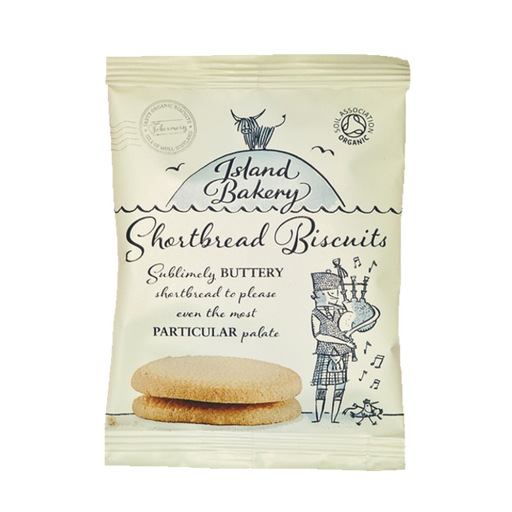 No image available
The listed 25 g size offers a single portion for a half-term snack. Confirm whether the biscuit has its own wrapper if that is essential, and check the current packaging for ingredients and allergens.
Not necessarily. Walker’s Shortbread specifies individual wrappers for its single-finger case, and Dean’s does so for its listed 17 g finger case; a standard finger pack’s per-biscuit information does not establish wrappers. Check the inner-pack description for the product you choose.
Follow the instructions on the particular pack. Tesco says to keep its listed 210 g shortbread fingers in a cool, dry place and in an airtight container once opened; separately sealed inner bags let you open one portion without opening the others.
Check the exact product’s current packaging for ingredients and precautionary warnings. For example, Marks & Spencer’s Made Without Wheat rounds contain milk and are marked unsuitable for people with nut or peanut allergies; ‘without wheat’ does not address those other ingredients or warnings.
For food covered by England’s school-food rules and provided other than as part of a school lunch, Schedule 4 of the Requirements for School Food Regulations 2014 says cakes and biscuits must not be provided. That is a rule about food provision in the covered school setting, not a ban on a family buying shortbread for half term. The Department for Education said proposed revised standards remained subject to Parliamentary approval for September 2027.