Tea-break portion planners
If you want one shortbread biscuit mid-morning, a per-biscuit sugars and energy figure helps you judge the serving you plan to eat.


For a mid-morning shortbread snack, compare sugars and energy per biscuit as well as per 100g, then consider how many biscuits you intend to eat. A smaller serving can reduce the amount of sugar in your snack, but it does not make the product a reduced-sugars recipe; assess that claim against a similar product and its energy content.
If you want one shortbread biscuit mid-morning, a per-biscuit sugars and energy figure helps you judge the serving you plan to eat.
If you are weighing up conventional, reduced-sugars and sugar-free biscuits, check the recipe and nutrition information rather than relying on serving size or front-of-pack wording alone.
Start with the amount you expect to eat, then use per-100g figures to compare biscuits of different sizes.
| Priority | What to check | Your needs |
|---|---|---|
| Sugars per snack | Read sugars per biscuit where given, and multiply by the number you plan to eat. The specified Waitrose and Sainsbury's fingers each list 3.0g sugars per biscuit, according to their respective product panels. | I want to know how much sugar is in my mid-morning serving, not just in 100g of biscuits. |
| Recipe comparison | Use sugars per 100g when formats differ, then return to your intended portion. M&S lists 14.8g per 100g for its Mini Shortbread Fingers; Walker's Shortbread lists 16.2g per 100g for its specified 250g Fingers. | A mini finger and a larger biscuit are hard to compare by piece alone. I need both a like-for-like recipe figure and a serving figure. |
| Energy and saturates | Check the same serving basis for energy and saturated fat. Waitrose lists 102kcal and 3.1g saturates per finger for its specified Shortbread Fingers. | Reducing the sugar in my serving is only part of the decision; I also want to see what the whole serving contains. |
| Claims and ingredients | For a reduced-sugars claim, examine the comparison with a similar product and its energy content. For a sugar-free alternative, read the UK pack's ingredients, total carbohydrate and allergen information. | If I choose a different recipe, I want to know what has changed rather than assuming its name tells me everything about the biscuit. |
A serving-size decision and a claim about the product's recipe answer different questions.
Use per-biscuit figures to plan your snack. For a reduced-sugars claim, check the product's comparison with a similar biscuit and its energy content.
The NHS notes that sweeteners do not necessarily make a food healthy. A product name also cannot establish its total carbohydrate or the ingredients in the UK pack.
Check energy, total carbohydrate, ingredients and allergens on the pack you are buying.
Those figures describe different amounts of food, so they do not show which intended snack contains less sugar.
Compare recipes per 100g first, then read or work out the figures for the number of biscuits you intend to eat.
These figures describe the specified products, not every shortbread made by each brand.
Its Shortbread Fingers have a published per-finger nutrition panel for planning one biscuit.
Its specified Highland All Butter Shortbread Fingers have per-biscuit and per-100g figures.
Mini Shortbread Fingers offer a smaller-looking format with nutrition stated per 100g.
Its specified 250g Shortbread Fingers have manufacturer-published ingredients and per-100g nutrition.
Its Traditional Fingers and All Butter Fingers are separate recipes with separate nutrition figures.
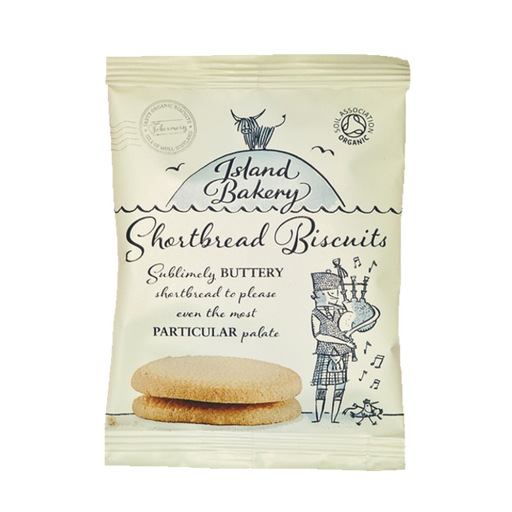
This conventional 25g shortbread pack is an option for choosing a defined mid-morning portion, rather than a demonstrated reduced-sugars recipe.
 No image available
The 25g pack gives you a defined portion for a mid-morning break. Check its nutrition label for the sugars and energy in the amount you eat; a smaller pack is not itself a reduced-sugars claim.
No. A smaller biscuit may contain less sugar than a larger serving, but that does not establish a reduced-sugars claim for its recipe. The claim calls for a comparison with a similar product and a check of energy content.
Do not decide from the sugar-free wording alone. Read the UK pack's total carbohydrate, ingredients and energy information; the NHS notes that sweeteners do not necessarily make a food healthy.
Check the rules applying to food provided to pupils before selecting it for morning break. The Department for Education's 2014 school-food standards identify lunchtime as the occasion when cakes and biscuits are allowed. This setting-specific guidance does not describe every private snack or every UK nation; the Department's September 2026 announcement says updated standards for September 2027 remain subject to Parliamentary approval.