Parents bringing biscuits to a school sale
Choose a portion that is straightforward to hand over, and keep its ingredient information available for the organiser and buyers.


For a school bake sale, do not treat ordinary shortbread as reduced sugar just because its label shows slightly less sugar than another biscuit’s. If a reduced-sugar shortbread is the aim, check the claim on the exact pack; otherwise, choose a portion you can describe clearly and check the ingredients, allergens and school’s instructions before bringing it in. A gluten-free alternative addresses a separate need and is not automatically lower in sugar.
Choose a portion that is straightforward to hand over, and keep its ingredient information available for the organiser and buyers.
Compare similar biscuits per 100g, then check the serving size. A lower total-sugars figure does not, by itself, make a conventional shortbread a reduced-sugar product.
Check the exact pack for wheat, milk and any precautionary allergen statements, then apply the school’s instructions. Gluten-free status and sugar content are separate checks.
Start with the school’s food and allergy instructions, then compare the exact packs for sugar information and a practical serving size.
| Priority | What to check | Your needs |
|---|---|---|
| Sugar claim | Look for an explicit reduced-sugar claim on the exact pack if that is what you need. Compare similar products using their declared total sugars per 100g, without treating a lower figure alone as proof of a reduced-sugar claim. | I want to distinguish a product sold as reduced sugar from an ordinary shortbread that happens to show a lower number. |
| Portion | Check the weight and sugars declared per biscuit, where provided, as well as the number and format of biscuits in the pack. Tesco Groceries, for example, lists 3.4g sugars per 21g biscuit for Tesco Finest Scottish Shortbread Fingers. | A clearly defined biscuit would make it easier to tell the organiser what one serving contains. |
| Allergens and school rules | Read the full ingredient list and any “may contain” statement on the exact pack. Ask whether the school accepts the product and how it wants ingredient information supplied. | I need to know whether the biscuits meet the event’s requirements before packing them for the sale. |
Tesco Groceries lists 16.1g total sugars per 100g for Tesco Finest fingers, while the supplied Walker’s product comparison lists 16.2g per 100g. That small difference between conventional products does not establish a reduced-sugar claim.
Use per-100g figures for a like-for-like comparison. If the claim itself matters, check that the exact product pack explicitly makes it.
A per-biscuit figure tells you what the labelled serving contains; an adult reference intake does not establish an appropriate serving for every child. Total sugars on a food label and the free sugars discussed in NHS guidance are also different measures.
Use the biscuit’s stated weight and sugar figure to describe the portion accurately, rather than presenting it as a child-specific allowance.
Once biscuits are separated from their packaging, buyers and organisers may be unable to check the ingredients or allergen statements for themselves.
Keep the original pack available, or follow the organiser’s instructions for providing a clear copy of its full ingredient and allergen information.
Gluten-free labelling addresses gluten; it does not establish the product’s sugar content or rule out other relevant allergens.
Check the alternative’s complete label and precautionary statements against the school’s requirements before including it.
These examples show what to compare on specific packs; a brand name alone does not establish reduced-sugar or allergen suitability.
Its Scottish Shortbread Fingers have both per-100g and per-biscuit sugar declarations on the Tesco Groceries listing.
Walker’s Shortbread lists wheat flour, butter, sugar and salt for its 250g Shortbread Fingers.
Dean’s Traditional Shortbread Fingers provide a declared sugar figure for comparing conventional fingers.
The M&S shortbread range lists a Made Without Wheat All Butter Shortbread Rounds option alongside conventional products.
These options cover a shortbread biscuit and a gluten-free oat biscuit for a different dietary requirement. The oat biscuit is not shortbread, and neither listing should be treated as a verified reduced-sugar shortbread choice.
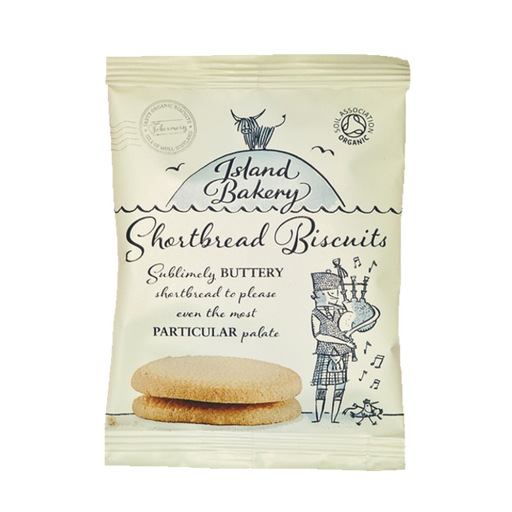 No image available
The stated 25g size gives you a defined amount to discuss with the bake-sale organiser. This is conventional shortbread, not a confirmed reduced-sugar option; check the pack’s sugar declaration, wheat and milk information, and packaging before taking it to school.
 No image available
These gluten-free oat biscuits are an alternative to consider if the school requests a gluten-free choice, but they are not shortbread. Check the exact pack’s sugar information, other allergen statements and inner-pack format against the organiser’s instructions.
No. A per-100g total-sugars figure helps you compare similar conventional biscuits, but a lower figure alone does not establish a reduced-sugar claim. If that claim matters to your choice, check the wording and nutrition information on the exact pack.
Do not assume so: the Tesco Finest, Walker’s and Dean’s traditional fingers described here contain wheat. Choose an alternative labelled for the relevant need only after checking its full pack and the school’s instructions, including any requirements concerning other allergens.
Keep the exact retail pack available so the organiser and buyers can inspect its ingredients and allergen statements. Ask the school how it wants this information displayed or handed over before separating biscuits from their packaging.
No. A food label declares total sugars, while NHS guidance discusses free sugars as a different measure. Use the label’s per-biscuit figure to describe that biscuit’s declared serving, not to calculate a child’s free-sugars intake from the total-sugars number alone.