Shortbread can be a mid-morning sweet treat, but check the portion’s fibre rather than choosing it to meet a fibre-focused need: Waitrose lists less than 0.5g fibre per finger, while Walker’s lists 2.1g per 100g of its classic fingers. Check the current pack if wheat, milk or nuts matter to you. For schools covered by England’s school-food regulations, biscuits must not be provided as food otherwise than as part of lunch.
Who is choosing?
Adults choosing a mid-morning snack
If fibre is the reason for reconsidering shortbread, compare the amount per biscuit or serving. The NHS recommends getting fibre from a variety of foods and suggests fruit, vegetable sticks and oatcakes among its snack examples.
Shoppers checking wheat, milk or nuts
Classic and gluten-free shortbread can have different ingredient lists. Read the current pack’s ingredients and precautionary allergen statements against your own requirements rather than relying on the product category.
School food planners in England
For schools covered by England’s Requirements for School Food Regulations 2014, Schedule 4 says cakes and biscuits must not be provided as food otherwise than as part of school lunch, according to legislation.gov.uk. A mid-morning school offering needs a different option.
What should you check?
Start with the purpose of the snack, then compare the serving information and ingredients on the exact pack you plan to use.
| Priority | What to check | Your needs |
|---|
| Fibre |
Read fibre per serving and per 100g on the pack. For context, Waitrose lists less than 0.5g per shortbread finger; Walker’s lists 2.1g per 100g of its classic fingers. The NHS advises adults to obtain fibre from varied sources. |
If I’m choosing this snack for its fibre, I need the serving figure—not just the word ‘shortbread’—to guide me. |
| Portion |
Check the weight or number of pieces in the portion and compare nutrition on the same basis. Sainsbury’s lists 3.7g saturates per Highland finger; Waitrose lists 3.1g per finger. |
A single piece or stated pack size makes it easier for me to decide how much shortbread I want mid-morning. |
| Ingredients |
Check the current ingredients for wheat and milk, plus any ‘may contain’ statement. Walker’s gluten-free rounds use a flour blend without wheat flour but contain butter (milk) and may contain nuts, according to Walker’s Shortbread. |
When I avoid a particular ingredient, ‘gluten-free’ alone does not answer my questions about milk or nuts. |
| Personal tolerance |
Look at the ingredients and portion alongside foods you already know you avoid. A short ingredient list does not establish how an individual will respond. |
If certain foods cause me discomfort, I want to make the decision from the actual recipe rather than a claim that shortbread is gentle. |
| School setting |
Confirm whether the food is being supplied by a school covered by England’s Requirements for School Food Regulations 2014 and whether it is part of lunch. Schedule 4 prohibits cakes and biscuits as food provided otherwise than as part of lunch, according to legislation.gov.uk. |
For an England school mid-morning offering covered by that rule, I need to plan something other than shortbread. |
Common buying mistakes
-
Assuming ‘digestive’ means a useful fibre serving
A name does not tell you how much fibre one biscuit supplies. Waitrose lists less than 0.5g per shortbread finger, while the NHS recommends obtaining fibre from a variety of foods.
Compare fibre per serving. If fibre is the main reason for the snack, consider the fruit, vegetable sticks or oatcakes listed in NHS snack guidance, subject to your ingredient requirements.
-
Assuming gluten-free also means milk-free or nut-free
Walker’s gluten-free shortbread rounds contain butter (milk) and carry a ‘may contain nuts’ statement, according to the manufacturer.
Check the ingredients and precautionary statement on the current pack of the exact product you intend to eat.
-
Using an HFSS assumption to decide school provision
An assumed classification of a particular shortbread product is not needed to apply England’s rule for biscuits supplied as food otherwise than as part of school lunch.
For schools covered by England’s Requirements for School Food Regulations 2014, follow the biscuit restriction in Schedule 4. For a setting elsewhere in the UK, check the standards that apply there rather than treating England’s rule as UK-wide.
Brand and retailer references
These examples show why the exact product label matters; a brand name alone does not establish fibre content or allergen suitability.
Walker’s
Walker’s Shortbread lists both classic fingers and separate gluten-free rounds.
- Its classic fingers list wheat flour, butter (milk), sugar and salt, with 2.1g fibre per 100g.
- Its gluten-free rounds contain butter (milk), may contain nuts and list 1.3g fibre per 100g.
Dean’s
Dean’s lists a shortbread selection containing wheat flour and salted butter with milk.
- The manufacturer gives per-100g figures for the selection, including 1.9g fibre.
- That selection does not meet a need to avoid wheat or milk; check other Dean’s products separately.
Waitrose
Waitrose Shortbread Fingers have a per-finger nutrition listing.
- The listing gives 102kcal, 3.1g saturates and less than 0.5g fibre per finger for portion comparison.
- These fingers contain wheat and butter and may contain nuts, according to Waitrose & Partners.
Sainsbury’s
Sainsbury’s Highland All Butter Shortbread Fingers have a per-biscuit nutrition listing.
- Sainsbury’s lists 105kcal and 3.7g saturates per biscuit.
- The listed ingredients include wheat flour and salted butter; check the current pack for the full allergen statement.
M&S
Marks & Spencer lists Made Without Wheat All Butter Shortbread Rounds alongside other shortbread.
- The named wheat-free option gives shoppers a specific product to inspect rather than relying on the wider category.
- Check that product’s current ingredients, allergens and nutrition before deciding whether it fits your needs.
Tesco
Tesco Groceries lists conventional Tesco Finest shortbread and a Finest Free From Belgian Chocolate Chunk Shortbread.
- The range includes a named Free From variant to compare with conventional products.
- Check the exact variant’s current pack for ingredients, allergens, serving size and fibre; the range name does not settle those details.
Joybuy shortbread option
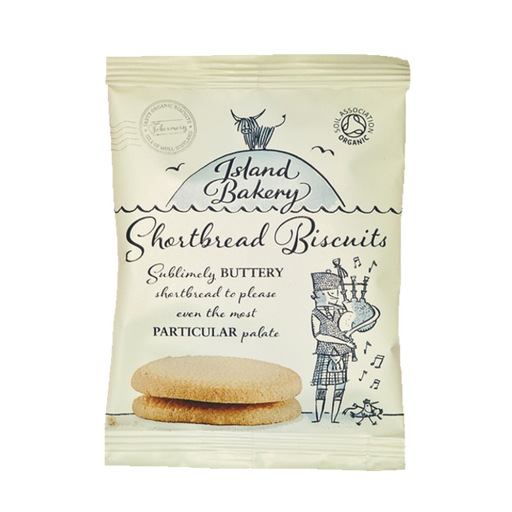
This 25g shortbread option is relevant to an adult choosing a mid-morning sweet treat. Use its current pack information to decide whether its ingredients and fibre fit your needs.
 No image available
Island Bakery Organic Shortbread 25g
The stated 25g size offers a defined amount of shortbread for a mid-morning treat. If fibre or allergens affect your choice, check the current pack’s nutrition and ingredient information rather than relying on the portion size.
View on Joybuy
Frequently asked questions
Should I choose shortbread when I want fibre at mid-morning?
Check the fibre per serving before choosing it for that purpose. Waitrose lists less than 0.5g per shortbread finger, and the NHS recommends fibre from a variety of foods, including fruit and oatcakes as snack options.
Will shortbread suit someone who finds certain foods uncomfortable?
The product name cannot predict individual tolerance. Check the ingredients and portion against foods you already know cause you discomfort; classic butter shortbread also needs a milk-ingredient check if dairy matters to you.
Does gluten-free shortbread also avoid milk and nuts?
Not necessarily. Walker’s Shortbread lists butter (milk) in its gluten-free rounds and says they may contain nuts, so check the current pack of the exact product.
Can shortbread be supplied at an England school mid-morning break?
Not as food provided otherwise than as part of lunch at schools covered by England’s Requirements for School Food Regulations 2014. Schedule 4 prohibits cakes and biscuits in that context, according to legislation.gov.uk; it is not a UK-wide conclusion about every school setting.


