Continental-breakfast hosts
If you are serving biscuits with coffee, fruit or yoghurt, the number of biscuits offered matters alongside the sugars shown on the pack.


For a continental breakfast where sugar content matters, compare the nutrition and serving information on packaged biscuits, or bake a recipe with stated sugars per portion; do not assume conventional all-butter shortbread is lower in sugar. Silver Spoon’s shortbread recipe states 2.6g sugars per 25g serving, but that figure alone does not establish how it compares with a particular shop-bought biscuit.
If you are serving biscuits with coffee, fruit or yoghurt, the number of biscuits offered matters alongside the sugars shown on the pack.
Compare sugars per 100g across packs, then use serving information to relate the figures to the portion you plan to serve.
A sugar-free claim does not answer a total-carbohydrate question. Diabetes UK notes that polyols, which may be used as sugar substitutes, still contain carbohydrate and calories.
Choose when: You want a ready-to-serve biscuit and can compare the exact pack before buying.
Bear in mind: Sugar-free and no-added-sugar wording does not, by itself, tell you the total carbohydrate or sugars per portion.
Choose when: You want to select a recipe and divide the finished batch into planned portions.
Bear in mind: Silver Spoon gives nutrition for its own recipe, not a comparison with every packaged shortbread.
Choose when: Traditional shortbread is the main reason for including a biscuit at breakfast.
Bear in mind: Descriptions such as all-butter or Scottish do not establish a lower sugars value.
Compare sugars on the same per-100g basis first, then check what the portion you intend to serve contains.
| Priority | What to check | Your needs |
|---|---|---|
| Nutrition and portion | Compare sugars per 100g across packs. Check sugars and total carbohydrate per serving, and how many biscuits that serving contains. Use traffic-light labelling, where present, alongside the full nutrition panel. | I want a quick label check without losing sight of the portion I will serve. In a Food Standards Agency and Ipsos Northern Ireland survey of 611 interviewees conducted from September to November 2024, 49% said they actively used traffic-light labelling when shopping for food; this was not a shortbread-specific measure. |
| Sugar wording | Read the exact sugar claim and the sugars figure on the current pack. Do not treat no added sugar and sugar-free as interchangeable descriptions. | If I am choosing a biscuit for its sugar wording, I want to know what the whole nutrition panel says, not just the front of the pack. |
| Sweeteners and carbohydrate | Check the ingredient list for sweeteners and the nutrition panel for total carbohydrate per serving. Diabetes UK notes that polyols contain carbohydrate and calories. | When carbohydrate matters to me, a sugar-free label alone is not enough to assess a breakfast portion. |
| Ingredients and allergens | Read the current ingredient and allergen statement, including any precautionary wording. Check wheat or gluten, milk and egg where these matter to your guests. | Before serving guests, I need to check their dietary requirements against the exact biscuit or recipe. |
Tesco, Waitrose and M&S list conventional shortbread, but descriptions of its style do not establish its sugars value.
Compare the nutrition declarations of the particular packs you are considering.
Diabetes UK notes that polyols still provide carbohydrate and calories, so the sugars line cannot answer every carbohydrate question.
Check total carbohydrate per serving and the sweetener ingredients rather than relying on the front-of-pack wording alone.
Silver Spoon states 2.6g sugars per 25g serving for its shortbread recipe; that figure does not identify the sugars in another recipe or a packaged biscuit.
Compare portions and nutrition on a consistent basis before drawing a conclusion about two options.
Sugar wording says nothing about whether a biscuit meets a guest’s ingredient requirements. The Food Standards Agency identifies wheat among cereals containing gluten.
Read the exact pack’s ingredients and allergen statement, or the complete recipe if you are baking.
These ranges offer different starting points for comparison; a brand name does not establish the nutrition of an individual biscuit.
Gullón Biscuits UK lists sugar-free digestives and no-added-sugar cookie products in its biscuit range.
Waitrose lists Walker’s Shortbread Fingers as a conventional shortbread option.
M&S lists all-butter shortbread fingers and Made Without Wheat All Butter Shortbread Rounds.
Waitrose lists own-label Shortbread Fingers and Free From Gluten Butter Shortbread.
Tesco Groceries lists Scottish shortbread fingers, honey and demerara shortbread fingers, and Shorties biscuits.
These Joybuy options are packaged Gullón biscuits for a continental breakfast. They are digestives, oat biscuits and filled cookies rather than traditional shortbread, so compare their current labels if shortbread texture or a particular sugars value is important.
 No image available
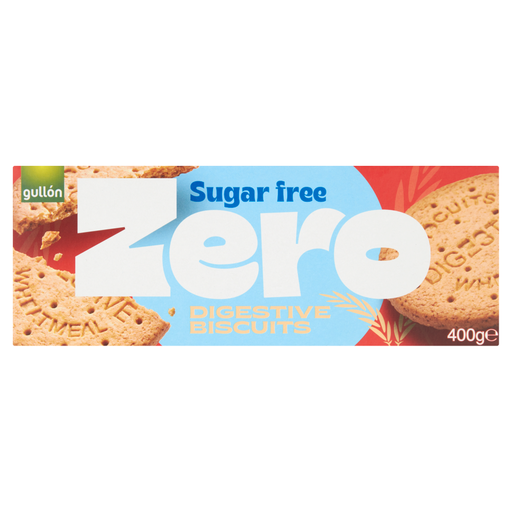
Choose this digestive format if a ready-to-serve biscuit suits your breakfast better than shortbread. The 400g pack name says Sugar Free; check sugars and total carbohydrate per serving, sweeteners and allergens on the current pack.
 No image available
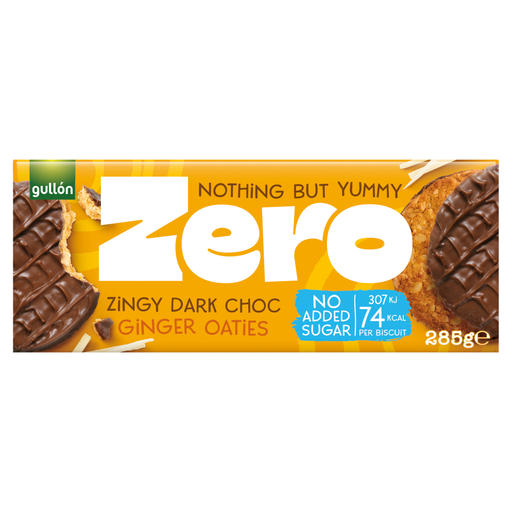
This 285g oat-biscuit option has dark chocolate and ginger in its name, rather than a shortbread style. Check the current pack for its sugar wording, sugars per 100g, serving information and allergens before comparing it with another biscuit.
 No image available
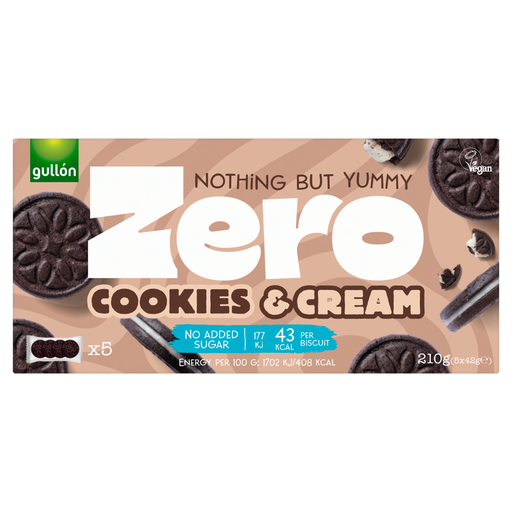
This 210g cookies-and-cream option is a filled cookie, not shortbread. Its name says No Added Sugar; use the current nutrition panel to assess total sugars and carbohydrate for the portion you would serve, and check the allergen statement for guests.
No. A sugar-free description does not mean carbohydrate-free. Diabetes UK notes that polyols can contain carbohydrate and calories, so check total carbohydrate per serving when that figure matters to your choice.
No. No added sugar concerns ingredients used for sweetening, while sugar-free concerns the sugars in the food. Compare the current pack’s sugars and total carbohydrate figures rather than treating the phrases as interchangeable.
Start with sugars per 100g for a common comparison, then check sugars and total carbohydrate for the portion you expect to serve. Read the ingredients, sweeteners and allergen statement as well.
No. Diabetes UK notes that polyols may still provide carbohydrate and calories. The product’s total carbohydrate per serving remains relevant; questions about an individual diabetes-management plan belong with that person’s healthcare team.
Read the exact current pack’s ingredients, allergen statement and any precautionary wording before serving it. Sugar-related wording does not establish whether a biscuit is suitable for someone avoiding wheat, gluten, milk or egg.