Hosts comparing sugar on the label
If you are putting shortbread out during the match, sugars per 100g help you compare recipes, while the number of fingers served determines the portion.


If you want less sugar from conventional shortbread, compare the exact packs per 100g before deciding how many fingers to put out: Tesco lists 13.1g sugars per 100g for its 210g all-butter fingers, compared with 14.9g for Waitrose’s 200g fingers. If avoiding added sugar matters more, check that claim and the full nutrition label separately; a no-added-sugar biscuit is not necessarily lower in total sugars or calories.
If you are putting shortbread out during the match, sugars per 100g help you compare recipes, while the number of fingers served determines the portion.
If added sugar is the deciding factor, check the claim and ingredients on the exact biscuit. Read its nutrition declaration separately for total sugars, carbohydrate and energy.
Check each pack’s ingredients and precautionary allergen wording before sharing. A sugar-related claim does not tell you whether a biscuit is suitable for a guest with an allergy.
Start with the distinction that matters to you: less sugar in a conventional shortbread, or a biscuit described as having no added sugar. Then plan the serving and check ingredients for everyone eating it.
| Priority | What to check | Your needs |
|---|---|---|
| Sugars per 100g | Compare the same measure on exact packs. Tesco lists 13.1g per 100g for its 210g all-butter fingers; Waitrose lists 14.9g for its 200g fingers, and Walker’s lists 16.2g for its 125g mini fingers. These figures do not establish a formal reduced-sugars claim. | I want to compare conventional shortbread recipes without mistaking a smaller biscuit for a lower-sugar recipe. |
| Serving size | Check the finger weight and sugars per finger, then count what you serve. Tesco lists 2.4g sugars per 18g finger; Waitrose lists 3.0g per 20g finger. Walker’s says its 125g mini-finger bag contains 24 pieces. | For a shared packet during the match, I would rather decide how many pieces to put out than judge the serving by the packet size. |
| No added sugar | Read the exact claim, ingredients and nutrition declaration. The UK seller of Doemi wholegrain biscuits describes them as no added sugar and lists maltitol; that description alone does not establish their total sugars, carbohydrate or energy relative to the shortbreads above. | Avoiding added sugar is my priority, even if it means choosing a different biscuit recipe. |
| Allergens | Read the pack’s ingredient and precautionary allergen information. Tesco’s and Waitrose’s checked shortbreads list wheat and milk; Waitrose also gives a nut precaution. The Doemi seller lists wheat and egg. | Someone sharing the biscuits has an allergy, so I need to check the particular pack before serving it. |
A no-added-sugar description concerns the recipe, not a comparison of the finished biscuit’s total sugars with another pack. A sweetened alternative still needs its own nutrition-label check.
Decide whether you are avoiding added sugar or comparing grams of sugar, then read the corresponding claim and nutrition figures on the exact pack.
Tesco’s checked finger weighs 18g and Waitrose’s weighs 20g, so their per-finger sugar figures describe different-sized servings.
Compare sugars per 100g for the recipe, then use the per-finger figures to account for the pieces you plan to serve.
Sainsbury’s checked Free From shortbread lists 23.5g sugars per 100g, while Walker’s mini fingers list 16.2g per 100g. Allergen positioning and biscuit size answer different questions from sugars per 100g.
Use allergen wording to check suitability, piece size to plan servings and the nutrition declaration to compare sugars.
These details apply to the named products or listings, not to every biscuit made by each brand.
The checked All Butter Shortbread Fingers 210g pack provides both per-100g and per-finger nutrition figures.
The checked 200g shortbread-finger pack also gives per-100g and per-finger figures.
Walker’s describes its checked 125g mini-finger bag as containing 24 pieces, which can be counted out for sharing.
Traditional Shortbread Fingers 125g offer another named recipe for a per-100g label comparison.
Boots has described its no-added-sugar shortbread fingers as all-butter biscuits made with maltitol.
A UK seller describes Doemi wholegrain biscuits as having no added sugar and lists maltitol among the ingredients.
The checked Free From Shortbread 160g is positioned for shoppers avoiding milk and gluten.
The M&S range includes conventional and Made Without shortbread varieties.
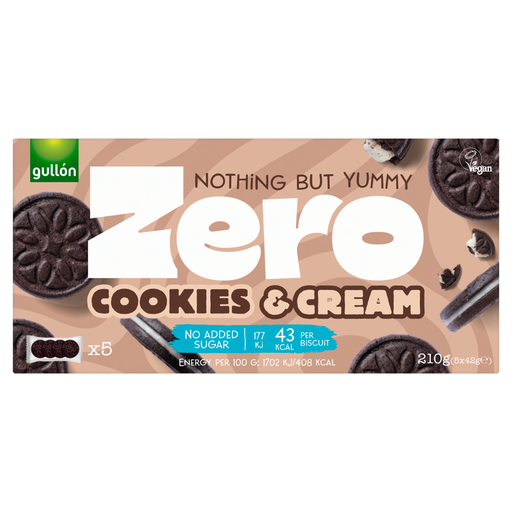
This no-added-sugar cookies-and-cream biscuit is an alternative to traditional shortbread for the match. Compare its pack label with any shortbread you are considering rather than treating it as the same recipe.
 No image available
If avoiding added sugar matters more than serving all-butter shortbread, this cookies-and-cream biscuit is a different option to consider. The pack is 210g; check its nutrition declaration and allergen information before sharing.
No. The wording does not give you the finished biscuit’s total sugars, carbohydrate or energy. Read those figures on the exact pack if you want to compare it with conventional shortbread.
NHS Scotland’s food-label guide describes a reduced-sugar product as containing 30% less sugar than a standard equivalent, and cautions that this need not mean low sugar. Do not apply that claim to a conventional shortbread simply because its per-100g figure is lower than another pack’s.
Read the exact pack’s ingredients and precautionary allergen wording before serving it. The checked Tesco and Waitrose shortbreads list wheat and milk, while the Doemi seller lists wheat and egg; a sugar-related claim does not replace an allergen check.
The checked shortbread is ready to serve. For storage, Tesco says to keep its All Butter Shortbread Fingers in a cool, dry place and in an airtight container once opened; follow the instructions on the pack you buy.