What should you check before buying?
Start with the pastry attachment and control method, then assess cleaning, storage and batch capacity against how your kitchen is shared.
| Concern | What to check | Who this matters to |
|---|
| Cleaning and cross-contact |
Check how food-contact parts come apart and how the manual says to clean them. For allergy-related use, decide whether shared equipment is appropriate. |
When pastry is for someone with a food allergy, I need a cleaning arrangement I can rely on rather than a dishwasher-safe label alone; around 36% of consumers put cleaning and cross-contact first. |
| Pastry control |
Confirm the exact model’s supplied dough attachment and pulse function, then follow its pastry instructions. |
I want to stop mixing as the pastry comes together instead of leaving the machine running; roughly 29% of consumers make controlled pastry preparation their primary concern. |
| Storage and handling |
Measure the intended cupboard and check the machine’s dimensions, weight and attachment storage. |
If the worktop belongs to everyone, I need to put the processor and its parts away after use; about 21% of consumers give storage and handling priority. |
| Batch capacity |
Compare the exact model’s working capacity or dough limit with your usual batch, not just its bowl volume. |
When several people bake or I prepare larger batches, I need enough usable capacity to justify a bigger machine; around 14% of consumers put batch capacity first. |
Joybuy product choices
These food processors offer different bowl and accessory arrangements for pastry preparation in a shared kitchen. Check the exact supplied tools, storage fit and cleaning instructions against your usual batch and the people who share the equipment.
 No image available
Kenwood MultiPro Express FDP65.180SI, silver
Consider this model if you want a 3 L bowl for shared preparation and can accommodate its accessories. Kenwood lists a dough tool, two speeds plus pulse, cord storage and dishwasher-safe components for the FDP65.180SI.
The product name specifies a 1000 W motor and six accessories. Check the stored dimensions for your cupboard, and do not rely on dishwasher-safe parts alone for allergen control.
View on Joybuy
 No image available
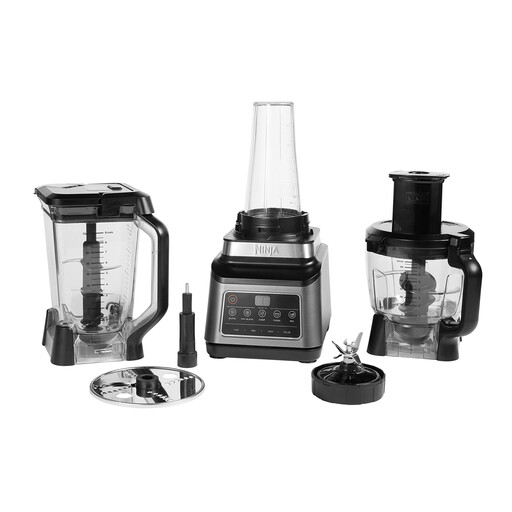
Ninja 3-in-1 Auto-iQBN800UK food processor
Consider this multi-purpose model if its processor bowl suits your pastry batch and you have room to store the other vessels. Its product name specifies a 1.8 L bowl, 2.1 L jug, 700 ml cup and 1200 W motor.
Confirm the supplied dough tool, pulse controls and appropriate batch size for your recipe. The jug, cup and other food-contact parts also need a shared cleaning and storage routine.
View on Joybuy
 No image available
KENWOOD MultiPro Express Weighing+ FDM71.450SS, silver
Consider this model if a larger bowl and integrated weighing are useful in a shared preparation space. Its product name specifies a 3 L bowl, 1000 W motor, eight accessories and an integrated digital scale.
Before choosing it for shortcrust, confirm which supplied attachment is intended for pastry and how to use the pulse control. Measure the intended storage space and establish who will clean the parts after use.
View on Joybuy
Common questions
Do I need a dough blade for shortcrust pastry?
Choose an exact model with a suitable supplied attachment and a way to stop processing promptly, rather than assuming any blade will do. Magimix’s published shortcrust method uses a dough blade, with a metal-blade alternative specified for its Mini Plus, and instructs users to stop when the dough forms a ball.
Do dishwasher-safe parts make a shared processor suitable for allergen-free pastry?
No: dishwasher-safe describes a permitted cleaning method, not proof that shared equipment is suitable for allergen-free preparation. Coventry City Council’s food-business guidance warns about controlling allergens in complex equipment; in a home kitchen, assess the individual risk and whether dedicated equipment is needed.
What if I make pastry for a food business?
Allergen information and control become business responsibilities, not just matters for a shared household routine. GOV.UK guidance says retail and catering food business operators must provide allergen information and follow applicable labelling rules; check the requirements for your business and location before preparing food for customers.
Is bowl volume enough to choose a processor for larger pastry batches?
No. Look for the exact model’s stated working capacity or dough limit alongside its bowl volume. Bosch, for example, lists both a 2.3 L usable bowl volume and a maximum 0.8 kg dough content for the MCM3501MGB; the figures describe different constraints.


