
24/7 Customer Support

Free returns

Same-day & Next-day Delivery

Quality Guaranteed

Unlock Your Welcome Offers: FREE Delivery | Up to 80% OFF | Free 30-day JoyPlus trial
Download the APP
A cluttered shower can be a daily frustration. Bottles toppling over, soap bars turning mushy and nowhere to put your razor—it’s a common problem in bathrooms across the UK. A well-chosen shower caddy is more than just a storage accessory; it’s a simple way to bring order and calm to your daily routine.
But with so many options available, from suction cup shelves to freestanding towers, finding the right bathroom organiser for your space can be a challenge. This guide is designed to help you understand the different types of shower storage and identify a solution that fits your bathroom, your lifestyle and your needs.
Before you decide, consider a few key factors. Thinking about these points will help you narrow down the options and find a caddy that you’ll be happy with for years to come.
The first question to ask is how you want to mount your caddy. Your answer will likely depend on whether you own your home, are renting or live in student accommodation.
The damp, humid environment of a shower is tough on materials. Look for a waterproof shower basket designed to withstand constant exposure to moisture.
Proper drainage is also crucial. Caddies with slatted bases or drainage holes prevent water from pooling, which helps keep your toiletries dry and reduces soap scum build-up.
Consider what you need to store. A single person may only need a small caddy for a few bottles, while a family will require a multi-tier organiser. Look at the height between shelves—can they accommodate tall shampoo and conditioner bottles? Some models, like a corner shower shelf, are specifically designed to maximise storage in a compact footprint.
Here are a few standout options that address different needs, from temporary storage for renters to large-capacity solutions for busy family bathrooms.

Why It Stands Out: This set offers a powerful and remarkably simple no-drill solution. The suction cup technology, based on bionic octopus sucker principles, provides a strong hold on suitable surfaces with just a press of the palm. There is no need for tools or waiting for adhesive to cure.
Pros:
Who is it for?: Renters, students or anyone who needs a reliable suction cup shower shelf that is easy to install and remove without damaging walls.
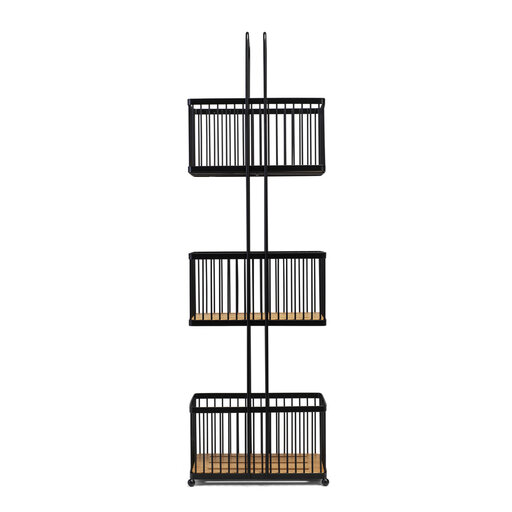
Why It Stands Out: This caddy combines function with style. Its elegant black mild steel frame and bamboo accents offer a contemporary look that can elevate your bathroom's decor. As a piece of freestanding bathroom storage, it offers complete placement flexibility.
Pros:
Who is it for?: Those who prioritise aesthetics and want a flexible bathroom organiser that doesn't need to be fixed to a wall. It works just as well in a bedroom or utility room.

Why It Stands Out: This tension pole shower caddy is a master of vertical space. It adjusts to fit ceiling heights from 95 cm up to 315 cm, turning an unused corner into a substantial storage hub. The four adjustable shelves can be positioned to accommodate items of all sizes.
Pros:
Who is it for?: Families, housemates or anyone with a large collection of shower products who needs a high-capacity corner shower shelf to keep everything organised.
The right storage can transform your bathroom experience. If you are looking for more specialised bathroom aids, such as accessible seating or commodes, our range of care and shower commodes offers solutions designed for enhanced safety and comfort.
1. How do I stop my shower caddy from rusting? The best prevention is to choose a caddy made from inherently rust-proof materials like ABS plastic, or high-quality stainless steel. For coated metal caddies, ensure the coating is intact. Good drainage is also key, as it prevents water from sitting on the surfaces. Wiping the caddy down periodically can also help prolong its life.
2. Do suction cup shower shelves actually work? Yes, modern suction cup systems can be very effective, but only on the right surfaces. They require a completely smooth, flat, non-porous surface to create a strong vacuum seal. They work well on glass, mirrors and glossy, smooth tiles. They will not adhere properly to textured or porous tiles, grout lines or painted walls. Always check the manufacturer's instructions and weight limits.
3. What is the best way to organise a small shower? In a small shower, using vertical space is essential. A tension pole shower caddy or a tall, narrow corner shower shelf are excellent choices as they provide multiple tiers of storage within a small footprint. A hanging caddy that fits over the shower door can also be a good space-saver.