
24/7 全天候客户支持

免费退货

当日/次日达

品质保障

开启新人专享福利: 全场免邮 | 低至 2 折 | 免费试用 30 天 JoyPlus 会员
下载 Joybuy
A shower caddy can make a small bathroom easier to manage, but the wrong design may create new problems. Bottles can topple, suction cups may lose their grip and trapped water can leave toiletries sitting in a damp film.
Before buying, look beyond appearance and check how the product will fit your shower, how much weight it can support and whether it can drain properly. This guide explains the main pitfalls and compares suitable shower storage options for renters, students, families and compact UK bathrooms.
A suction cup shower caddy usually needs a smooth, non-porous surface, such as glass, acrylic, stainless steel or smooth tiles. Uneven tiles, grout lines, textured finishes, wallpaper and painted walls can prevent a reliable seal.
A wall-mounted shower caddy may be more suitable if your shower has an uneven surface, but check whether it requires screws, wall plugs or adhesive. Renters should pay particular attention to this distinction before ordering.
A tall or deep basket may look spacious in product photographs, but it can be difficult to reach the back of the shelf. Check the measurements and consider the size of your shampoo and conditioner bottles. A two-tier shower caddy can separate everyday products from spare bottles, while a single shower shelf may be easier to clean and access.
Also check the stated load capacity. Do not assume that a shelf designed for several small bottles can safely carry large refill containers.
Solid-bottom baskets may hold water around soap and bottle caps. Look for an open-wire structure or drainage holes, together with enough airflow around the products. Materials also matter: powder-coated steel, stainless steel and ABS plastic have different care requirements.
A product described as rust-resistant is not necessarily maintenance-free. Wipe away excess water, clean deposits regularly and inspect metal surfaces for damage to the finish.
Choose between:
For suction-mounted products, clean and dry the surface before installation. Press the cups firmly and test stability before adding toiletries. Never use the organiser to support body weight.
Compare width, depth and height with the available wall or corner space. A narrow shower shelf may suit a compact enclosure, while a four-tier corner unit can use vertical space more efficiently.
Read the capacity in the same units used by the listing. For example, the TAILI two-basket model lists a maximum capacity of 22 lb, while the single TAILI basket lists 10 kg. These are stated product limits, not a recommendation to load every shelf to its maximum. Distribute bottles evenly and leave clearance for doors and shower controls.
Stainless steel can be a practical choice for buyers prioritising a metal finish and moisture resistance. Powder-coated steel is also designed for everyday bathroom use, but scratches should be monitored. ABS plastic is lightweight and does not rust, making it useful for removable bathroom storage.
Look for drainage holes, raised or inclined bases and an open structure. These features allow water to escape rather than collect beneath toiletries.
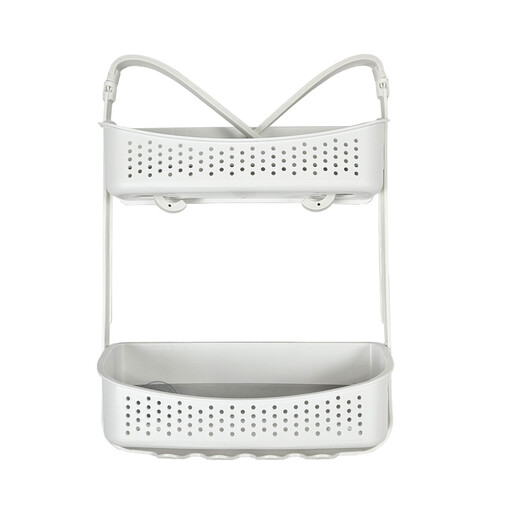
Why This Fits Their Persona: A practical option for students, first homes and households needing two levels of everyday shower storage without drilling.
Its open wire design supports drainage and airflow, while the product instructions specify smooth shower screens or doors for the suction cups.
Two baskets, tool-free hanging installation and powder-coated steel construction.
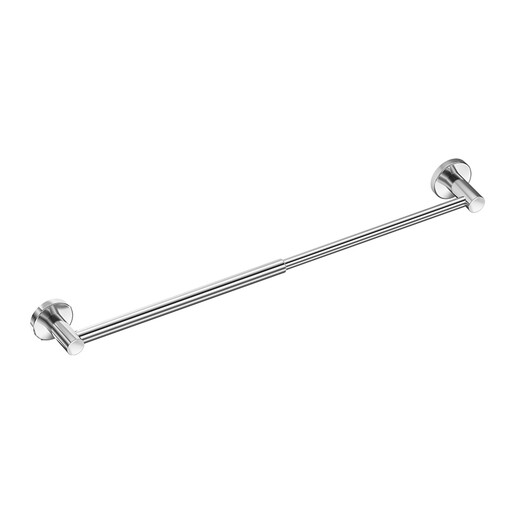
Why This Fits Their Persona: Suitable for shoppers who prefer a metal finish and want an adjustable single shelf for a modern bathroom.
The stainless-steel specification addresses buyers concerned about moisture, while the adjustable format helps with fit and placement.
Stainless steel construction and adjustable single-shelf design.
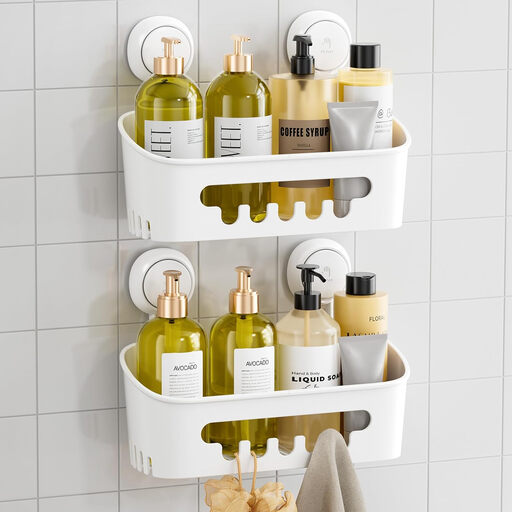
Why This Fits Their Persona: A useful match for families or shared bathrooms needing two removable baskets for multiple bottles and accessories.
The listing specifies smooth-surface installation, 22 drainage holes and a stated 22 lb maximum capacity. Load limits still need to be observed.
Two ABS baskets, four TPE suction cups and removable, reusable positioning.
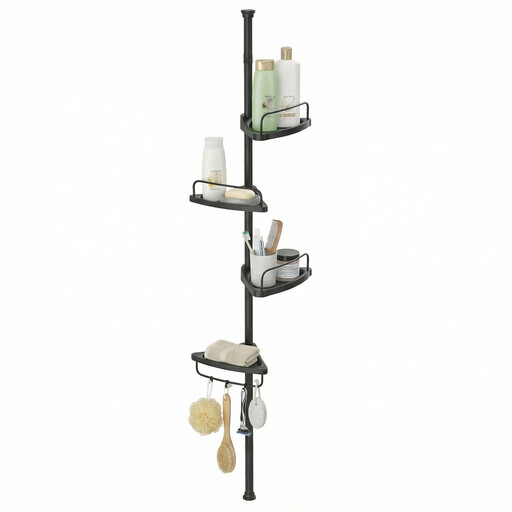
Why This Fits Their Persona: Designed for bathrooms where vertical corner storage is more practical than occupying a flat wall or shower door.
Its adjustable height and drainage holes address fit and water build-up, while the stated 2 kg limit per shelf clarifies how to load it.
Four tiers, adjustable height from approximately 95 to 315 cm and hooks for accessories.
We have compiled a complete, real-time list of products that fully satisfy these strict selection criteria and UK safety regulations.
They can be suitable because they do not normally require screws, nails or adhesive. However, the wall or screen must be smooth and non-porous. Always follow the installation instructions and remove the caddy if it becomes unstable.
Lifespan depends on the material, installation surface, loading and cleaning routine. Keeping shelves free from excess water and avoiding overloading can help maintain them. Suction cups may need cleaning or repositioning over time, while metal finishes should be checked for scratches or corrosion.
A hanging model is convenient for drill-free bathroom storage and may suit renters. A screw-fixed wall-mounted shower caddy can provide a more permanent arrangement where drilling is acceptable. A corner shelf is worth considering when floor and wall space are limited but ceiling height allows an adjustable fit.