
24/7 Customer Support

Free returns

Same-day & Next-day Delivery

Quality Guaranteed

Unlock Your Welcome Offers: FREE Delivery | Up to 80% OFF | Free 30-day JoyPlus trial
Download the APP
A side table seems like a simple purchase, but it's an item where design flaws quickly become daily annoyances. Whether it's for your living room or as a modern bedside table, choosing the right one means finding a balance of style, function and durability. Too often, a promising online find arrives only to disappoint.
As the Joybuy Product Recommendation Officer, my role is to help you see past the marketing photos and identify the practical details that matter. Before you add that stylish table to your basket, let's look at the common pitfalls that lead to buyer's remorse.
To avoid these issues, focus on a few core parameters. Analysing these details will help you select a piece that not only looks good but also serves its purpose for years to come.
The foundation of a good table is its stability. Look beyond the overall shape and examine the structure.
A compact side table is essential for many UK living rooms and bedrooms, but "compact" should not mean "unusable."
The material dictates the table's longevity and aesthetic.
Based on these practical criteria, here are a few options matched to different needs and styles.
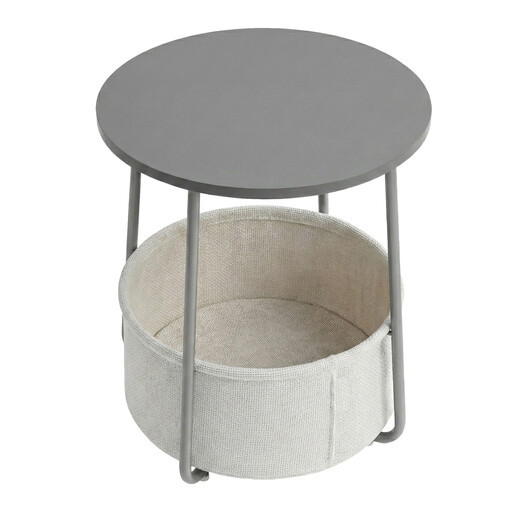
Why This Fits Their Persona: Ideal for those in smaller flats or anyone who moves frequently. It’s lightweight, incredibly simple to assemble, and the neutral grey colour fits seamlessly into most modern decor schemes. The fabric basket provides essential, soft-look storage without adding visual bulk.
The U-shaped steel legs and adjustable feet directly counter the "Wobble Factor." The deep, double-layer polyester basket offers genuinely useful storage, avoiding the "Impractical Proportions" pitfall.
Effortless 5-10 minute assembly and a space-saving design that combines a stable surface with a generous storage basket.
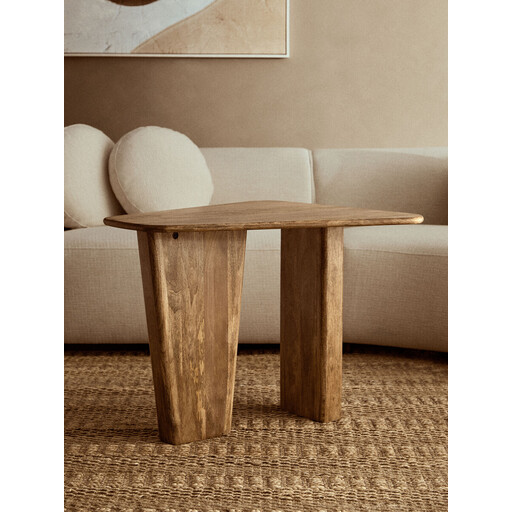
Why This Fits Their Persona: For those who view furniture as a long-term investment in style. This table acts as a sculptural centrepiece, celebrating natural materials and craftsmanship. It's a statement piece that brings warmth and character to a room.
As a solid wood coffee table, it completely bypasses the "Wood-Look Letdown." Its substantial, tapered pedestal base provides a solid, grounded feel, eliminating any risk of the "Wobble Factor."
Crafted from eco-friendly solid mango wood with a unique ridged pedestal design that adds texture and visual interest.
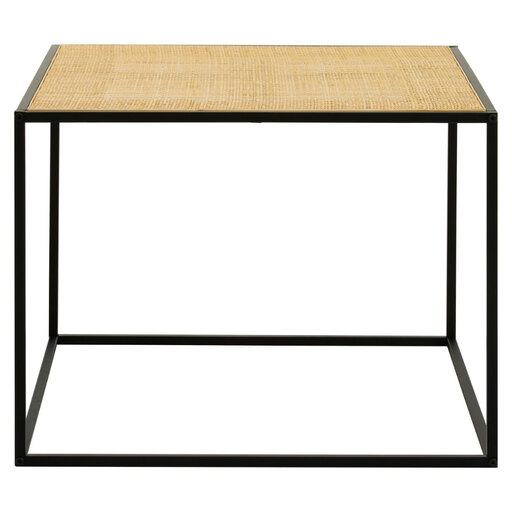
Why This Fits Their Persona: This table perfectly balances natural texture with clean, industrial lines. It's ideal for a contemporary living room that needs a touch of warmth without sacrificing a minimalist aesthetic. It's lightweight and easy to position.
The handwoven rattan coffee table top provides authentic, high-quality texture, avoiding the "Wood-Look Letdown." Its sleek but sturdy black metal frame offers excellent stability without the bulk of traditional designs.
A lightweight yet sturdy piece that combines artisan handwoven rattan with a modern, minimalist black metal frame.
We have compiled a complete, real-time list of products that fully satisfy these strict selection criteria and UK safety regulations.
This varies significantly by design and material. Always check the product specifications before purchase. As a general guide, a particleboard tabletop might support around 15-35 kg, which is ample for a lamp, books and drinks. A solid wood coffee table can often hold more. The fabric basket or lower shelf usually has a separate, lower weight limit, typically around 5-10 kg.
Most modern designs use durable materials like polyester with a linen-like appearance, which are chosen for their practicality. They are generally resistant to stains and can be easily dusted or spot-cleaned with a damp cloth. It is always advisable to check the manufacturer's specific care instructions.
In the UK, the terms are largely used interchangeably. Both refer to a small table designed to be placed beside a sofa, armchair or bed. Traditionally, an 'end table' would sit at the end of a sofa, while 'side table' is a more general term. Their function and typical dimensions are essentially the same.