
24/7 Customer Support

Free returns

Same-day & Next-day Delivery

Quality Guaranteed

Unlock Your Welcome Offers: FREE Delivery | Up to 80% OFF | Free 30-day JoyPlus trial
Download the APP
A sideboard is one of the most versatile pieces of furniture you can own. More than just a storage cabinet with doors, it can define a room, providing a focal point in your living area, essential dining room storage or a stylish welcome in a hallway. Yet, with so many options available, finding the right one can feel overwhelming. How do you balance style with function and ensure the piece you choose will fit your home and last for years to come?
As your Joybuy Product Recommendation Officer, my role is to help you navigate these choices. This guide cuts through the clutter, offering practical advice and a look at some standout options to help you find a sideboard that truly works for your space.
Before you start browsing, considering a few key factors will narrow down your search and ensure you make a choice you'll be happy with for years to come.
The first rule of furniture shopping is to measure your space. Note the maximum width, depth and height you can accommodate. Remember to account for 'breathing room' around the unit and ensure there's enough space for doors and drawers to open fully without obstructing walkways or other furniture. A large, heavy sideboard can overwhelm a small room, while a piece that's too small might look lost in a larger space.
The material of your sideboard is crucial in defining its style.
industrial sideboard or a modern sideboard, look for materials like metal, glass and clean lines. A grey sideboard with a powder-coated finish can offer a sophisticated, contemporary feel.wooden sideboard is a timeless choice. Light oak is a hallmark of scandi sideboard design, creating a bright and airy feel. Pine, often painted, lends itself to rustic or coastal aesthetics. A white sideboard is incredibly versatile, fitting seamlessly into minimalist, classic or even bohemian decors.Think about what you plan to store. Will it be a living room sideboard for hiding away electronics, books and board games? Or will it serve as dining room storage for crockery, glassware and table linens? The answer will determine the best configuration. Deep cupboards are great for larger items, while drawers are ideal for cutlery and smaller objects. Open shelving can be used to display decorative pieces.
Here are a few recommendations from our current collection, each offering a distinct style and functional benefits.
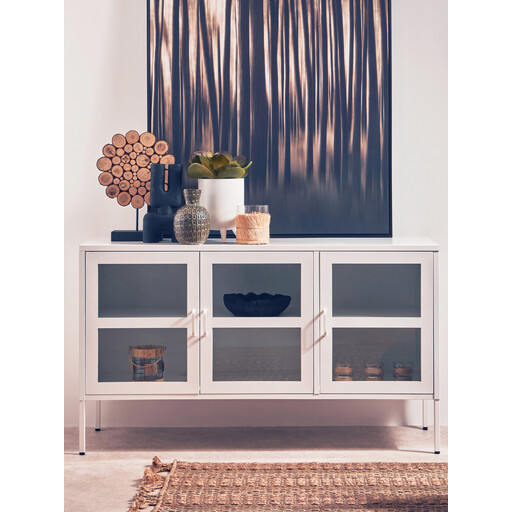
Why It Stands Out: This piece perfectly captures the industrial-chic trend. The combination of a sturdy Grey powder-coated metal frame and three glass doors creates a look that is both raw and refined. The wood-effect top adds a touch of warmth, softening the industrial edge and providing a durable surface for display.
Pros:
Who is it for?: This is an excellent choice for anyone wanting to make a statement with an industrial sideboard. It works beautifully in modern lofts, contemporary dining rooms or any space that benefits from a touch of urban sophistication.
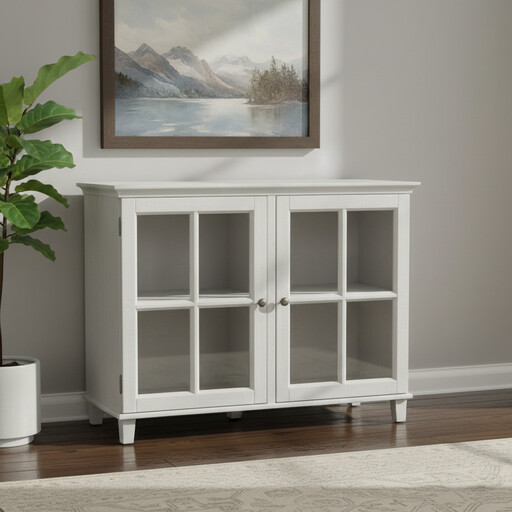
Why It Stands Out: The Provence sideboard exudes a timeless, rustic charm. Its soft truffle painted finish is neutral and calming, while the panelled glass doors and antique-finish metal knobs add classic detailing. A significant benefit is that it arrives fully assembled, saving you time and effort.
Pros:
dining room storage.Who is it for?: Ideal for those who appreciate classic design and convenience. If you're looking for a wooden sideboard that feels both elegant and homely and you'd rather avoid flat-pack assembly, this is a fantastic option.
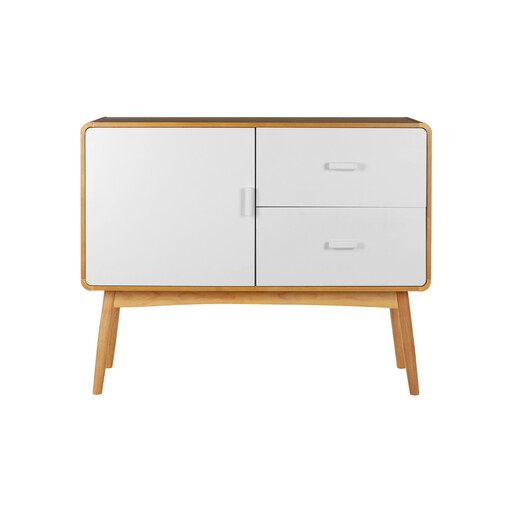
Why It Stands Out: This is a textbook example of clean, functional Scandinavian design. The light-coloured oak wood frame with its natural grain brings warmth, while the contrasting white door and drawers provide a fresh, modern accent. Its blend of storage options makes it highly practical.
Pros:
scandi sideboard style is light, airy and easy to integrate into many decors.Who is it for?: Perfect for lovers of minimalist and Nordic interiors. If you need a stylish living room sideboard to keep clutter at bay without visually crowding the room, the Malmo's clean lines and smart storage are an ideal match.
While these recommendations cover a range of popular styles, your perfect match might be something else entirely. A white sideboard, for instance, is a consistently popular choice for its ability to brighten a room and act as a neutral backdrop for any decor.
If you're drawn to a clean and bright aesthetic, explore our curated collection of white sideboards to find more options that suit your space.
1. What is the difference between a sideboard, a buffet and a credenza? Historically, these terms had distinct meanings. A sideboard was traditionally a dining room piece for serving food and storing linens. A buffet is very similar. A credenza was typically a lower, more formal cabinet, often with sliding doors, found in offices. Today, the terms are used almost interchangeably to describe a long, low storage cabinet with doors used in various rooms.
2. How should I style the top of my sideboard? A well-styled sideboard can elevate your entire room. A good approach is to create visual balance. Place a tall item, like a lamp or a vase with branches, at one end. Anchor the wall above with a large mirror or piece of art. Then, group smaller decorative objects—like candles, books or a small plant—on a tray to keep them from looking cluttered.
3. Can a sideboard be used in a hallway? Absolutely. A slimline sideboard is an excellent storage solution for a hallway. It provides a convenient "drop zone" for keys and post on top, while the cupboards can be used to hide away shoes, bags and other outdoor accessories, keeping your entrance tidy and welcoming. Just be sure to choose a model with a shallow depth to avoid obstructing the walkway.