
24/7 Customer Support

Free returns

Same-day & Next-day Delivery

Quality Guaranteed

Unlock Your Welcome Offers: FREE Delivery | Up to 80% OFF | Free 30-day JoyPlus trial
Download the APP
Buying Sijia Kitchen pork lard can make a noticeable difference to fried rice, noodles, pastries and stir-fries. However, shoppers can easily choose the wrong format if they focus only on the jar size or phrases such as “traditional” and “natural”.
This guide explains the practical details to check before buying pure pork lard, rendered pork fat or flavoured cooking lard in the UK.
Pork lard may be sold by weight, such as 140g or 660g, or by volume, such as 212ml or 720ml. These measurements are not directly interchangeable because the density of a fat differs from water.
A larger-looking container may not suit occasional cooks, while a small jar may run out quickly if you regularly fry, bake or prepare family-sized meals. Consider your weekly usage, fridge space and how soon you can consume the product after opening.
Plain lard generally offers a clean, rich pork-fat character without added aromatics. Flavoured versions may contain ingredients such as spring onion, ginger or Sichuan pepper, which can influence the finished dish.
That makes scallion-flavoured lard useful for noodles and spring onion pancakes, but it may be less suitable for delicate baking recipes where you want to control the flavour separately.
Lard can soften at room temperature and become firm when chilled. This is normal for a fat-based cooking ingredient, but poor storage can affect freshness and handling.
Always check the product label for the best-before information. Many listings advise storing the product in a cool, dry place before opening and refrigerating after opening. Use a clean, dry spoon to reduce the chance of introducing moisture or food particles.
Look for the ingredient declaration before adding a product to your basket. The plain Sijia Kitchen options list pork fat or lard, while flavoured products may include spring onion, ginger or Sichuan pepper.
Pork lard is not suitable for vegetarians, vegans or anyone avoiding pork. The listed products contain no declared allergens, but UK shoppers should still read the packaging on arrival because the label is the final source of current ingredient and allergen information.
Choose the size based on the way you cook:
Do not compare prices by container appearance alone. Work out the cost per 100g or 100ml, then check the storage requirements and likely consumption period.
The supplied product information lists approximately 880–885 kcal and around 99.5g fat per 100g or 100ml, with negligible carbohydrate and protein. Lard is therefore a concentrated cooking fat rather than a low-calorie ingredient.
For cooking, it can be melted gently in a pan before adding other ingredients. It can also be used as lard for frying, sautéing and baking. Avoid overheating any fat until it smokes; the suitable temperature depends on the recipe, pan and cooking method. For pastries, weigh the quantity carefully rather than substituting it at random for butter or vegetable shortening.
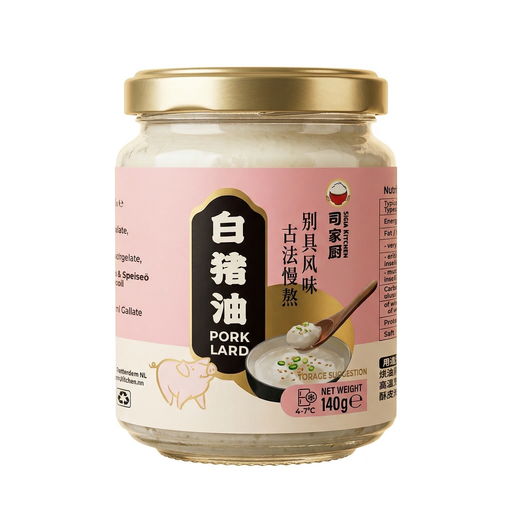
Why This Fits Their Persona: A compact option for UK shoppers who want to try cooking lard in fried rice, dumplings or baking without buying a large supply.
The 140g net weight makes the commitment clear, helping occasional users avoid overbuying a product they may not use regularly.
Lists lard as the ingredient; the product information describes a neutral flavour and a texture that is easy to scoop.
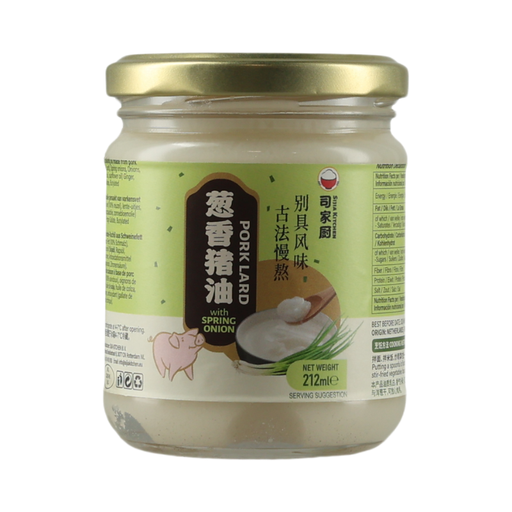
Why This Fits Their Persona: Suits cooks who want a measured aromatic layer for noodles, pastries and Chinese dishes rather than adding spring onion separately every time.
The ingredient description identifies lard and spring onion, so the flavour direction is clearer than relying on vague “traditional” wording.
212ml quantity; listed uses include stir-frying, mixing with noodles and making pastries.
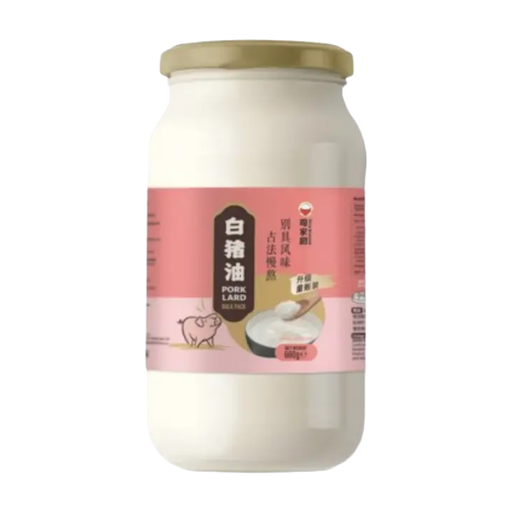
Why This Fits Their Persona: A larger format for frequent stir-frying, batch cooking and bakers who use rendered pork fat as a shortening ingredient.
The 660g net weight is stated clearly, making it easier to plan stock levels and compare the quantity with smaller jars.
Lists pork fat as the ingredient and specifies use for frying, sautéing and baking.
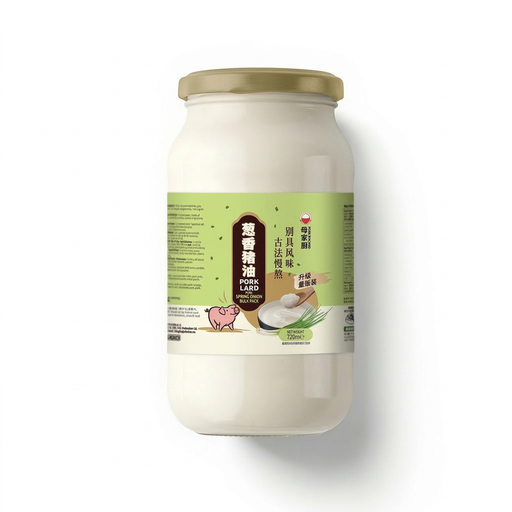
Why This Fits Their Persona: Suitable for households that regularly prepare fried rice, noodles, spring onion pancakes or other dishes where an infused fat is convenient.
The listing identifies pork fat and spring onion and states that the product may solidify when chilled, setting realistic handling expectations.
720ml quantity; listed applications include stir-frying, fried rice, noodles and dumpling fillings.
We have compiled a complete, real-time list of products that fully satisfy these strict selection criteria and UK safety regulations.
Plain lard can be melted and added to a wok for fried rice, vegetables or meat. A small amount stirred into noodles or soup can provide a fuller texture. In baking, it may be used in selected pastry recipes where a short, crumbly texture is desired.
Flavoured options are more specific. Ginger and Sichuan pepper lard can suit savoury stir-fries and noodle soups, while spring onion lard is a convenient match for scallion pancakes and fried rice. Start with a modest amount, particularly when adapting a recipe, as the aroma can become more pronounced during heating.
Use dedicated utensils and keep the container closed between uses. If the product has an unusual smell, visible contamination or packaging damage, do not use it; contact the retailer and follow the product’s food-safety guidance.
Yes, the plain 140g and 660g products are listed for baking as well as frying and sautéing. The final texture and flavour will differ from butter or vegetable shortening, so begin with a recipe that specifically accommodates lard.
The precise shelf life depends on the packaging and storage conditions. Check the best-before information and refrigerate the product after opening where instructed. Avoid leaving the jar open at room temperature for extended periods and use clean utensils each time.
Choose pure pork lard when you want flexibility across Chinese cooking, frying and baking. Select flavoured lard when spring onion, ginger or Sichuan pepper suits the recipes you prepare most often. Always check the ingredient list if you need a specific flavour or have dietary restrictions.