Choose a streaming device that carries the film services you want and works with your television, rather than expecting the device to overcome glare or a dim screen. For a bright lounge, check the TV’s picture in that room alongside its HDR capability; then weigh app access, HDMI installation and network stability. A set-top box may suit a wired connection, while an HDMI stick offers a compact plug-in arrangement, subject to the features of the exact model.
Who is this for?
Bright-lounge film viewers
If daylight makes shadow detail or intertitles difficult to see, assess the television’s picture in the room as well as the streamer’s output formats. Apple and Roku both specify that 4K HDR viewing requires a compatible TV.
Classic-film service users
If BFI Player or another particular catalogue drives the purchase, check the app on the exact device and the films you intend to watch. BFI Player lists dedicated TV-app routes for several platforms, but a device’s picture specifications cannot establish catalogue access.
Low-fuss HDMI upgraders
If you are adding streaming to a TV with an HDMI port, compare the space around its sockets, the power arrangement and the connection available near the screen before choosing a stick or box.
What matters when choosing a streamer?
Start with the TV and the films you want to watch: HDR-format support matters only with a compatible display and programme, while an app is useful only if it carries your chosen titles. Installation and network choices come next.
| Concern |
What to check |
Who this matters to |
| Picture visibility |
Check the TV’s picture in your room and its 4K HDR capability. Match any desired HDR format to both the streamer and the content. |
When daylight obscures shadow detail, I need a screen I can see clearly rather than assuming a new streamer will fix glare; around 42% of consumers put picture visibility first. |
| Film-service access |
Find the exact app on the intended platform and check that the films you want are currently available to you in the UK. |
If I am buying the device for BFI Player or a particular collection, access to those films matters more than an output-format claim; roughly 33% of consumers make catalogue access their main concern. |
| Setup and connection |
Check HDMI clearance, power and any required cable. Assess Wi-Fi near the TV or choose a model with Ethernet if you need a wired connection. |
With crowded TV ports or an unreliable wireless connection, I need an arrangement that fits and streams steadily; about 25% of consumers prioritise setup and connectivity. |
Common buying mistakes
-
Expecting a streamer to fix glare
Dolby Vision, HDR10+ and 4K describe supported formats, not the brightness or reflection handling of the connected TV. Apple and Roku both make 4K HDR viewing conditional on a compatible television.
Look at how your TV performs in the lounge during daylight. Treat blinds, seating position and any TV change as separate decisions from the streaming device.
-
Choosing the platform before checking the films
An app route does not establish that a particular silent film is in the current catalogue. BFI Player lists dedicated apps for Amazon Fire TV, Apple TV, Android TV and Google TV Streamer; its device list does not name Roku.
Check the intended platform’s app store, BFI Player’s current device requirements and the availability of the titles you want before ordering.
-
Assuming wireless features prevent interruptions
Long-range Wi-Fi or Wi-Fi 6E cannot compensate for an unstable broadband connection or a limited source stream. Netflix says slow or unstable connections may result in lower streaming quality.
Assess the connection where the TV sits. If Wi-Fi is unreliable, consider a wired option on a device that supports it; Apple’s Ethernet port is on the Wi-Fi + Ethernet Apple TV 4K model.
-
Overlooking the space and connections behind the TV
A stick needs room at the HDMI port and a suitable power connection. A box needs a cable between it and the TV.
Inspect the available port, socket access and box contents before choosing a format.
Apple specifies an HDMI cable sold separately for Apple TV 4K, while Google requires a certified HDMI 2.1 cable for Google TV Streamer (4K), also sold separately.
Streaming-device brands to consider
These product lines offer different installation and app routes. Their stated formats do not establish how a TV will look in a bright room.
Apple
Apple TV 4K is a set-top box for consumers who want Apple-platform integration. BFI Player lists an Apple TV app route, subject to its Apple TV OS requirement.
- Apple specifies Dolby Vision, HDR10+ and HDMI 2.1 support, with Gigabit Ethernet on the Wi-Fi + Ethernet model.
- A compatible HDMI TV is required, and 4K HDR streaming requires a 4K HDR TV. Apple sells the HDMI cable separately.
Google
Google TV Streamer (4K) is a set-top option with a dedicated BFI Player TV-app route listed by BFI Player.
- Google specifies output up to 4K HDR with Dolby Vision.
- Google requires a certified HDMI 2.1 cable sold separately. The connected TV and programme must also support the format you want to watch.
Roku
Roku Streaming Stick 4K is a direct-HDMI option for consumers who prefer a compact device.
- Roku specifies Dolby Vision, HDR10+ and long-range Wi-Fi for Streaming Stick 4K.
- Roku says a TV without 4K or HDR support will not show those picture formats. BFI Player does not name Roku on its dedicated TV-app list, so check that service’s current availability before choosing this route for it.
Amazon Fire TV
Fire TV Stick 4K Max is an HDMI-stick route; BFI Player lists Amazon Fire TV among its dedicated TV-app platforms.
- Amazon specifies 4K Ultra HD, Dolby Vision, HDR10+ and Wi-Fi 6E support.
- Wi-Fi 6E depends on compatible network equipment and does not guarantee a stable stream. Amazon limits Dolby Atmos availability to select services with compatible equipment.
Roku streaming devices on Joybuy
These Roku sticks are options for adding streaming to an HDMI television. Check the films and apps you intend to use, particularly BFI Player, before choosing either model; neither stick establishes how well the TV itself handles a bright room.
 No image available
Roku Streaming Stick 4K
Consider this direct-HDMI stick if your TV and chosen films can make use of its stated picture formats. Roku specifies 4K, Dolby Vision and HDR10+ for Streaming Stick 4K, but a compatible TV and content are needed to see those formats. If BFI Player is essential, check its current availability for this device before buying.
View on Joybuy
 No image available
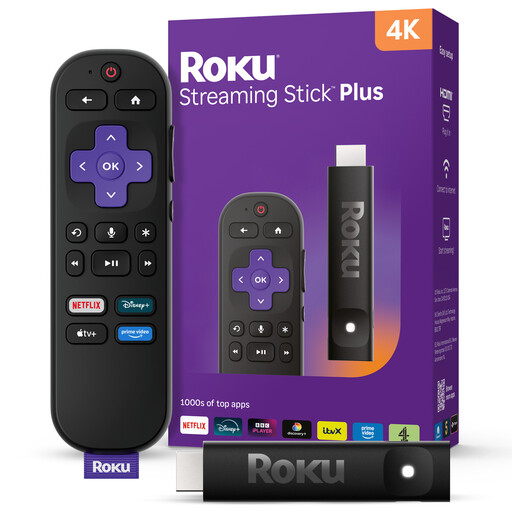
Roku Streaming Stick 4KPlus
Consider this 4KPlus variant if a streaming stick and its remote-control arrangement suit your setup. Before relying on HDR for your TV, confirm the exact output formats and connection requirements for this variant. Check BFI Player access on the device if that service is part of your film plans.
View on Joybuy
Questions about streaming silent films
Will a 4K HDR streamer make silent films easier to see in daylight?
Not on its own: the television’s brightness and reflection handling determine how its picture looks in your lounge. Apple and Roku both state that a compatible TV is needed to view their devices’ 4K HDR output; the film and service must provide the relevant format too.
Which streaming devices have a BFI Player TV app?
BFI Player lists dedicated TV apps for Amazon Fire TV, Apple TV, Android TV and Google TV Streamer, subject to its device and version requirements. Check its current guidance and the app store for the exact device; its listed routes do not name Roku. BFI Player also states that viewing is limited to the UK and is not available through a VPN.
Do I need Ethernet to stream films?
No: a suitable Wi-Fi connection may be sufficient, while Ethernet is worth considering if the connection near your TV is unstable and your device supports it. Netflix says slow or unstable connections may lower streaming quality. For Apple TV 4K, Ethernet is available on the Wi-Fi + Ethernet model.
What should I check before connecting a stick or box?
Check for a free HDMI port, room around it, a suitable power connection and any cable the device requires. Roku says Streaming Stick 4K needs HDMI and power; Apple sells the Apple TV 4K HDMI cable separately, and Google specifies a separately sold certified HDMI 2.1 cable for Google TV Streamer (4K).


