
24/7 Customer Support

Free returns

Same-day & Next-day Delivery

Quality Guaranteed

Unlock Your Welcome Offers: FREE Delivery | Up to 80% OFF | Free 30-day JoyPlus trial
Download the APP
Choosing silicone cake moulds can make baking more flexible, but not every colourful mould delivers the same practical value. Some are too floppy to carry safely when filled, others have unclear temperature limits, and some shapes look appealing online but are difficult to clean or store.
This guide explains what to check before buying, then matches a selection of moulds to different baking needs.
Silicone should flex enough to release a cake without damaging its shape. However, a very soft mould may bend when moved from the worktop to the oven. This is especially inconvenient with liquid batter.
Place flexible moulds on a sturdy baking tray before filling. A tray provides support during transport and helps the mould remain level while baking. Products with integrated handles can also be easier to move when cool, although oven gloves are still needed when handling hot bakeware.
Temperature limits vary. Some non-stick silicone baking moulds are listed for use up to 230°C, while others may have a different maximum rating. Microwave, freezer and oven suitability should be confirmed in the product information rather than assumed from the material alone.
Do not use silicone moulds on a hob, under a grill or over an open flame unless the manufacturer specifically states that they are suitable. Avoid exceeding the stated temperature, as excessive heat can damage the mould and affect its shape.
A non-stick surface can support easier release, but preparation and cooling still matter. Overfilling may cause batter to spill into detailed sections, while removing a cake before it has cooled can lead to breakage.
Avoid metal knives and sharp utensils, which can cut or scratch silicone. Although some products are listed as dishwasher-safe, handwashing with mild detergent may help preserve colour and surface condition over repeated use.
Look for clear material information, such as food-grade silicone. The products below specify food-grade or durable silicone, but shoppers should still read the care instructions supplied with each item.
Silicone is useful for both hot and cold preparation because it can flex around the finished food. This makes it suitable for cakes, jellies, chilled desserts and chocolate moulds. It does not mean every mould is suitable for every appliance, so always check the stated use.
For oven-safe cake moulds, check the maximum temperature and whether the product is suitable for microwave use. Several options in this selection list a limit of 230°C, while some cake pop products have product information that refers to ratings of up to 230°C or 240°C. Follow the specific rating shown for the item you purchase and do not rely on a general silicone temperature assumption.
Freezer-safe moulds are useful when preparing desserts or chocolate treats in advance. A microwave-safe baking mould can also simplify melting or reheating, but it should never be used on a hob or open flame where the instructions prohibit it.
Consider how many portions you need and where the mould will be stored. A large rectangular or square mould may suit family baking, while smaller themed cake moulds are more practical for parties and lunchbox treats.
Check the listed dimensions before ordering. Lightweight, stackable products can be easier to store in a typical UK kitchen. For shaped moulds, inspect the depth and design detail, as narrow sections may require more careful filling and cleaning.
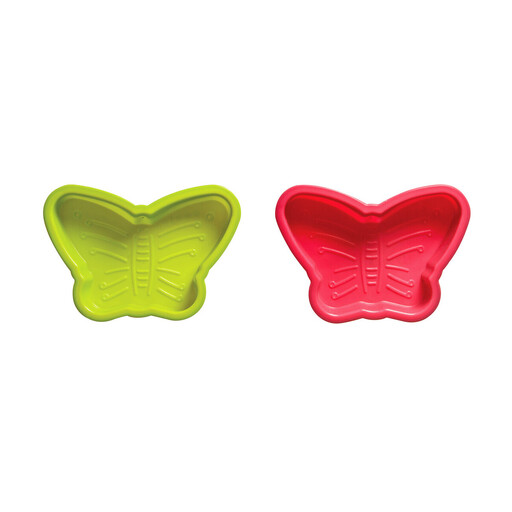
Why This Fits Their Persona: Two butterfly-shaped moulds provide an accessible way for beginner bakers or parents to create themed treats without committing to a large collection of specialist bakeware.
The product information states that the set is oven-safe up to 230°C and suitable for microwaves, freezers and dishwashers, giving clearer guidance than a generic “multi-use” description.
Includes two colour-coded moulds, with a lightweight, stackable design and flexible silicone for cakes, chocolates and jellies.
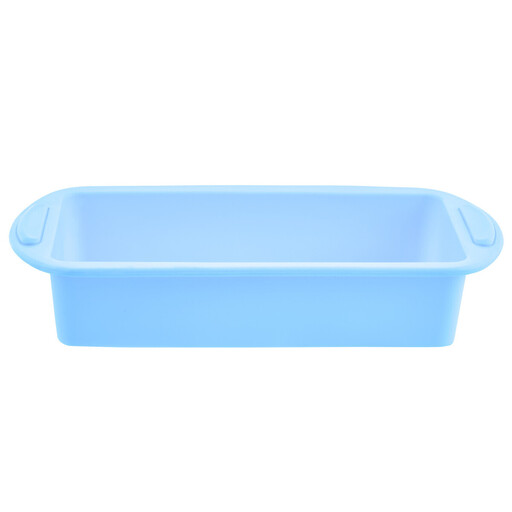
Why This Fits Their Persona: Its classic rectangular profile suits regular home baking, including loaf cakes, breads and pound cakes, rather than occasional novelty use.
Integrated handles help with lifting, while the instructions advise placing the mould on a baking sheet and cooling fully before release.
Made from 100% food-grade platinum silicone, with a listed heat limit of 230°C and dimensions of H6 x W31 x L17cm.
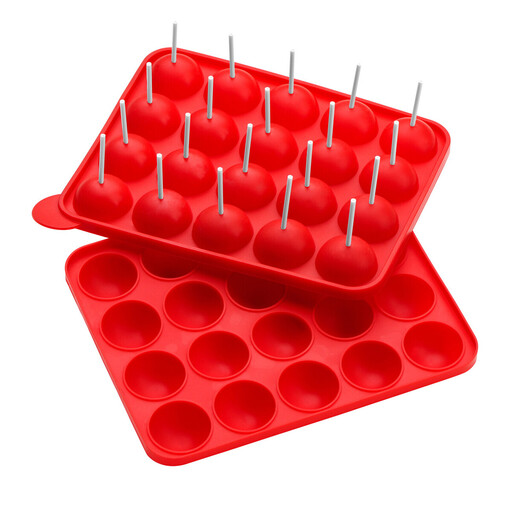
Why This Fits Their Persona: This set is suited to children’s parties, school celebrations and bakers who need multiple uniform portions in one preparation.
The set states its output clearly: up to 20 cake pops, supplied with 40 polypropylene sticks. Its oven, microwave, fridge and freezer uses are also specified.
Non-stick silicone, easy-clean construction and a relatively high stated capacity for batch cake pop preparation.
For handmade chocolates, sweets and decorative jellies, a dedicated chocolate mould may be more suitable than a deep cake shape. The Essentials by Premier 12 Eye Shape Brown Chocolate Mould is listed as microwave-safe, freezer-safe and dishwasher-safe, with flexible silicone for releasing detailed treats.
If children are involved, themed designs such as train or gingerbread shapes can make decorating more engaging. Always supervise children around hot moulds and melted chocolate. For smaller portions, silicone cupcake moulds, six-heart cake pop sets and shell-shaped cake pop moulds can reduce the amount of mixture needed for each batch.
We have compiled a complete, real-time list of products that fully satisfy these strict selection criteria and UK safety regulations.
Many are suitable for domestic ovens, but the exact temperature limit differs by product. Check the stated maximum, place the mould on a baking tray for stability and use oven gloves when hot. Do not use a mould on a hob or open flame where the instructions prohibit it.
Non-stick silicone may release cakes without extensive greasing, but lightly greasing can be useful for intricate designs or low-fat recipes. Cooling the cake fully before demoulding is often more important than adding excess oil.
Lifespan depends on frequency of use, storage and cleaning. Avoiding sharp utensils, abrasive products and excessive heat helps reduce premature damage. Replace a mould if it develops cuts, splits, severe stickiness or loses its shape.