
24/7 Customer Support

Free returns

Same-day & Next-day Delivery

Quality Guaranteed

Unlock Your Welcome Offers: FREE Delivery | Up to 80% OFF | Free 30-day JoyPlus trial
Download the APP
Choosing silicone kitchen utensils can appear straightforward, but product pages often focus on colour and broad claims rather than the details that affect daily use. A turner that bends too easily may struggle with heavier foods, while a spatula with an awkward head can leave sauce or batter around the edges of a pan. Poor storage and unsuitable cleaning can also shorten the usable life of otherwise practical tools.
Before buying a silicone spatula, silicone turner or complete kitchen utensil set, look beyond appearance and check how the design suits your cookware, cooking temperatures and cleaning routine.
“Heat-resistant” is useful only when the product’s instructions explain how it should be used. Silicone may be suitable for contact with hot pans, but that does not mean it should touch an open flame, grill element or extremely overheated surface. Always follow the manufacturer’s warnings and avoid prolonged direct contact with flames.
A large-looking kitchen utensil set may contain several similar solid spatulas but no slotted spatula, spoon or scraper. Consider the cooking you actually do. Families may benefit from a solid turner and serving spoon, while baking enthusiasts may need a flexible baking spatula or stainless steel palette knife.
A silicone head is generally designed to be gentler on non-stick cookware than metal edges, but sharp utensils, damaged silicone and dragging food across a pan can still cause problems. Inspect the head for splits or exposed hard components, and replace it if the surface becomes damaged.
For non-stick cookware utensils, a flexible silicone head is a practical choice for flipping, folding, scraping and serving. Look for a clearly described food-contact material and check whether the product is labelled BPA-free, where this feature matters to you. Product descriptions should also identify the handle material; silicone heads paired with wood, rubber or another material may have different cleaning requirements.
Wooden cooking utensils are another non-stick-friendly option. Beechwood feels warm in the hand and will not melt or rust, but it normally requires hand washing and occasional care. Stainless steel is durable and hygienic, although a stainless steel edge can scratch some non-stick coatings if used carelessly.
A silicone turner with a tapered edge is suited to sliding beneath fried eggs, pancakes and delicate foods. A slotted spatula or slotted turner allows oils and liquids to drain while lifting food from a pan. Solid heads are more useful for stirring, mixing and handling foods that need support.
For baking, a flexible silicone spatula can help scrape bowls and fold mixtures. A stainless steel palette knife with an angled blade is better suited to spreading icing, lifting cake layers and applying decorative finishes.
A long handle can keep hands further from heat, while a compact tool may be easier to control in smaller pans. Check the stated dimensions rather than relying on photographs. Hanging loops are useful in kitchens with limited drawer space, provided the utensil can be stored away from the hob.
Cleaning instructions are equally important. Some products are dishwasher safe, while others recommend hand washing to preserve the finish or handle. Do not assume that a silicone head makes the entire utensil dishwasher safe.
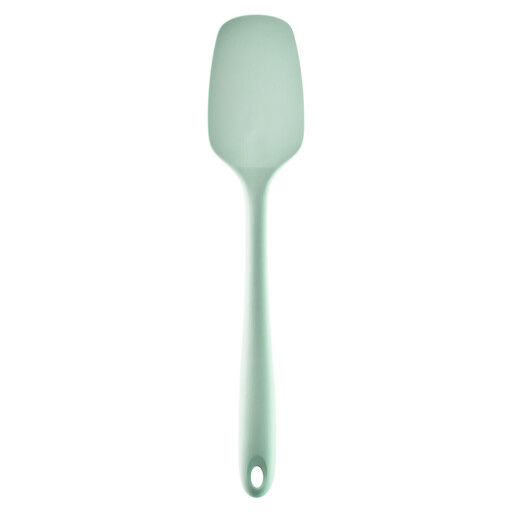
Why This Fits Their Persona: A straightforward option for students, first homes and everyday family cooking, with a compact 28 cm length and a hanging loop for simple storage.
Its tapered silicone head is described for flipping, turning and serving, rather than offering a vague multi-tool promise. The product guidance also states to avoid open flames and recommends hand washing.
Heat-resistant silicone head; designed to be gentle on non-stick cookware; sage colour and hanging loop.
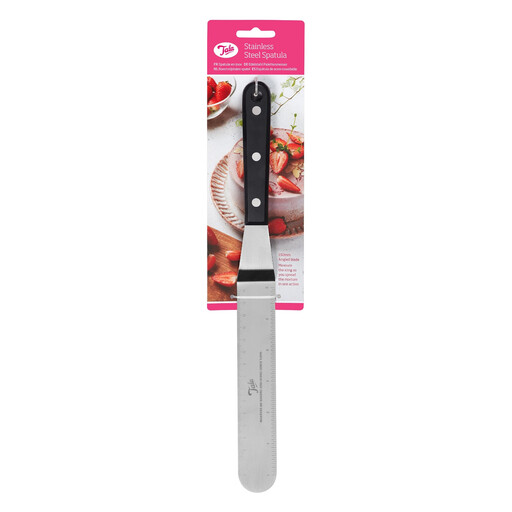
Why This Fits Their Persona: Suitable for home bakers who want one precise tool for icing, cake decoration and lifting delicate layers.
It is purpose-designed as an angled palette knife, so buyers are less likely to mistake a general spatula for a decorating tool.
Flexible stainless steel blade; integrated measurement guide; dishwasher-safe specification.
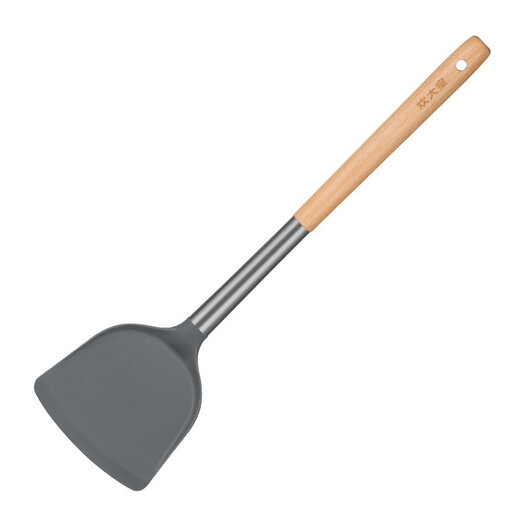
Why This Fits Their Persona: A practical match for frequent stir-frying, flipping and serving, particularly where several non-stick-safe tools are needed.
The listing specifies BPA-free, high-heat-resistant silicone and identifies solid and slotted spatula formats, making the contents clearer than a generic “multi-piece” label.
Slip-resistant wooden handles; solid and slotted formats; listed for frying, stir-frying, flipping and serving.
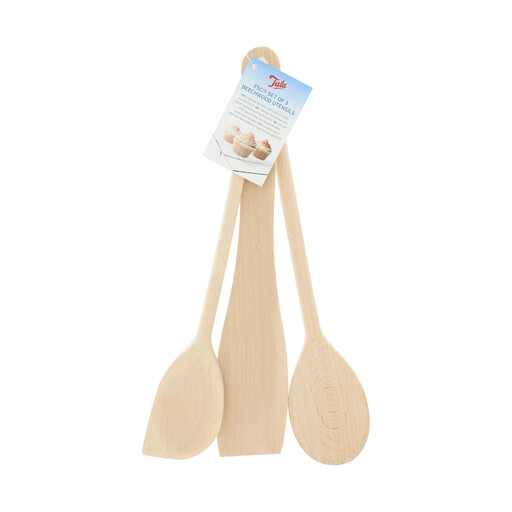
Why This Fits Their Persona: A useful choice for cooks who prefer the feel of natural beechwood and want separate tools for stirring, scraping and draining.
The three-piece contents are stated clearly: a spatula, slotted spoon and solid spoon. This avoids paying for repeated shapes that perform the same task.
FSC-certified beechwood is specified; three different utensil shapes; hand washing and occasional oiling are recommended for care.
We have compiled a complete, real-time list of products that fully satisfy these strict selection criteria and UK safety regulations.
They are commonly selected for non-stick cookware because silicone heads are softer than exposed metal edges. However, no utensil should be dragged aggressively across the pan or used after the head has split. Check the product description and care instructions before purchase.
Lifespan depends on heat exposure, cleaning and construction. Regular hand washing, avoiding open flames and storing the utensil without sharp objects can help preserve it. A loose join, damaged head or persistent odour indicates that replacement may be sensible.
Some are, but this is product-specific. For example, the Tala stainless steel palette knife is listed as dishwasher safe, while several silicone products recommend hand washing. Check the individual listing rather than assuming that all components of a utensil set share the same cleaning instructions.