
24/7 Customer Support

Free returns

Same-day & Next-day Delivery

Quality Guaranteed
Download the APP
Categories
As a 3D printing enthusiast, you understand the satisfaction of a perfectly executed print. Yet, standard PLA, while reliable, can sometimes produce models that lack visual impact, requiring extensive sanding and painting to achieve a professional finish. If you're looking to create objects with a vibrant, lustrous surface straight off the print bed, silk PLA filament is a material worth your attention.
This guide is designed to help you navigate the options available. We will explore what makes a quality shiny PLA filament and provide some practical purchasing advice. We will also highlight a few recommended products that offer unique aesthetic qualities for your creative projects.
Selecting the right filament goes beyond just picking a colour. Here are a few key factors to consider to ensure your prints are both beautiful and successful.
The term "silk" refers to the finish, but the colour application can vary significantly.
For any 3D printing material, consistency is key. Look for a filament with a tight diameter tolerance, typically 1.75mm ±0.02mm. A consistent diameter helps prevent nozzle clogs and ensures even extrusion, which is crucial for maintaining the smooth, reflective surface that defines silk PLA. Inconsistent filament can lead to visible banding and a less-than-perfect finish.
Tangled filament is a common cause of print failure. A neatly wound spool ensures the filament feeds smoothly into your printer without snagging. Additionally, PLA is hygroscopic, meaning it absorbs moisture from the air. Always look for filament that comes in vacuum-sealed packaging with a desiccant pouch, and store it in a dry environment to maintain its quality.
Based on their unique visual properties and material specifications, here are a few silk PLA filaments that can elevate your 3D printing projects.
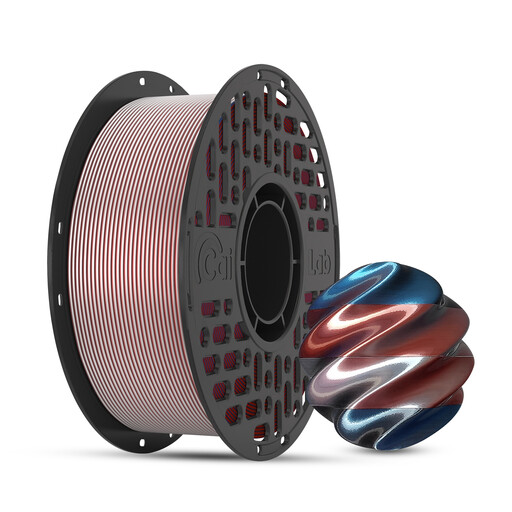
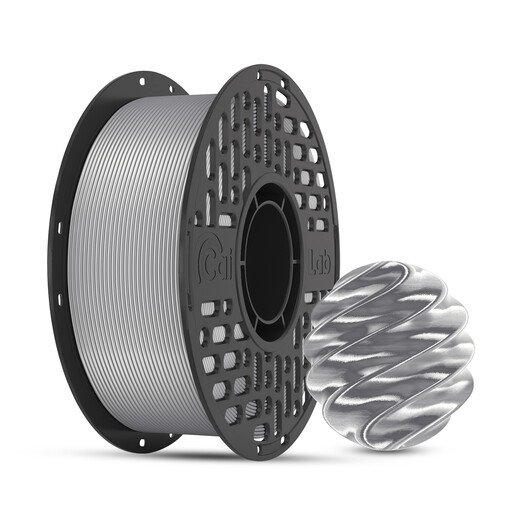
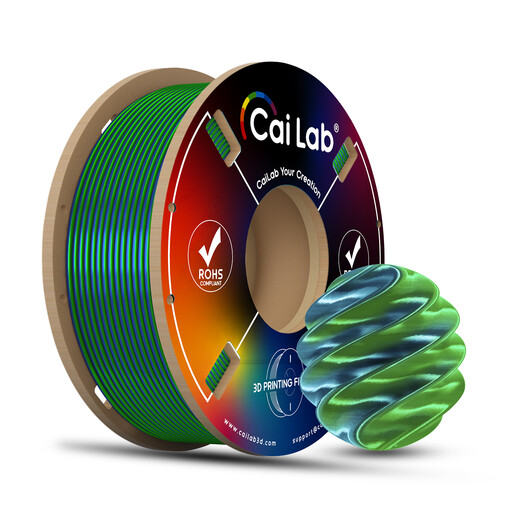
The recommendations above represent just a fraction of the possibilities. If you are searching for a different colour combination or a specific shade to match your project's needs, there are many other options to explore.
Discover a wider selection of filaments in our colour silk category to find the perfect material for your next creation.
The primary difference is aesthetic. Silk PLA is a composite material, typically standard PLA mixed with other polymers like TPU or PHA. This blend enhances light reflection, giving the finished print a shiny, silky-smooth surface that effectively hides layer lines. Regular PLA has a more matte or semi-gloss finish and tends to show layer lines more prominently. Functionally, silk PLA may be slightly more brittle than standard PLA.
No, you do not need a special printer. Silk PLA is designed to be printed on most FDM 3D printers that are compatible with standard PLA. A standard brass nozzle works perfectly well. Because some silk PLA formulations can be slightly more abrasive than standard PLA, you may want to consider a hardened steel nozzle for very long-term use, but it is not a requirement for getting started.
To maximise the sheen of a shiny PLA filament, consider a few adjustments. Printing at the higher end of the recommended temperature range for the specific filament often improves layer adhesion and increases gloss. A slightly slower print speed can also help, as it allows the material to flow more smoothly. Finally, ensure your printer's cooling fan is optimised—too much cooling can sometimes dull the finish, so you may need to experiment with fan speed to find the right balance.