Weekday lunchbox batch cooks
You prepare several fish parcels at once and need to check tray space, timer controls and whether the oven supports cooking across the shelves you plan to use.


For one tray of fish parcels, a correctly sized built-in single fan oven is usually sufficient: check that your tray fits and that the controls meet your needs. Choose a double oven if you regularly need a separate cavity for accompaniments or batch cooking. A food sensor is optional; whichever format you choose, confirm the fitting dimensions and electrical connection before ordering.
You prepare several fish parcels at once and need to check tray space, timer controls and whether the oven supports cooking across the shelves you plan to use.
You usually make one tray and want to assess whether a single built-in oven covers your routine without adding a second cavity you rarely use.
You prepare fish portions of varying thickness and would value an integrated food sensor to help monitor cooking progress. AEG says this feature is fitted only to selected models.
Choose it when: You normally bake one tray of fish parcels and do not regularly need another cooking temperature at the same time.
Trade-off: Side dishes needing a different temperature cannot use a separate cavity.
Choose it when: You regularly cook parcels alongside other food that needs its own cavity or temperature.
Trade-off: Two cavities need suitable housing, and their capacities and functions can differ.
| Concern | What to check | Who this matters to |
|---|---|---|
| Cooking across trays | Check usable tray space and the exact model’s stated shelf or multi-level cooking capability. | When several parcels need cooking during weekday preparation, I want the trays to fit without crowding and the shelf arrangement to suit the batch. Around 45% of consumers put reliable multi-parcel cooking first. |
| Separate cooking space | Check whether you need two cavities, then compare each cavity’s capacity and functions separately. | If accompaniments need another temperature while the fish cooks, I need a separate cavity rather than more space on the same shelf. Roughly 33% of consumers prioritise that two-cavity flexibility. |
| Cleaning and installation | Check the exact cleaning system and the oven’s fitting dimensions, power and connection requirements. | I want manageable clean-up without choosing an oven that does not fit or connect as required. Around 22% of consumers chiefly prioritise cleaning and installation certainty. |
A second cavity helps when you need independent cooking space or temperatures; it may see little use if lunchbox preparation normally involves one tray.
Plan around what you cook at the same time, and compare the capacity and functions of each cavity rather than only a combined litre figure.
Food sensors, steam functions, cleaning systems and multi-level settings depend on the model. For instance, Neff lists no steam technology for its B1DCC0AK3B oven.
Match the complete model number to its specification before relying on any particular function.
Electrical Safety First advises checking an oven’s power requirements because some models need hardwiring or a dedicated circuit. Neff specifies that its B1DCC0AK3B has no plug and requires electrical connection by an electrician.
Check the model’s connection and installation instructions against your kitchen, and arrange a qualified electrician where needed.
A required circuit change or electrical installation adds work before the oven can be used.
Oven features do not replace cooling and chilled storage after fish parcels have been cooked, particularly for a child’s lunchbox.
Plan when the food will cool and be refrigerated. NHS guidance for children’s food says to cool it as quickly as possible, ideally within 1 to 2 hours, and to eat food kept in the fridge within 2 days.
Relevant if you are comparing built-in single and double ovens or a model with added steam.
Relevant if multi-level hot-air cooking is important in a built-in single oven.
Relevant if you are comparing a built-in oven with cooking-progress monitoring or a specified cleaning system.
These built-in electric single and double ovens cover one-cavity fish-parcel preparation and routines that call for separate cooking space. Check the housing, electrical connection and usable tray space for the model that fits your routine.
 No image available
Consider its two cavities if fish parcels and accompaniments regularly need separate cooking space.
The 71-litre main cavity is described as having 3D Hotair for multi-level cooking; the oven also has an electronic timer and EcoClean Direct.
This is an eye-level built-in model. Confirm the housing, electrical requirements and usable tray dimensions before ordering.
 No image available
The single-cavity format suits a usual one-tray routine, while the stated multi-level function is relevant if you also prepare larger batches.
Its stated capacity is 66 litres, with 3D Hotair cooking on up to three levels and a GranitEnamel interior.
The oven requires hardwiring. Check the housing and circuit, plus timer operation and usable tray dimensions if those matter to your routine.
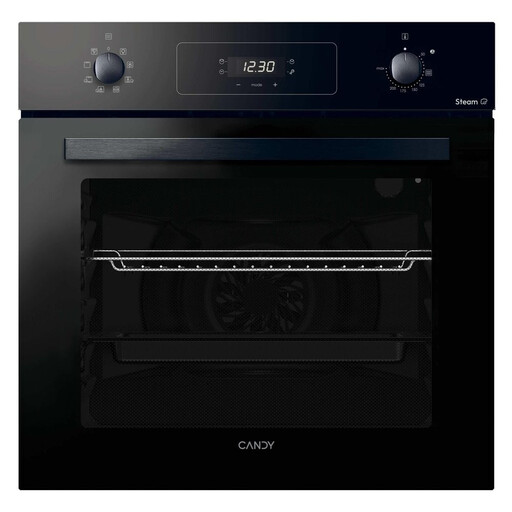 No image available
This single oven is an option for a usual one-tray lunchbox batch when a digital timer is useful.
It is described as fan-assisted, with a 65-litre capacity, rotary controls and Aquactiva steam cleaning.
Check the permitted electrical connection method before installation; no plug is supplied. Confirm tray dimensions and multi-level capability if you plan to use several trays.
 No image available
Its separate cavities are relevant if you regularly prepare parcels alongside food needing another cooking space.
The stated capacities are 72 litres for the fan-assisted main oven and 38 litres for the top oven. The model also lists a programmable timer and catalytic liners.
It is described as an eye-level oven requiring hardwiring. Confirm the housing, electrical supply and usable tray dimensions.
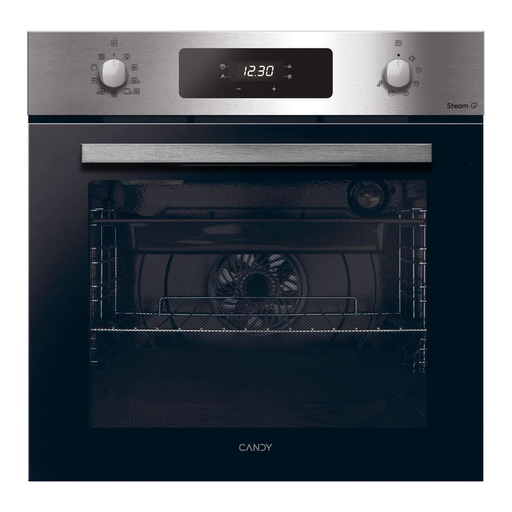 No image available
Consider this single-cavity model if you usually prepare one tray and want to compare pyrolytic cleaning with other cleaning systems.
It is described as a 71-litre oven with fan-assisted modes, a timer and pyrolytic cleaning.
Its instructions call for shelves and trays to be removed before a pyrolytic cycle. Check the installation opening, electrical connection and usable tray dimensions before buying.
No, not if you usually bake one tray and a correctly sized single oven fits it. A double oven becomes useful when you regularly need a separate cavity for accompaniments or food cooked at another temperature.
A food sensor can help you monitor cooking progress if the exact oven includes one and you can use it as instructed with your parcels. AEG says the feature is fitted only to selected models; it does not replace appropriate handling and storage after cooking.
Check the model’s fitting dimensions, power requirement and electrical connection against your kitchen. Electrical Safety First advises that some ovens need hardwiring or a dedicated circuit, so arrange a qualified electrician where the installation requires one.
Yes, compare the energy information for the exact models you are considering rather than relying on a brand-wide description. GOV.UK guidance explains that energy labels are displayed at the point of sale, including online, for products covered by energy-labelling requirements.
Cool and chill them promptly after cooking. NHS guidance for children’s food says to cool food as quickly as possible, ideally within 1 to 2 hours, then refrigerate or freeze it; food kept in the fridge should be eaten within 2 days.