Batch-muffin hosts
You need to bake several trays of carrot muffins for a gathering. Heat distribution and temperature accuracy are worth checking if consistent rise and browning matter to you; Which? includes these factors in its oven testing.


If carrot muffins are the main oven task and you bake at one temperature, start with a full-size single oven and look for independent evidence of even heating and temperature accuracy. A double oven makes more sense when you regularly cook the muffins alongside a dish needing a different temperature or timetable, provided both cavities fit your dishes and the appliance fits your kitchen. A fan setting or second cavity alone does not establish better baking results.
You need to bake several trays of carrot muffins for a gathering. Heat distribution and temperature accuracy are worth checking if consistent rise and browning matter to you; Which? includes these factors in its oven testing.
You plan to bake muffins while preparing another course. Separate cavities let you set different temperatures, but the smaller cavity still needs to fit the dish you intend to cook in it.
You need an oven that suits an existing cabinet or under-worktop space. Check the housing measurements and electrical requirements before comparing cooking features.
Choose the oven format around the gathering menu and the space available. A freestanding cooker is a different route if you also need a hob and have a suitable kitchen gap; a compact oven calls for a closer check of tray space if several muffin batches are planned.
Consider it: when muffins are the main task and one cooking temperature usually suffices.
Accept: another dish cannot cook at a different temperature in a separate cavity; a fan function is not proof of even baking.
Consider it: when muffins and another course regularly need separate temperatures in a tall cabinet installation.
Accept: the second cavity may restrict which trays or dishes fit, and the housing must accommodate the taller appliance.
Consider it: when you need two cavities below a worktop rather than in a tall cabinet.
Accept: check main-cavity and tray dimensions rather than assuming they match those of a tall built-in double oven.
| Concern | What to check | Who this matters to |
|---|---|---|
| Even baking | Look for independent heat-distribution and temperature-accuracy results. Check how many shelves the exact model supports for multi-level cooking. | I want several trays of muffins to rise and brown consistently without having to rely on a feature name as reassurance. Around 36% of consumers put baking consistency first. |
| Usable capacity | Compare each cavity’s capacity and internal dimensions with your muffin trays and other dishes. | When muffins share the menu with a dish needing a different temperature, I need space to cook them separately. For around 29% of consumers, that flexibility is the primary concern. |
| Installation fit | Measure the housing or gap, then check the model’s installation instructions and electrical connection requirements. | If I am replacing a fitted oven, the new appliance has to fit the kitchen and its available electrical supply. Installation fit comes first for around 21% of consumers. |
| Cleaning and energy information | Identify the exact cleaning system and compare energy information for the relevant cavities and programmes. | After cooking for a gathering, I want to understand the cleaning work and compare the oven’s energy information. Around 14% of consumers make those considerations their primary concern. |
A fan or multi-level programme describes a cooking function, not how accurately a particular oven holds its temperature. Which? assesses heat distribution as part of its baking-related oven testing.
Check independent results for the model where available, especially if baking several trays without rotating them matters to you.
The smaller cavity may not accommodate the muffin tray, tin or gathering dish you have in mind.
Compare the usable dimensions of each cavity with your cookware before deciding whether two ovens will help.
Built-in, built-under and freestanding ovens require different spaces. Some fitted models also require hard-wired installation rather than a standard plug connection.
Use the exact model’s installation instructions to check the measured space, ventilation requirements and electrical supply before ordering.
Energy information can help compare consumption on the stated basis, but it does not tell you whether muffins will brown evenly or whether the controls hold the selected temperature.
Check the energy label and product information alongside separate evidence about baking performance and the cavity space you need.
Bosch has single, tall built-in double and built-under double models relevant to these different kitchen layouts.
John Lewis & Partners lists NEFF built-in ovens with differing formats and cleaning features.
The Candy FCI9D405X is a built-in double-oven example for shoppers considering separate cavities.
These built-in single and double ovens offer different ways to plan muffin baking and the rest of a gathering menu. Choose the format that fits your cooking schedule, then check the exact appliance against your kitchen space.
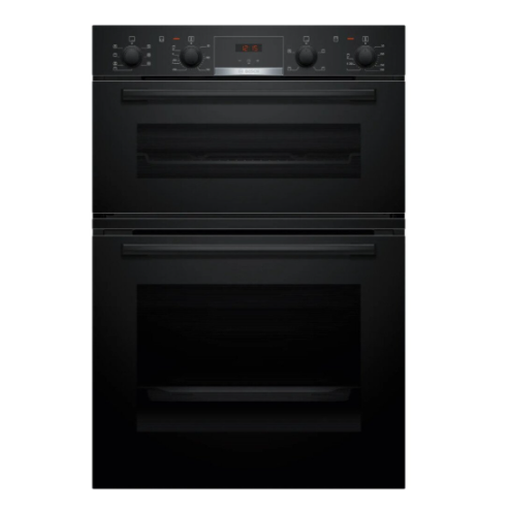 No image available
Consider the separate cavities if muffins and another dish need different cooking temperatures.
Check each cavity’s usable dimensions, the required housing and electrical connection before ordering.
 No image available
The double-oven layout is worth considering when muffins and another course need separate cooking schedules.
The name identifies a 90 cm format; confirm the appliance and cavity dimensions, housing fit and electrical requirements for this model.
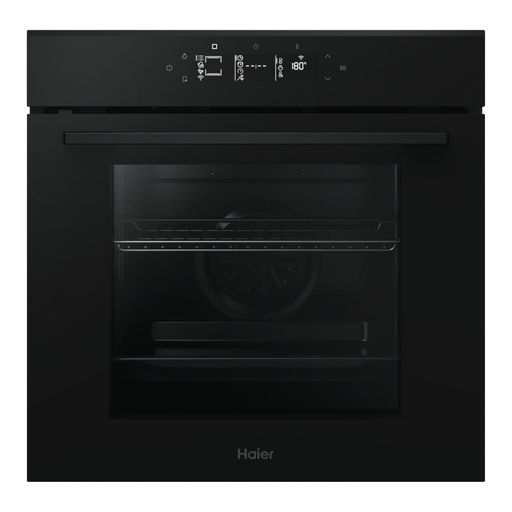 No image available
The 70 L single cavity is an option when muffins are the main oven task and a second temperature is not needed at the same time.
If baking across several shelves matters, check the supported cooking modes and levels, as well as the cut-out and electrical requirements.
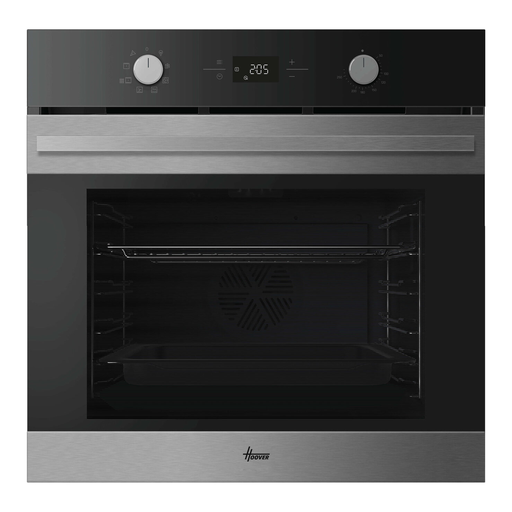 No image available
The 78 L single cavity may appeal if you want one oven for a larger batch rather than two separate cooking temperatures.
Confirm the exact fan and multi-level baking modes before relying on it for several trays, and check its housing dimensions.
 No image available
Consider a single oven if the muffins and other dishes can share one cooking temperature or be cooked in turn.
If several trays must bake together, check the model’s supported shelf arrangements and independent baking results where available; confirm installation requirements too.
No. A fan or hot-air mode can be useful for multi-shelf cooking, but it does not establish how evenly a particular oven heats or how closely it holds the selected temperature. Look for independent model-specific results where available; Which? assesses heat distribution and temperature accuracy in its oven testing.
A double oven is useful when you regularly bake muffins while another dish needs a different temperature or timetable. Check each cavity separately: retailer information lists the Bosch MBA533BS3B tall built-in model with 71-litre and 34-litre cavities, while the Bosch NBS533BS0B built-under model has 47-litre and 34-litre cavities. Those figures describe the named models, not every double oven.
Measure the available housing height, width and depth, then compare them with the exact oven’s installation instructions, including any ventilation clearances. Confirm its electrical connection requirements as well; do not assume an existing socket or a nominal appliance width establishes compatibility.
No. An energy label helps you compare the stated energy information for an oven within its applicable scope, not its heat distribution or temperature accuracy. Use the product’s energy information for that comparison and assess baking performance separately.