What to check before buying
Start with where breakfast will be made, then compare the exact pack's portion, ingredients and preparation instructions.
| Priority |
What to check |
Your needs |
| Preparation |
Check whether a bowl is needed, which liquid is required and the stated microwave or hot-water method. Follow the pack's heating and standing-time instructions. |
I need breakfast to fit the time and equipment available before leaving, without relying on a bowl or microwave that will not be accessible. |
| Allergen suitability |
Read the current ingredient list, allergen statement and any gluten-free label. Check milk ingredients, cross-contact warnings and the individual dietary plan where relevant. |
I need to avoid choosing plain oats as a shortcut for checking whether the exact product suits a coeliac, wheat allergy, oat allergy or milk allergy requirement. |
| Flavour and ingredients |
Compare plain and flavoured recipes by their ingredients and nutrition panel. Check sugars and salt on the same basis, such as per serving or per 100 g. |
A plain base lets me choose toppings separately, while a flavoured sachet may be preferable when flavour is important for the person eating it. |
| Portion size |
Check the dry weight of each sachet or pot rather than relying on the term “single serve”. Consider whether the format is a 27 g sachet, a larger sachet or a 70 g pot. |
I want a measured breakfast portion that suits the eater's appetite rather than an unmeasured bag or a pot that may be larger than needed. |
Joybuy single-serve oat options
These Joybuy options cover plain and flavoured single-serve oat sachets for breakfasts prepared with a bowl, liquid and microwave access.
 No image available
Quaker Oat So Simple Big Bowl Original 6 Pack 231g
Plain 38.5 g sachets suit a quick home breakfast where a bowl, water or milk and a microwave are available.
The listing states 100% wholegrain rolled oats and a 2½-minute preparation method.
Check the current pack label and individual dietary plan where gluten-free or wheat-allergy suitability matters.
Joybuy
 No image available
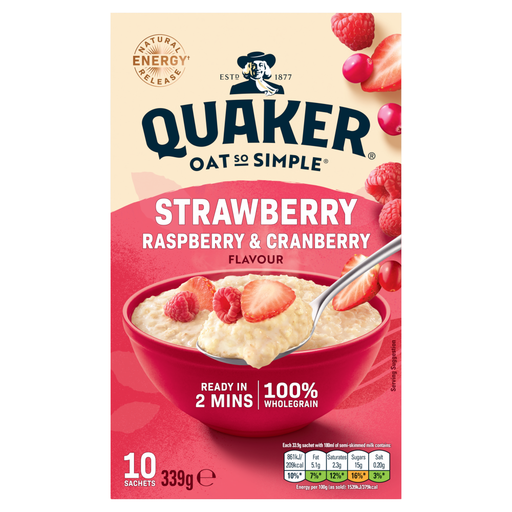
Quaker Oat So Simple Strawberry, Raspberry & Cranberry 10 Sachets 339g
This berry-flavoured option provides ten measured 33.9 g servings for mornings with a bowl, milk and microwave available.
The listing states a two-minute microwave method and includes mixed-berry flavouring and fruit pieces.
It contains cereals containing gluten and oats, with possible barley, soya and wheat presence stated on the listing; it also lists 19 g sugars per 100 g.
Joybuy
 No image available
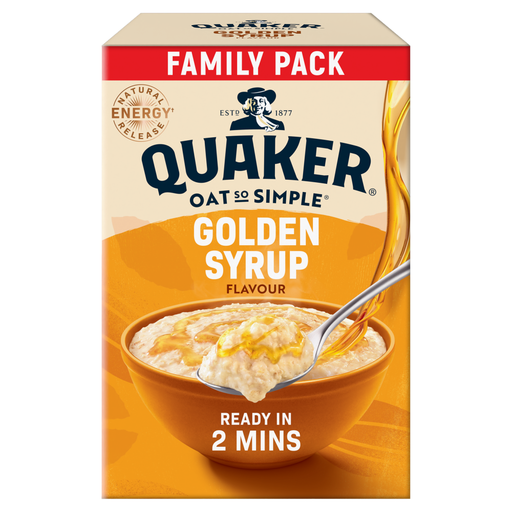
Quaker Oat So Simple Golden Syrup Family Pack 20 Sachets 720g
Twenty 36 g golden-syrup sachets suit households that want individual portions for repeated breakfasts.
The listing states a two-minute microwave method followed by a one-minute standing time.
The ingredients include sugar and salt; the listing states 6.4 g sugars and 0.20 g salt per 36 g sachet. It contains oats and may contain barley, wheat and soya.
Joybuy
 No image available
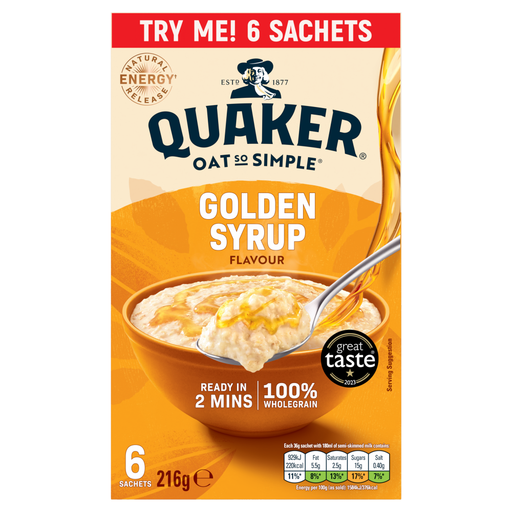
Quaker Oat So Simple Golden Syrup Sachets 6 Pack 216g
This six-sachet pack is for a flavour-led breakfast routine with a bowl, milk or water and microwave access.
Each sachet is stated to be 36 g and prepared in a bowl in two minutes.
The listing states added sugar and salt, with 18 g sugars and 0.56 g salt per 100 g; it contains oats and may contain barley, soya and wheat.
Joybuy
 No image available
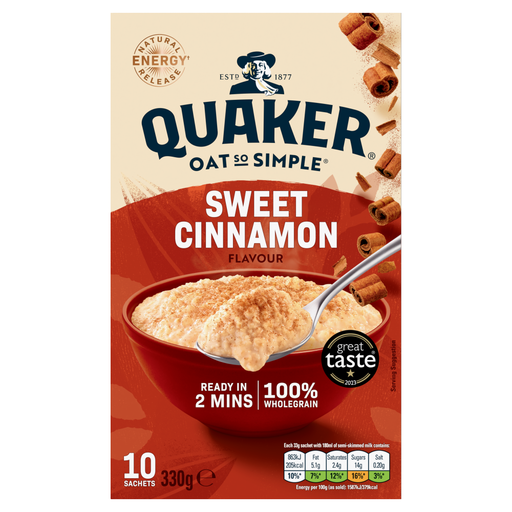
Quaker Oat So Simple Sweet Cinnamon Porridge 10 Pack 330g
This cinnamon-flavoured ten-pack suits a quick breakfast where milk or water, a bowl and a microwave are available.
The listing states a two-minute microwave method followed by a one-minute standing time.
It contains sugar and lists 22 g sugars per 100 g. The product contains oats and is produced in a facility that processes wheat, so check the current pack label for dietary suitability.
Joybuy
Frequently asked questions
Can I assume all instant oats contain gluten?
No. Ordinary oat products can be unsuitable for coeliac disease because oats may be contaminated with wheat, barley or rye, while some products are labelled gluten free. The Food Standards Agency states that food labelled gluten free in the UK must contain no more than 20 mg/kg gluten, and oats must still be declared as an allergen.
Are gluten-free oat sachets suitable for every child with coeliac disease or wheat allergy?
No. Coeliac UK says most people with coeliac disease can tolerate gluten-free oats, but a small number remain sensitive to avenin. The cited Quaker gluten-free sachet page also says it may not suit people with wheat allergy, so use the individual dietary advice and current pack label.
Can a sachet be packed as a school breakfast?
A dry sachet is portable, but it needs safe preparation with a bowl and the stated liquid. Product instructions for the cited sachets use microwave or hob preparation, so confirm the school's current food, allergen and hot-water arrangements before packing one.
When is a porridge pot more practical than a sachet?
A pot is more practical when a bowl is unavailable but safe boiling water or microwave access is available. Check its portion and ingredients: the cited M&S pot is 70 g and contains dried whole milk, while the Flahavan's pot also includes sugar and skimmed milk powder.
Should I compare sugars per 100 g or per serving?
Use both, starting with the serving likely to be eaten. Per-sachet figures show the immediate breakfast portion, while per-100-g figures help compare recipe concentration; keep the preparation basis consistent when comparing dry oats with oats made using milk.


