What to check before buying
Start with the equipment available that evening, then compare the portion, ingredients and preparation basis on the pack.
| Priority |
What to check |
Your needs |
| Preparation method |
Check whether the product needs a microwave, hob or boiling water; follow the stated liquid amount and standing time; confirm whether a bowl is needed. |
I need a bowl I can make with the appliance available. A microwave sachet and a kettle-prepared pot are different formats, not interchangeable instructions. |
| Portion and evening meal plan |
Compare the dry portion weight and the liquid used; check whether toppings or side foods are part of the meal you intend to make. |
A defined sachet or pot helps me avoid measuring, but I decide how substantial dinner becomes through the liquid and additions. |
| Allergens and gluten-free status |
Read ingredients and precautionary statements for each variant; look for an explicit gluten-free label where required; check the current physical pack. |
I need to know about oats, milk, soy, wheat, barley, nuts or peanuts before choosing a flavour or format. |
| Nutrition comparison basis |
Compare like-for-like prepared servings; note whether nutrition is stated for dry mix, water preparation or milk preparation; distinguish added ingredients such as sugar or soy protein. |
If protein or sugars matter to me, I compare the serving as I will actually prepare it rather than treating different preparation bases as equivalent. |
Joybuy product options
Joybuy options for a fast single-serve oat bowl, including microwave sachets and a hot-water pot.
 Image unavailable
Quaker Oat So Simple Peanut Butter Protein Sachets, 8 Pack 344g
A portioned option for a microwave or hob-prepared evening oat bowl when a higher-protein dry mix is relevant to your meal plan.
Each 43 g sachet uses 180 ml water or milk and has a stated 2½-minute microwave method. The dry mix lists 22 g protein per 100 g and 16% soy protein.
Contains oats and soya; the listing also states it may contain milk, peanuts and nuts. The protein figure is for dry mix, not a prepared bowl.
Joybuy
 Image unavailable
Quaker Oat So Simple Golden Syrup Porridge Pot, 57g
A self-contained option for a kettle-only setting, with no separate bowl or measuring needed.
The 57 g pot is stated to be ready after adding hot water and waiting two minutes. It lists 70% rolled oats, skimmed milk powder and sugar.
Contains cereals containing gluten, milk and oats. The listing gives 12 g sugars per serving; check the physical pack for current precautionary allergen information.
Joybuy
 Image unavailable
Quaker Oat So Simple Big Bowl Original, 6 Pack 231g
A plain microwave sachet for a solo eater who wants flexibility over liquid and toppings.
Each 38.5 g original-oat sachet can be made with water or milk and has a stated 2½-minute microwave method. The listing describes it as 33% bigger than a standard 27 g sachet.
Check the physical pack if gluten-free suitability or precautionary cross-contact information matters. Toppings and other foods determine how substantial the finished bowl becomes.
Joybuy
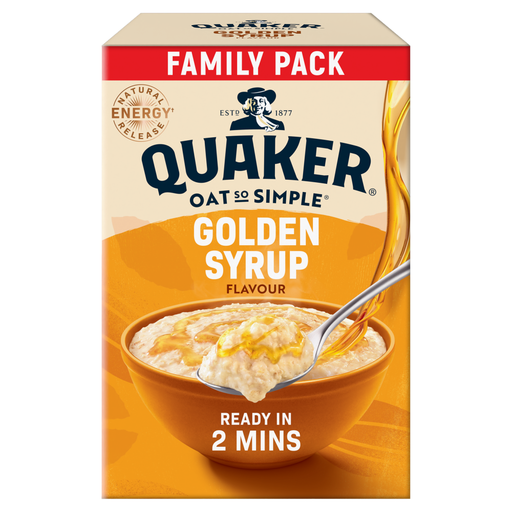 Image unavailable
Quaker Oat So Simple Golden Syrup Family Pack, 20 Sachets 720g
A multi-sachet cupboard option for repeat microwave preparation of individual portions.
One 36 g sachet uses about 180 ml milk, followed by a two-minute 900 W microwave step and a one-minute stand. The box contains 20 sachets.
Contains oat gluten and may contain barley, wheat and soy. The listing gives 6.4 g sugars per 36 g dry sachet and specifies milk and microwave preparation.
Joybuy
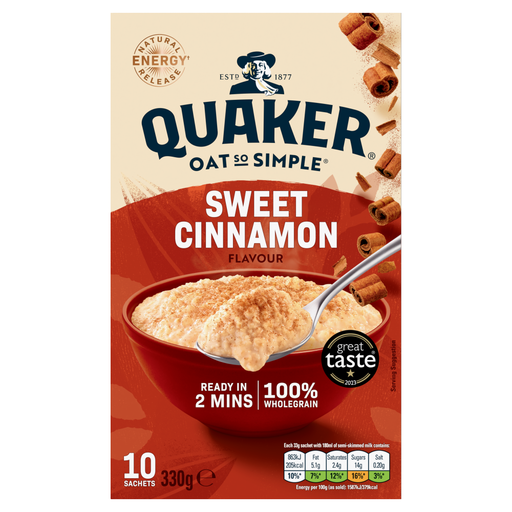 Image unavailable
Quaker Oat So Simple Sweet Cinnamon Porridge, 10 Pack 330g
A flavoured microwave porridge option for a quick bowl using milk or water.
The listing gives a two-minute microwave method with 180 ml liquid, stirring halfway through, then a one-minute stand. It is supplied as a 10-pack.
Contains oats and is produced in a facility that processes wheat. Check the physical pack for gluten-free suitability, serving weight and prepared-bowl nutrition if those details are important to your choice.
Joybuy
Frequently asked questions
Can a single-serve instant oat sachet be dinner?
It can be a quick light meal or snack, but a sachet or pot is only the starting point. The preparation liquid and any additions determine how substantial the finished bowl is for your own evening meal.
Should I choose a microwave sachet or a hot-water pot?
Choose a sachet when you have a microwave-safe bowl and can follow its stated liquid amount and cooking time. Choose a pot when you have boiling water but no microwave; Tesco’s cited instant-oat pot is explicitly not suitable for microwave cooking.
Are ordinary oat sachets suitable for a gluten-free diet?
Do not assume so. Choose a product explicitly labelled gluten free where this is required; Coeliac UK explains that terms such as 100% oats, pure oats or organic do not establish gluten-free status, and some people with coeliac disease remain sensitive to gluten-free oats.
Which allergen checks matter most?
Read the current pack’s ingredients and precautionary statements every time. The cited products include possible wheat, barley and soya in Quaker Original, soy protein in Quaker Protein, and milk plus possible peanuts, nuts and wheat in Tesco’s pot.
Do I need to use milk?
No universal rule applies. The cited Tesco Natural Oats sachets use water, while M&S and Flahavan’s state that water or milk can be used; Quaker’s cited Original and Protein instructions use milk. Follow the product’s own instructions and compare nutrition using the same preparation basis.


