Who this may suit

Solo breakfast eaters who count carbohydrates

A repeatable cereal amount can be useful when carbohydrate counting is part of an insulin plan. Count the cereal and the milk or yoghurt together rather than judging the meal from the sugars figure alone; University Hospitals Coventry and Warwickshire NHS Trust advises using total carbohydrate on labels.

People with type 2 diabetes managing portions

Those wanting a quick cereal breakfast can compare total carbohydrate, fibre, wholegrain ingredients and the actual bowl size. Diabetes UK notes that wholegrain cereals may release glucose more slowly, particularly for people with type 2 diabetes.

Muesli buyers with allergies or intolerances

Convenience should not replace an exact label check. The examples discussed here include cereals containing gluten, milk and nuts, with some products also carrying precautionary allergen information.

Buying priorities

Start with the carbohydrate in the breakfast you will actually eat, then check portion basis, ingredients and allergens.

Priority What to check Your needs
Total carbohydrate Use total carbohydrate rather than only “of which sugars”. Check the dry cereal amount and any milk, yoghurt or fruit added. Compare the stated serving with the amount eaten. I need to count the complete breakfast, not just the cereal in the packet. This is especially relevant if carbohydrate counting forms part of my treatment plan.
Grain, fibre and sugars Compare fibre, total carbohydrate and sugars on like-for-like portions. Treat wholegrain and no-added-sugar wording as product information, not a shortcut around the nutrition panel. I want to compare mueslis without assuming that a fruit-and-nut blend or a front-of-pack claim suits my meal plan.
Portion format Check the sachet or pot weight. For a bulk pack, use scales or a consistent measure when a repeatable amount matters. Include the serving basis on the label. A sealed portion may help me avoid over-pouring, while a weighed bowl lets me choose an amount that fits my own guidance.
Allergens and ingredients Read highlighted allergens and any “may contain” statement for the exact variant. Recheck the current pack after recipe or packaging changes. I need a regular breakfast that accounts for cereals containing gluten, milk, nuts and possible cross-contact warnings.

Common buying pitfalls

  • Treating “no added sugar” as meaning low carbohydrate

    Total carbohydrate still matters for carbohydrate counting. Alpen No Added Sugar lists 29g carbohydrate per 45g serving, despite its no-added-sugar name.

    Compare total carbohydrate for your actual portion first, then consider sugars, fibre and ingredients. If you use milk or yoghurt, include it in the calculation.

  • Assuming a sachet or pot is the right portion for everyone

    A fixed portion is convenient, but it may not match an individual meal plan. Diabetes UK notes that portion needs vary between people.

    Use the pack amount as a starting point rather than a prescription. Weigh cereal from a bulk pack when a different amount is more appropriate for your own diabetes-care advice.

  • Ignoring the nutrition of toppings and dairy

    Milk, yoghurt, fruit and dry cereal can all contribute carbohydrate. The Activia Raspberry Chia Muesli pot lists 26g carbohydrate per 165g serving, while a dry sachet does not include your chosen accompaniment.

    Calculate the full breakfast rather than only the cereal component. Use a per-serving figure only when you eat that exact serving.

  • Overlooking allergens because muesli sounds natural or wholegrain

    Muesli commonly combines cereals, nuts and dried fruit. The examples include wheat, oats, barley, rye, milk, almonds and hazelnuts, alongside some precautionary allergen statements.

    Read the current pack label every time you buy, particularly after a recipe, retailer or packaging change.

Relevant muesli brand references

Alpen

A mainstream UK muesli range with Original and No Added Sugar products, including Original sachets in a 45g individual format.

  • Alpen No Added Sugar lists 29g carbohydrate, 8.1g sugars and 3.6g fibre per 45g serving.
  • No added sugar does not mean low carbohydrate, and the product contains wheat, oats, milk and nuts.

Dorset Cereals

A fruit-, nut- and seed-led muesli range sold in UK grocery retail, including no-added-sugar muesli listings.

  • Dorset Tasty Toasted lists 28g carbohydrate, 8.5g sugars and 3.2g fibre per 45g serving.
  • Dried fruit, nuts and gluten-containing cereals remain relevant ingredients to assess, and naturally occurring sugars still count in the nutrition panel.

Lizi's

A specialist cereal brand offering muesli alongside high-protein, digestive-health and lower-sugar options.

  • Lizi's describes its products as high in fibre, lower in sugar and GL tested.
  • These are the brand's own claims, so check the nutrition panel and ingredients for the exact muesli and serving size.

Jordans

A mainstream muesli brand with Natural, Fruit and Nut and Berry Burst variants.

  • Natural Muesli lists 30.6g carbohydrate, 4.7g sugars and 4.1g fibre per 45g bowl.
  • It contains wheat, oats, barley, almonds and hazelnuts; the manufacturer advises people with nut allergies not to eat it because various nuts are handled in production.

Rude Health

An organic, plant-based and wholegrain muesli option led by The Ultimate Muesli.

  • The brand describes The Ultimate Muesli as high fibre, organic, plant based and whole grain.
  • Its ingredients include oats, dried fruit, barley, rye, nuts and seeds, and the product may contain traces of milk.

Tesco

A UK supermarket retail route with muesli listings across a range of brands and own-label products.

  • Tesco Every Day Muesli lists 31.35g carbohydrate, 2.1g sugars and 4.4g fibre per 50g serving.
  • This product is a 1kg pack, so the portion needs measuring; Tesco also advises shoppers to read the label because food information can change.

Joybuy product options

Joybuy product options for a weighed portion from a larger no-added-sugar muesli pack.
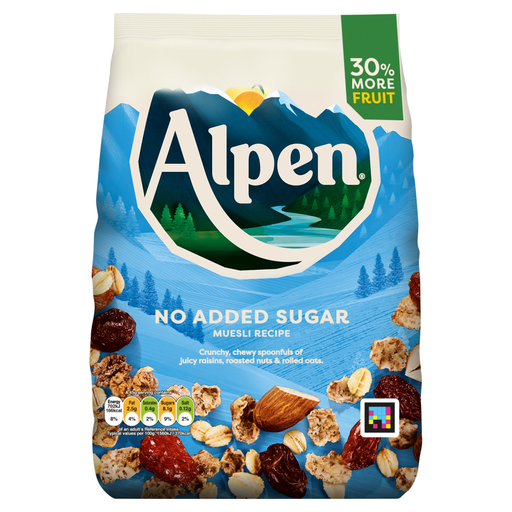
Alpen No Added Sugar Muesli 950g

Alpen No Added Sugar Muesli 950g

For a measured dry-cereal breakfast when a repeatable portion matters more than a ready-portioned sachet.

950g bulk pack. Check the current pack for total carbohydrate per portion, measure the amount you eat, and include any milk or yoghurt separately.

Contains wheat, oats, milk, almonds and hazelnuts; check the current allergen statement before buying.

Joybuy

Frequently asked questions

Is muesli labelled “no added sugar” automatically suitable for diabetes?

No. Check total carbohydrate for the portion you will eat. Alpen No Added Sugar lists 29g carbohydrate per 45g serving, and University Hospitals Coventry and Warwickshire NHS Trust advises using total carbohydrate rather than only the “of which sugars” figure when carbohydrate counting.

Does a 45g sachet make muesli easier to manage?

It can make the dry cereal amount repeatable, but it suits you only if 45g fits your individual carbohydrate plan. It also excludes any milk or yoghurt; Diabetes UK notes that portion needs vary, and weighing food gives a more precise measure.

Should I compare sugars or carbohydrate first?

For carbohydrate counting, compare total carbohydrate first. Sugars remain useful nutrition information, but University Hospitals Coventry and Warwickshire NHS Trust specifically advises using total carbohydrate on food labels rather than “of which sugars”.

Are yoghurt-and-muesli breakfast pots a better diabetes-aware choice than dry muesli?

Not necessarily. The Activia Raspberry Chia Muesli pot has a fixed 165g serving, but it lists 26g carbohydrate and 18g sugars per pot. Compare the full serving with your own meal plan rather than choosing by format alone.

What allergen checks are important for muesli?

Check the current label for gluten-containing cereals, milk and nuts, plus any “may contain” statement. Muesli recipes vary and may include wheat, oats, barley, rye, milk, almonds or hazelnuts.