What to check before choosing
Start by deciding whether oats are the main warm bowl or one item on the table, then check preparation instructions and the exact pack label.
Larger pot for the main warm bowl
Choose it when: You want porridge to take a substantial role in brunch and a 65–70g serving suits the meal plan.
Keep in mind: A larger portion does not establish gluten-free or allergen suitability; check the exact label.
Plain oats for topping-led brunches
Choose it when: Fruit, yoghurt, nuts or other toppings are part of the planned brunch.
Keep in mind: Plain Quaker Original sachets are a multi-sachet format and need a microwaveable bowl or saucepan rather than a ready-to-use pot.
Small hot-water pot alongside other food
Choose it when: Porridge is one part of brunch alongside dishes such as eggs, fruit or pastries.
Keep in mind: A 45–50g pot may not match the role of a full main brunch bowl.
| Priority |
What to check |
Your needs |
| Portion and ingredients |
Compare dry weight, serving information, ingredients, sugars, fibre and protein on the same serving basis. Check whether milk powder or other ingredients fit the rest of the meal. |
I want the pot to suit the role it has in brunch rather than assuming every oat pot is nutritionally interchangeable. |
| Preparation method |
Check whether boiling water is required, how long the pot needs to stand and whether the exact pot can be microwaved. Sainsbury’s Original Pot requires about 170ml of boiling water and two to three minutes standing. |
I need porridge that works with the equipment available when brunch is being served. |
| Flavour and toppings |
Decide whether a plain oat base or a flavoured pot suits the planned toppings. Review milk ingredients where dairy matters to the meal. |
I want toppings to complement the oats rather than clash with an already sweetened or flavoured pot. |
| Role in the meal |
Compare 45–50g pots with larger 65–70g pots. Consider whether you are serving a single warm bowl, adding toppings or putting other dishes on the table. |
For a lighter brunch, a smaller pot can sit alongside other food; for a main warm bowl, I would start by comparing larger portions. |
| Allergens and gluten-free labelling |
Read the exact ingredients, emphasised allergens and precautionary statements. For coeliac disease, select an exact product labelled gluten free rather than relying on oats as an ingredient. |
I need the current pack label to match the dietary requirements of everyone being served. |
Joybuy product options
Joybuy product options for a lighter Sunday brunch where porridge is served alongside other dishes and boiling water is available.
 No image available
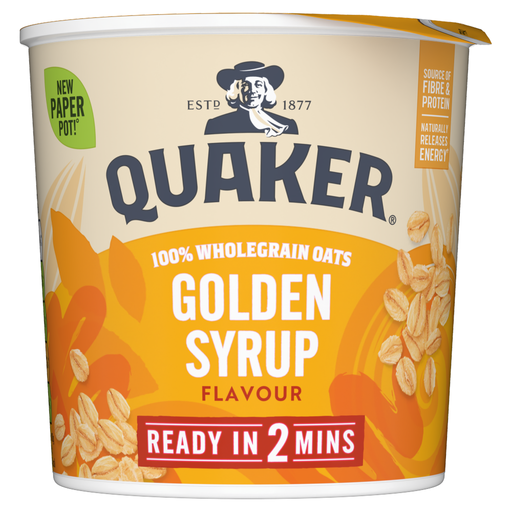
Quaker Oat So Simple Golden Syrup 57g
A single-serve option for Sunday brunch alongside other dishes, with hot-water preparation stated to take two minutes.
The golden syrup flavour may not suit a plain, topping-controlled oat bowl. The supplied product information notes skimmed milk powder and cereals containing gluten, so check the current physical label for individual allergen needs.
Joybuy
Questions about single-serve oat pots
Is a single instant oat pot substantial enough for Sunday brunch?
It depends on whether porridge is the main dish. Verified examples range from Quaker’s 45g Original Pot and Sainsbury’s 50g Original Pot to M&S Food’s 70g Traditional Porridge Pot; a 45–50g pot is more suited to brunch with other food, while a 65–70g pot is the stronger starting point for a main warm bowl.
Can I make these porridge pots in the microwave?
Do not assume so. Sainsbury’s verified Original Pot is not suitable for microwaving or reheating and is prepared with boiling water. Check the exact pack because preparation instructions differ between pots and sachets.
How much hot water does a single pot need?
Sainsbury’s verified Original 50g Pot uses boiling water to the indented line, approximately 170ml, followed by stirring and a two-to-three-minute stand. Use the fill line and the instructions on the exact product rather than guessing, as pot capacities differ.
Are ordinary instant oat pots suitable for coeliac disease?
Not automatically. Coeliac UK states that oat products not labelled gluten free should be avoided because oats can be contaminated with wheat, barley and rye. Choose an exact product labelled gluten free when this is required.
What allergen information should I check before serving an oat pot to a guest?
Check the ingredient list, emphasised allergens and any precautionary statements on the exact pack. GOV.UK explains that food businesses must provide information on regulated allergens used as ingredients, and the verified pot examples have different milk, cereal, nut and peanut warnings.


