Solo breakfast eaters who want a fixed oat portion
You eat porridge alone and want a stated dry amount without estimating from a large bag. Waitrose, Mornflake and Flahavan’s product information shows that sachet sizes can differ between products.


Choose a plain, single-serve sachet when a visible dry-oat amount and quick preparation help you keep breakfast consistent, but compare the oats with the milk and toppings you actually use. Plain 27g sachets from Quaker and Mornflake offer a smaller stated portion, while Flahavan’s sachets are 35g; a larger bag can be measured at home, but the NHS notes that weight management depends on total energy intake rather than the sachet alone.
You eat porridge alone and want a stated dry amount without estimating from a large bag. Waitrose, Mornflake and Flahavan’s product information shows that sachet sizes can differ between products.
You prefer plain oats so you can choose the milk, fruit, nut butter or other toppings and include them in your breakfast total.
You need a portable microwaveable option, while still checking nutrition on the basis you will actually prepare and eat.
Start with the dry portion, then compare the preparation method, ingredients and nutrition on the same basis. A sachet can make the oats easier to portion, but it does not include everything added at breakfast.
| Priority | What to check | Your needs |
|---|---|---|
| Total breakfast energy | Check whether calories are stated for dry oats or a prepared bowl. Match the listed milk volume to your own milk, yoghurt or water, and include toppings. | I want to see how the dry oats, liquid and usual extras fit together in my breakfast plan. Quaker lists 180 kcal for one 27g Original sachet prepared with 180ml semi-skimmed milk, while Mornflake lists 100 kcal for a dry 27g sachet, so these are not equivalent totals. |
| Portion size | Compare grams per sachet before comparing calories or fibre. Plain sachets in this group range from 27g to 35g, and pots can be larger again. | A clearly stated dry-oat amount helps me avoid repeatedly serving more than I intended. A 35g sachet is a different portion from a 27g sachet, even when both are described as plain. |
| Recipe control | Read the ingredient list and compare sugars per stated serving. Check whether a flavoured recipe includes sugar, dried fruit, milk powder, flavourings or salt. | I would rather decide whether sweetness comes from fruit, spices or another topping. Plain Quaker Original and Mornflake Original sachets list wholegrain oats with no added sugar. |
| Wholegrain, fibre and allergens | Check the exact pack for wholegrain-oat ingredients, fibre per serving and current allergen information. Compare like-for-like serving bases before drawing conclusions from nutrition figures. | I want wholegrain oats and clear fibre information, but I also need the current allergen statement to suit my dietary requirements. Mornflake lists 3.1g fibre per dry 27g sachet. |
Milk and toppings can change the energy, sugars, fat and protein in the bowl. A pack may show a prepared serving made with a particular milk volume that does not match yours.
Compare the dry oats, your chosen liquid and your usual toppings together. Use the pack’s preparation basis only when it reflects how you make porridge.
The plain sachets considered here range from 27g to 35g, so an “original” or “natural” description does not make servings directly equal.
Check the grams per sachet first, then compare calories and fibre on a matching serving basis.
Flavoured products can contain more sugars and salt than plain oats, and their serving sizes may also differ. Joybuy’s Quaker Golden Syrup sachet listing states 6.4g sugars and 0.20g salt per 36g sachet; Mornflake Original lists 0.3g sugars and less than 0.01g salt per dry 27g sachet.
If flavour matters, compare the exact nutrition panel per stated sachet and decide whether a plain base with your own fruit or spices would suit you better.
Manufacturing cross-contact statements differ by product and can make otherwise similar plain oat products unsuitable for particular allergies.
Read the current pack’s ingredients and allergen declaration every time you buy, especially for nut, milk, wheat, barley or gluten-related dietary needs.
A UK single-serve route through Oat So Simple Original, sold as 10 microwaveable 27g sachets.
Original Instant Porridge Sachets are supplied in 27g portions.
Natural Organic Porridge Oat Sachets are supplied as eight 35g portions.
The referenced range is focused on loose traditional and organic porridge oats rather than a single-serve sachet.
The retailer offers instant sachets, loose oats and porridge pots, including a 60g Original Porridge Pot in its category listing.
Dorset Cereals’ current range is centred on muesli and granola rather than a comparable single-serve porridge-oat sachet.
Joybuy product options for single-serve porridge breakfasts, including a plain larger-portion sachet and flavoured sachets or pots with stated serving information.
 No image available
A plain, individually portioned option for a solo breakfast where you want to choose the milk and toppings separately.
Each sachet is 38.5g and the listing states wholegrain rolled oats as the only ingredient, 142 kcal dry, 3.5g fibre and 0.4g sugars per sachet. It also states 254 kcal when made with 245ml semi-skimmed milk.
The 38.5g sachet is larger than the 27g plain-sachet route. Check the current pack nutrition panel because the listed salt figures conflict.
 No image available
A flavoured sachet option with a fixed portion and an approximately two-minute preparation method.
The listing states 136 kcal and 2.6g fibre per 36g sachet, or 221 kcal when prepared with 180ml semi-skimmed milk. It lists 7.7g sugars per sachet.
It contains sugar, dried fruit and flavouring, so it offers less control over sweetness than a plain oat base. Check the current allergen statement for wheat, barley and soya where relevant.
 No image available
A self-contained single serving for occasions when only hot water is available.
The listing gives nutrition per 57g pot and states two-minute preparation, 3.6g fibre and 12g sugars per serving.
It contains sugar and skimmed milk powder, so it is not a plain porridge option. Check the current pack if cereals containing gluten, milk or oats are relevant to your dietary needs.
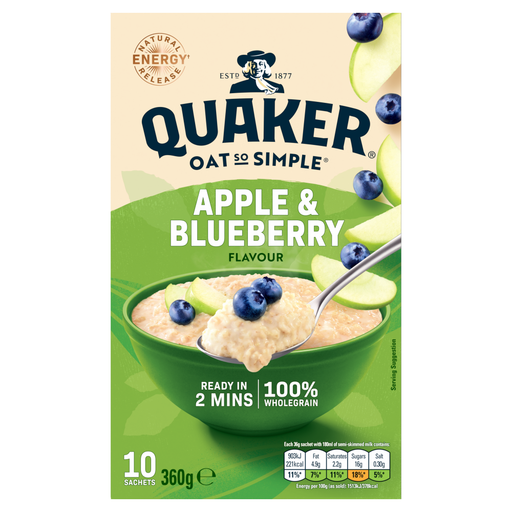
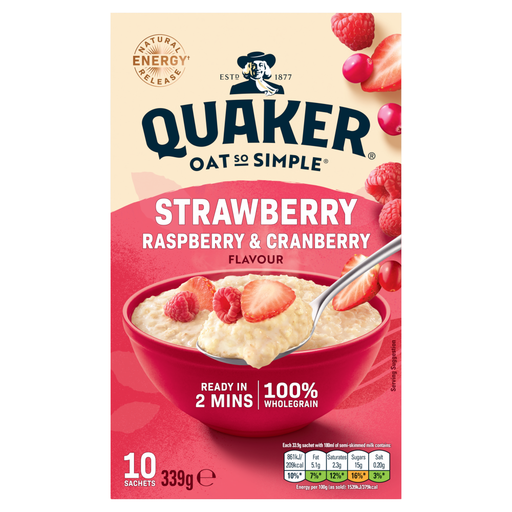 No image available
A portioned microwave sachet for a quick home or office breakfast.
The listing states 129 kcal and 2.6g fibre per 33.9g sachet, or 209 kcal when made with 180ml semi-skimmed milk. Preparation is stated as two minutes with milk.
It contains sugar and flavouring, so it is not equivalent to a plain no-added-sugar oat sachet. Check the current allergen declaration for barley, soya and wheat where relevant.
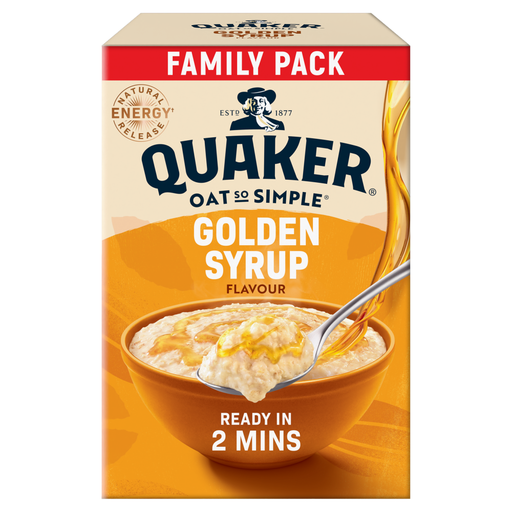 No image available
A multipack of fixed portions for repeatable breakfasts, prepared in a two-minute microwave method with approximately 180ml milk.
The listing states 2.6g fibre, 6.4g sugars and 0.20g salt per 36g sachet.
It contains sugar, natural flavourings and salt rather than plain oats. The prepared energy figure is not listed, so calculate your breakfast total using the milk and toppings you actually use.
No. A sachet can make the dry oat amount easier to see, but weight management depends on the total energy you eat and drink. The NHS states that weight loss requires a calorie deficit and notes that a manufacturer’s portion may differ from the amount you actually eat, so include milk, yoghurt, nut butter, syrup, fruit and other toppings.
Compare both, but use a prepared basis that matches how you eat it. Quaker’s listed Original sachet is 180 kcal when prepared with 180ml semi-skimmed milk, while Mornflake lists 100 kcal for its dry 27g sachet; these figures are not equivalent breakfast totals.
Use the nutrition panel and, where shown, front-of-pack traffic-light information. GOV.UK explains that traffic-light labels show calories, fat, saturates, sugars and salt, with green, amber and red indicating low, medium and high amounts; compare products on the same basis, such as per sachet or per 100g, and check whether milk is included.
Do not assume so. Products can contain or be exposed to other cereals or allergens during manufacture: Mornflake Original states that it is not suitable for nut, milk, wheat or barley allergy sufferers because of manufacturing methods, while Jordans says its porridge is made where nuts are handled. Check the exact current pack and choose a product specifically labelled for your dietary requirement where applicable.
Yes. GOV.UK guidance states that nutrition information must be declared on prepacked food packaging. Front-of-pack traffic-light labelling is used by some manufacturers and retailers as an additional comparison tool, rather than replacing the back-of-pack declaration.