Parents with confirmed hot-water access
For families whose school permits supervised or approved preparation. Compare the required liquid, heating method, serving size and current allergen statement; a pot can avoid packing a separate bowl.


Choose a dry single-serve sachet only when the pupil has an approved bowl and access to the required liquid and heating method. Choose a porridge pot when boiling water is definitely available but packing a bowl is impractical, while checking the current ingredient and allergen statement for the exact product.
For families whose school permits supervised or approved preparation. Compare the required liquid, heating method, serving size and current allergen statement; a pot can avoid packing a separate bowl.
For families looking for unflavoured single portions. Mornflake Original lists 100% wholegrain oat flakes, while Quaker Original lists wholegrain rolled oats; their precautionary allergen statements differ.
For pupils with a diagnosed dietary need or allergy plan: check the current pack, any required gluten-free claim and the school’s own allergy arrangements. Gluten-free oats can still present an oat-allergen issue.
Choose this when: the school permits preparation and a bowl, liquid and approved heating method are available.
Trade-off: sachets are compact but cannot be eaten straight from the packet, and allergen statements vary by product.
Choose this when: boiling water is available but carrying a separate bowl is impractical.
Trade-off: the pot is self-contained, but it still needs safe hot-water access and may include milk or precautionary allergen warnings.
Choose this when: the child requires a gluten-free product and the exact pack carries that claim.
Trade-off: a gluten-free claim does not mean the product is suitable for someone with an oat allergy.
| Priority | What to check | Your needs |
|---|---|---|
| Preparation at school | Check whether a bowl, liquid, microwave or boiling water is permitted. Follow the exact pack instructions and allow for standing time where stated. | I need a portion that can actually be prepared within the school’s approved arrangements, not simply one labelled single serve. |
| Ingredients and allergens | Read the current ingredient list and precautionary allergen wording. For a gluten-free requirement, check for the specific claim; the Food Standards Agency notes that oat remains an allergen even in gluten-free food. | The exact pack needs to fit the child’s dietary plan and the school’s allergy arrangements. |
| Portion and recipe | Compare the labelled portion size and whether the recipe is plain oats or includes milk powder, sugar, flavourings, fruit or salt. Do not assume that every sachet or pot has the same recipe. | I want a portion and ingredient list that suit the child, rather than treating every individual pack as interchangeable. |
Dry sachets need a bowl, liquid and heat. Pots also need boiling water and time to stand, so either format may be unsuitable during the school day.
Confirm the permitted preparation method first, then choose a sachet with a bowl and approved heating method or a pot with approved boiling-water access.
Quaker sachets may contain wheat, barley and soya; Mornflake Original is stated to be unsuitable for nut, milk, wheat and barley allergy sufferers; the Waitrose pot includes milk powder and may contain nuts.
Check the current exact pack whenever a product or recipe changes, and follow the child’s medical advice and the school’s allergy plan.
Gluten-free and oat allergy are different issues. The Food Standards Agency states that oat must still be emphasised as an allergen even when food is gluten-free or very-low gluten.
For a coeliac requirement, choose an appropriately labelled product and check the pack. For an oat allergy, do not choose an oat product simply because it carries a gluten-free claim.
A pot may reduce the need for a separate bowl but can include milk or nut-related restrictions and still requires hot water.
Compare unit pricing only after confirming that the format can be prepared at school and meets the child’s dietary requirements.
Quaker offers Original dry sachets and an Original Porridge Pot, making it useful when comparing bowl-and-microwave preparation with a hot-water pot.
A plain dry-sachet option for families seeking individually packed oat-only portions.
A larger plain organic dry-sachet option supplied as eight 35g portions.
An own-label instant porridge pot route for a self-contained format rather than a dry sachet.
A traditional loose-oat reference rather than a verified single-serve packed-lunch option.
Joybuy options for single-portion porridge in a school packed-lunch scenario, including dry sachets for approved bowl-and-microwave preparation and a self-contained hot-water pot.
 No image available
A plain dry-sachet option for schools that approve a bowl, liquid and microwave preparation.
Six individually sealed 38.5g sachets; stated ingredients are wholegrain rolled oats only. The stated method uses water or milk and microwave preparation for 2½ minutes. Check the current pack for allergen wording and whether the portion suits the pupil.
 No image available
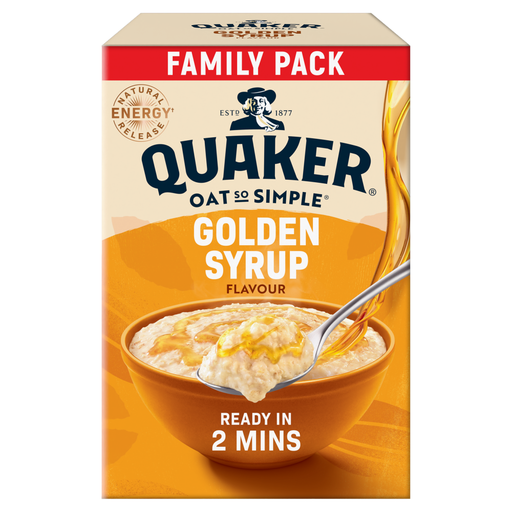
An individually portioned option where a school permits a microwaveable bowl, milk and microwave access.
Twenty 36g sachets with stated 180ml milk and two-minute microwave instructions. Contains sugar, natural flavourings and salt; the listing identifies oats and may contain barley, wheat and soya.
 No image available
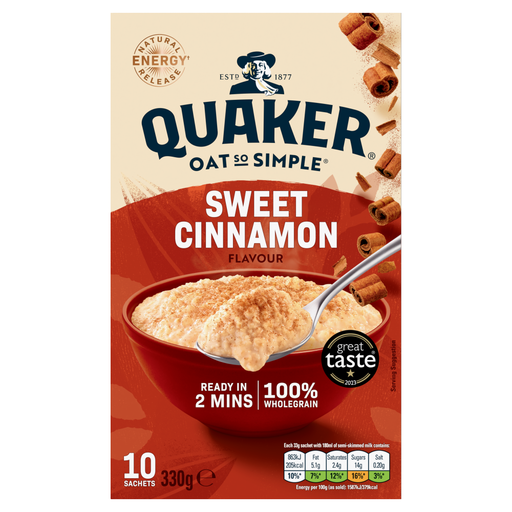
A flavoured sachet option for approved bowl-and-microwave preparation at school.
The stated method uses 180ml milk or water, a two-minute microwave cook and a one-minute standing period. Contains oats, sugar, cinnamon, natural flavours and salt; the listing notes production in a facility processing wheat.
 No image available
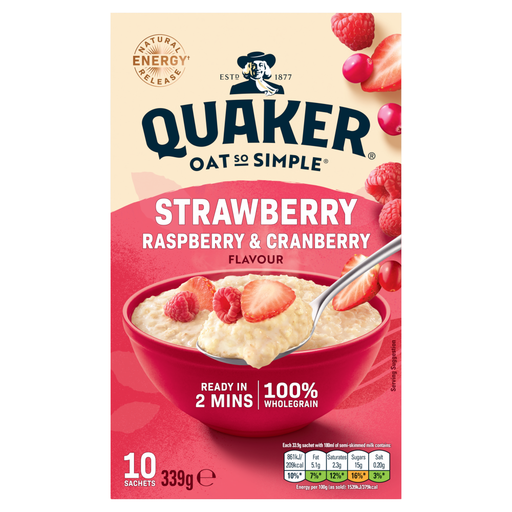
A fruit-flavoured single-portion format for schools where milk, a bowl and microwave use are approved.
Ten 33.9g sachets with a stated 180ml milk and two-minute microwave method. Contains sugar, mixed-berry flavouring and fruit pieces; the listing identifies cereals containing gluten and oats and may contain barley, soya and wheat.
 No image available
A self-contained pot for situations where approved hot-water access is available but packing a bowl is impractical.
One 57g pot with a stated hot-water method and two-minute wait. Contains skimmed milk powder, sugar, salt and natural flavourings; the listing identifies cereals containing gluten, milk and oats.
Yes, but only if the school allows the preparation arrangement and the pupil will have what the exact product requires. Quaker Original sachets require a bowl, 180ml milk and either a hob or microwave, so dry oats alone are not a ready-to-eat lunch item.
It can be easier because the pot replaces a separate bowl, but it still needs safe access to boiling water. The Waitrose Original Porridge Pot requires 170ml boiling water and a three-minute stand, is not suitable for microwave cooking and should not be reheated.
Do not assume so. Choose a product specifically labelled gluten-free where that is required and check the current pack; the Food Standards Agency defines gluten-free as no more than 20mg/kg gluten in food as sold, while oats must still be highlighted as an allergen.
No single UK-wide rule applies to every school. In England, the Department for Education’s allergy guidance states that schools must publish an allergy safety policy and have arrangements to reduce exposure to known allergens, so check the individual school’s current packed-lunch policy before sending oat products in.
No. Use the pack in hand and the child’s clinical or school dietary plan for the final decision, as recipes and label information can change.