Multi-tray family hosts
You want several trays of parcels ready close together. Usable shelf levels and the oven’s stated fan-baking mode matter more to you than a long list of programmes.


Choose a single fan oven if your trays can bake at the same setting and the exact model accommodates the shelf layout you need. A double oven is more useful when another dish needs a separate temperature or function, provided the appliance fits your kitchen and its electrical connection is suitable. Check usable tray positions and the stated fan mode rather than judging batch capacity by litres alone.
You want several trays of parcels ready close together. Usable shelf levels and the oven’s stated fan-baking mode matter more to you than a long list of programmes.
You need to bake parcels while another dish requires a different temperature, timing or grill function. Two cavities may help if your kitchen can accommodate a double oven.
You are replacing an integrated oven and need to check the cabinet opening, ventilation and electrical connection before settling on a model.
Choose it when: Parcels and other trays can use one fan setting, and you want one uninterrupted cavity for baking.
Trade-off: A single cavity cannot cook another dish independently at a different temperature; confirm how many trays the exact model permits at once.
Choose it when: Your gathering menu needs parcels in one cavity and a dish using a separate temperature or function in the other.
Trade-off: A double oven needs a suitable cabinet opening, and its two cavities may have different cooking functions. Bosch lists 3D Hotair for the main cavity of its MBA533BB3B, not as a feature of both cavities.
| Concern | What to check | Who this matters to |
|---|---|---|
| Batch baking | Check the exact fan mode’s simultaneous shelf-level guidance and whether your trays fit with the required spacing. Use the recipe or pastry pack’s fan setting. | If I want several trays of parcels ready together, I need usable shelf levels that work at the same fan setting. Around 50% of consumers put batch baking first. |
| Format and installation | Compare appliance and cabinet dimensions, ventilation instructions and the exact model’s plug or electrical-connection requirements. | When replacing an integrated oven, I need it to fit and connect appropriately before deciding whether one or two cavities suit the menu. Roughly 30% of consumers prioritise format and installation fit. |
| Cleanup and serving | Check which surfaces the cleaning system covers and plan cooking times around the filling’s recipe or packet instructions. | If I am preparing filled parcels for a gathering, I need time to clean up and to check that the filling is cooked through. About 20% of consumers put cleanup, timing and safe serving first. |
Fan and conventional settings are not interchangeable. Good Food’s mini salmon and dill puffs recipe specifies 200°C conventional or 180°C fan, with a 25–30-minute cooking time for that recipe.
Start with the fan setting in your chosen recipe or pastry-pack instructions, then follow their guidance for checking when the parcels are done.
A capacity figure does not tell you how many of your baking trays fit with suitable shelf spacing. NEFF and AEG describe multi-level baking for specific models, not every oven in their ranges.
Check the exact model’s usable shelf positions, tray dimensions and instructions for its multi-level mode.
Electrical connection varies by model. NEFF states that its B1DCC0AK3B has no plug and requires connection by an electrician; Bosch gives an electrician-connection requirement for its MBA533BB3B double oven.
Read the installation instructions for the exact appliance and arrange fitting where its connection requirements call for it.
Crisp pastry does not establish whether the centre of a filled parcel is thoroughly cooked. GOV.UK’s food-business guidance gives 70°C for two minutes as a standard core-temperature example; that guidance is not a separate domestic-oven purchase requirement.
For fillings that require thorough cooking, follow the recipe and packet instructions and use a clean probe thermometer to check the thickest centre when needed.
The built-in N30 B1DCC0AK3B is relevant if several trays need to bake at one setting in a single cavity.
The built-in OU5AB20CK is a single-oven reference for buyers comparing tray layout, a timer and cleaning features.
The MBA533BB3B illustrates the double-oven option when the gathering menu calls for separate cooking spaces.
These single- and double-oven options relate to two different gathering menus: trays baked at one setting, or parcels cooked alongside a dish needing a separate cavity. Check each model’s tray layout and installation instructions before choosing.
 No image available
Consider the two-cavity format if another dish needs a separate cooking function while the parcels bake.
The upper cavity is described as conventional and grill rather than fan cooking. Confirm the main cavity’s simultaneous tray arrangement, cabinet fit and hardwired installation requirements.
 No image available
A single cavity is worth considering when all the parcels can bake at the same setting.
Check the usable tray positions for the stated 3D Hotair mode. Confirm the electrical connection for this exact appliance before arranging installation, as descriptions of this model differ on whether it is plug-in or hardwired.
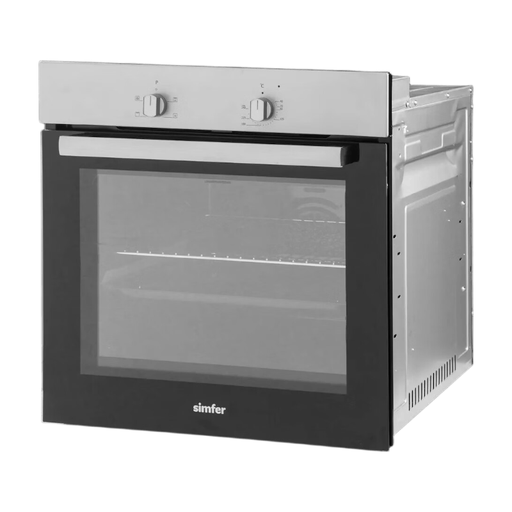 No image available
This single-cavity fan oven is relevant when your trays can share one baking setting.
Before planning several trays at once, check the permitted shelf positions, tray fit and whether its fan-temperature range covers your recipe.
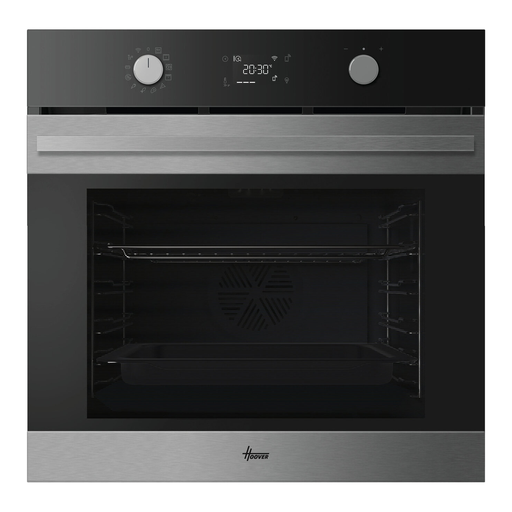 No image available
Consider its single cavity for trays that can use one setting, while checking how many shelf levels the baking mode permits simultaneously.
The installation type is described inconsistently, so confirm the appliance dimensions and fitting instructions. Check the manual before using pyrolytic cleaning, including its instruction to remove accessories.
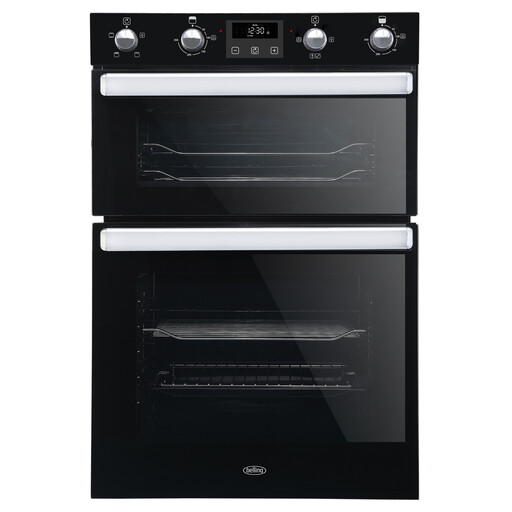 No image available
Two cavities may suit a menu with parcels and a dish needing a separate cooking function.
The upper cavity is described as conventional and grill rather than fan cooking. Check the main cavity’s usable tray layout, as well as appliance dimensions and electrical-connection instructions.
Yes, if the oven provides the fan setting required by your recipe or pastry pack. Good Food’s mini salmon and dill puffs recipe uses 180°C fan for 25–30 minutes, rather than its 200°C conventional setting; follow the instructions for the parcels you are making.
Consider a double oven when the parcels must cook alongside a dish needing a different temperature or function. If every tray can share one fan setting, a single cavity may meet the baking need; check the exact oven’s shelf layout and, for a double oven, the functions available in each cavity.
No; the connection requirement depends on the exact model. NEFF specifies electrician connection for its B1DCC0AK3B, while the installation descriptions for Bosch HHF113BA0B differ. Check the appliance’s own connection and fitting instructions before ordering.
Follow the filling’s recipe and packet instructions, and check the thickest centre with a clean probe thermometer when needed rather than relying on the pastry colour. GOV.UK’s food-business guidance gives 70°C for two minutes as a standard core-temperature example; it does not make a particular oven model suitable for every filling.