Family hosts cooking several dishes
If the crumble needs to bake alongside a roast, sides or another dessert, consider whether you need two independently controlled cavities or can schedule everything around one oven.


A single fan oven is a sensible choice when the crumble is the main dish using the oven, provided its cavity and shelves fit your baking dish. Consider a double oven if you regularly need dessert and savoury dishes cooking at different temperatures. Before choosing either, check the cabinet opening and electrical requirements; compare cleaning systems and energy information for the exact models that fit.
If the crumble needs to bake alongside a roast, sides or another dessert, consider whether you need two independently controlled cavities or can schedule everything around one oven.
Check the exact model’s fan and shelf functions, along with the space available for your dish. Manufacturer names for heat-circulation systems do not establish comparable baking results.
Start with the cabinet opening and electrical supply. Electrical Safety First notes that some ovens use a plug while others require hardwiring, so the connection needs checking for the model you choose.
Choose between one cavity and two according to what must cook at the same time; treat the cleaning system as a separate choice once you know which ovens suit the kitchen.
Choose it when: The crumble is usually the main oven task and one cavity has room for your dish and any shelves you plan to use.
Accept the trade-off: A single cavity cannot cook another dish independently at a different temperature.
Choose it when: You regularly need the crumble in one cavity while another course cooks at a different temperature.
Accept the trade-off: The housing and electrical supply must suit the particular double oven; do not assume it will fit an existing single-oven space.
| Concern | What to check | Who this matters to |
|---|---|---|
| Space and separate temperatures | Check each cavity’s usable dimensions, shelf positions and space for your dishes, not just the stated litres. | If I need the crumble baking while a roast cooks at another temperature, separate cavities matter more than total capacity alone. Around 24% of consumers put independent cooking zones first. |
| Baking functions | Check the exact cavity’s fan or multi-level functions and the manufacturer’s guidance for the shelves you will use. | When I bake more than one dish or use several shelves, I want to know which functions are available without assuming a feature name guarantees even results. Roughly 29% of consumers put baking control first. |
| Kitchen fit and connection | Compare the cabinet opening and ventilation space with the installation drawing; check the connection type and electrical requirements. | Replacing a fitted oven leaves me little room for a cabinet or wiring mismatch. Around 29% of consumers prioritise installation fit and electrical suitability. |
| Cleaning and energy information | Identify the model’s cleaning method, then compare energy labels for ovens of a similar type and capacity. | After fruit spills, I want a cleaning routine I can live with and useful energy information before choosing a larger cavity. Roughly 18% of consumers put upkeep and energy comparison first. |
A second cavity is useful only if the oven suits the housing and electrical supply. Electrical Safety First advises checking oven power requirements; connection arrangements differ between appliances.
Measure the opening against the exact model’s installation drawing, then have a qualified electrician assess its connection and circuit requirements before ordering.
An unsuitable housing or supply could mean cabinet alterations, electrical work or an installation that cannot go ahead as planned.
Bosch 3D Hotair, Neff CircoTherm, AEG SurroundCook and Beko AeroPerfect are manufacturer feature names. Their stated functions depend on the model and do not establish which oven will bake your crumble more evenly.
Check the cooking functions and usable shelf levels of the exact cavity, then follow that model’s baking instructions.
Energy Saving Trust notes that a larger appliance can use more energy than a smaller one with the same rating. An energy class alone therefore does not settle a comparison between different cavity sizes.
Read the energy label and product information for each exact model, comparing similar oven types and capacities while ensuring the cavity still fits your cooking plans.
Relevant if separate cavities would help with a family meal.
Relevant if you are considering multi-level cooking in a built-in single oven.
Relevant when comparing single- and double-oven layouts and model-specific cleaning options.
Relevant if a built-in single fan oven and a steam-assisted cleaning option suit your plans.
These choices include built-in double ovens for cooking separate dishes and single ovens for gatherings where one cavity is enough. Check each model’s fit and connection requirements before deciding.
 No image available
Consider this built-in double oven if the crumble and another course need separate cavities. The Joybuy listing describes a 71 L main cavity and a 34 L additional cavity.
Check that your housing suits this model and have its electrical requirements assessed before ordering.
 No image available
A built-in double-oven option when you want to plan the crumble and another dish around separate cavities.
Confirm the appliance height against the installation drawing: the title gives 90 cm, while another stated dimension is 885 mm. Check the electrical connection requirements for this model too.
 No image available
Consider this built-in single oven when the crumble is the main oven task. One cavity cannot independently cook another dish at a different temperature.
Check your baking dish against the internal space, and confirm the cabinet fit and electrical connection before purchase.
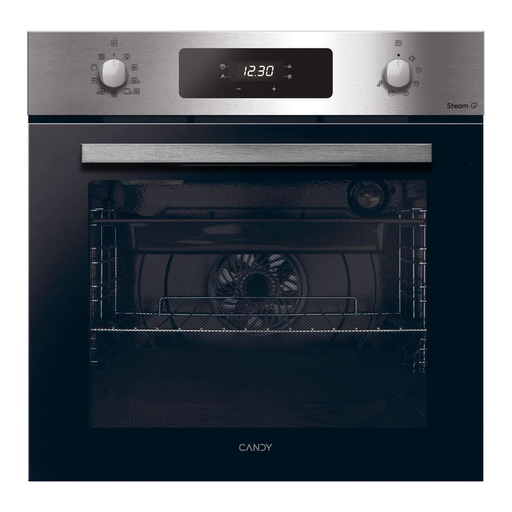 No image available
This built-in single oven is relevant if the crumble is your main oven task and pyrolytic cleaning is a priority. Its one cavity cannot provide an independent temperature for another dish.
Check cabinet fit and electrical requirements. Follow the supplied instructions for the cleaning cycle, including their directions on accessories and ventilation.
 No image available
The stated 65 L single cavity is worth considering when the crumble is the main oven dish; it cannot cook a second dish independently at another temperature.
Check that your dish and cabinet fit, then confirm the exact electrical connection method against the installation instructions.
No, not if the crumble is the main oven task and a single cavity fits your dish. A double oven becomes useful when you regularly need another course cooking at a different temperature; check the housing and electrical requirements before choosing one.
Look for a fan-assisted or multi-level function on the exact model, particularly if you expect to use several shelves. Bosch, Neff, AEG and Beko describe different heat-circulation systems, but those manufacturer descriptions are not directly comparable baking tests; follow the chosen oven’s cooking guidance.
It may do. Electrical Safety First notes that some ovens have a plug while others need hardwiring into a dedicated circuit. Check the exact model’s connection and power requirements, and use a qualified electrician to assess fitting where needed.
Use it alongside the product information when comparing ovens of a similar type and capacity. Energy Saving Trust notes that a larger appliance can use more energy even if it has the same rating as a smaller one, so choose a cavity that accommodates your cooking plans without judging by the energy class alone.