Choose a large fan-assisted single oven if baking several trays of oat bars is the main job. A double oven is more useful when another dish needs its own cooking space during the gathering; either choice depends on the space available, the exact installation requirements and whether your trays fit.
Who is this for?
Multi-tray family bakers
If oat bars are the main event, you need room for your trays and shelf positions that suit the batch. Beko and Hotpoint describe large-cavity and multilevel features on specific models, but check the arrangement for your own tins.
Mixed-menu hosts
If you are making oat bars alongside savoury dishes, a second cooking cavity may matter more than the size of one cavity. Which? identifies cooking multiple dishes at once as a reason to consider a double oven.
Occasional bakers who want simpler clean-up
If you mainly bake for gatherings, consider controls you will use and how you will clean the oven afterwards. Beko, Hotpoint and AEG describe different cleaning features on their respective models.
What matters when choosing?
Large single oven
Choose it when: Oat-bar trays are the main task and one suitably sized cavity meets your cooking plan.
Trade-off: Another dish needing a different temperature must wait or cook elsewhere.
Double oven
Choose it when: You need to prepare oat bars and another dish in separate cavities at the same time.
Trade-off: It requires space for a compatible double-oven installation; two cavities do not, by themselves, establish more even baking.
| Concern | What to check | Who this matters to |
|---|
| Batch space and shelf use |
Check usable cavity space, shelf positions and whether your baking trays fit; consult the model’s fan-baking guidance. |
I need enough oat bars without awkward repeat batches, so tray space comes first. Around 36% of consumers would put batch space and shelf use first. |
| Separate cooking spaces |
Compare the two cavity sizes and controls with the dishes you plan to cook at the same time. |
If another dish needs a different setting while the bars bake, I want a separate cavity. For around 29% of consumers, that flexibility would be the primary need. |
| Fit and installation |
Match the exact model’s cut-out and ventilation instructions to your cabinet, then check its electrical connection requirements. |
I need to know the oven can be installed in my kitchen before choosing features. Cabinet fit and installation would come first for around 21% of consumers. |
| Cleaning and extras |
Compare the cleaning method and included accessories; consider steam, probe or connected functions only if you will use them. |
After hosting, I want a manageable clean-up rather than functions I rarely use. Around 14% of consumers would make cleaning and useful extras their main concern. |
Buying pitfalls
-
Assuming a nominal 60cm oven will fit
Appliance dimensions alone do not establish the required cabinet cut-out or ventilation space. Beko and AEG publish different dimensions for their example built-in ovens.
Measure the available housing and follow the installation chart and electrical instructions for the exact model before ordering.
An unsuitable opening could mean cabinet alterations or additional installation work.
-
Expecting identical bars from every shelf
Beko’s airflow description and Hotpoint’s multilevel-cooking statement are manufacturer claims, not a guarantee for every recipe, tray or shelf arrangement.
Check the manual’s shelf guidance and try your intended tray arrangement before the gathering if matching batches matters to you.
-
Choosing two cavities solely because the gathering is large
Which? identifies the ability to cook multiple dishes at once as a benefit of a double oven. If oat bars are the main task, the usable space in a single cavity may matter more.
Plan which dishes actually need separate settings before deciding between a large single oven and a double oven.
-
Prioritising functions you will rarely use
Steam, probe and connected functions broaden what some ovens can do, but they are not necessary to bake oat bars.
Check fit, tray handling and the cooking settings you will use regularly before giving extra functions priority.
Oven brands to consider
Beko
The BBIM17401 illustrates a 60cm built-in single oven with a stated 72L cavity and 13 functions.
- Beko describes fan-based AeroPerfect airflow and a catalytic back wall on this model.
- Its stated appliance dimensions are 59.5 × 59.4 × 56.7cm; check the separate cut-out and ventilation instructions. Beko’s airflow claim does not guarantee matching results on every shelf.
Hotpoint
The HOI98PT2SBUK is a built-in single fan oven aimed at shoppers considering multilevel cooking.
- Hotpoint says this model can cook on up to four levels without flavour transfer.
- That claim does not establish how a particular oat-bar recipe will bake on every shelf. Its 59.5cm width also does not establish cabinet compatibility on its own.
Bosch
Bosch lists both a 60 × 60cm built-in single oven with added steam, HQA534BB3B, and a built-in double oven, MBA578BS7B.
- These distinct configurations give shoppers a concrete starting point for deciding whether a second cavity is useful.
- The configurations alone do not establish a baking-performance advantage or whether either model fits a particular kitchen.
AEG
The TB8SB731AB is a 70L built-in single oven with SteamPro, multilevel cooking and a temperature probe.
- Its additional functions are relevant if you regularly cook foods beyond oat bars that call for them.
- The stated 590 × 560 × 550mm built-in dimensions need checking against the kitchen niche; extra functions need not determine an oat-bar-baking choice.
Joybuy ovens for these cooking plans
These built-in single and double ovens offer starting points for comparing an oat-bar batch with a gathering menu that also needs another cooking space. Check the exact model’s tray space and installation instructions before choosing.
 No image available
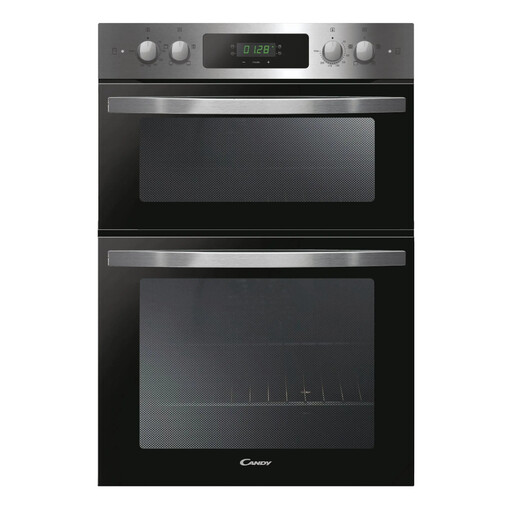
Candy FCI9D405X built-in double oven, stainless steel
Consider this double-oven format if oat bars and another dish need separate cooking spaces. Check each cavity’s usable tray space, the housing cut-out and the electrical instructions.
View on Joybuy
 No image available
Bosch Series 4 MBA533BB3B electric double oven, black
This double oven is worth considering when another dish needs its own cavity while the bars bake. Confirm the intended housing format, shelf arrangement and electrical requirements for this exact model.
View on Joybuy
 No image available
Belling BEL BI902FP built-in double oven, black
For a mixed gathering menu, compare how you would use each cavity for the bars and other food. Confirm tray fit, the cabinet cut-out, ventilation and electrical connection against the model’s instructions.
View on Joybuy
 No image available
Bosch HHF113BA0B Series 2 built-in single electric oven, black
A single cavity may suit a gathering where oat bars are the main oven task. Check the manual’s shelf and tray guidance for your batch, along with the housing and electrical requirements.
View on Joybuy
 No image available
Candy FIDCN605 65L built-in single electric oven, black
Its stated 65L single cavity is a starting point for assessing an oat-bar batch. If you need several trays at once, confirm their fit and the recommended shelf arrangement; check the electrical instructions before purchase.
View on Joybuy
Frequently asked questions
Do I need a double oven to bake oat bars for a family gathering?
No: a suitably sized single oven can serve the oat-bar batch if it accommodates your trays and cooking plan. Consider a double oven when another dish needs a separate cavity at the same time, rather than expecting two cavities to improve the bars themselves.
What oven size should I check for batch baking?
Check your tray dimensions and the oven’s usable shelf space as well as its stated cavity capacity. For a built-in model, match the cabinet to the exact installation chart: Beko lists the BBIM17401 appliance at 59.5 × 59.4 × 56.7cm, while AEG gives a 590 × 560 × 550mm built-in niche for the TB8SB731AB.
Are steam or air-fry functions important for oat bars?
They are optional for this baking task. Give priority to tray fit, suitable cooking settings and installation requirements, then consider steam or air-fry functions if you expect to use them for other foods.


