Travelling alone
A single ready-to-drink bottle avoids carrying a large container for one onboard drink. Tesco lists Müller Frijj milkshake in 330ml bottles and Yazoo vanilla milk in 400ml bottles.


Sainsbury's and Asda list six-pint bottles as fresh milk, while Tesco lists ready-to-drink milkshakes in smaller bottles. For a drink during a train journey, an individual portion is easier to carry than a six-pint milk bottle; choose the larger bottle when you need plain milk after arrival and can refrigerate it.
The useful distinction is whether the drink is for one passenger, several people or use after the journey.
A single ready-to-drink bottle avoids carrying a large container for one onboard drink. Tesco lists Müller Frijj milkshake in 330ml bottles and Yazoo vanilla milk in 400ml bottles.
A larger milkshake bottle may work if the group can share it and follow its storage instructions. Tesco lists a 1-litre Yazoo banana milkshake; consider how you will pour it and handle any remainder.
A six-pint bottle suits a plan that calls for plain milk and has fridge space on arrival. Sainsbury's lists 3.4L six-pint milk, while Asda's six-pint semi-skimmed milk is labelled 3,408ml. Neither is a ready-to-drink milkshake.
Decide whether you need a flavoured drink during the journey or plain milk at the destination, then check portion size, storage instructions and the label.
Choose when: One person wants a ready-to-drink portion without sharing a bottle.
Trade-off: Each bottle contains less than a 1-litre format, so check how many portions you need.
Choose when: Several people plan to share a flavoured drink, or it will be poured after arrival.
Trade-off: You will need a way to serve it and a plan for any remainder.
Choose when: The purchase is plain milk for use at your destination, with refrigeration available.
Trade-off: It is a large chilled container to carry and does not provide a ready-to-drink flavoured milkshake.
| Priority | What to check | Your needs |
|---|---|---|
| Product and portion | Check whether the name says milk or milkshake, then compare the net content and number of servings. Tesco lists 330ml and 400ml ready-to-drink options; Sainsbury's lists 3.4L six-pint fresh milk. | I want a drink I can open and finish on the train, rather than a large bottle of milk intended for later. |
| Keeping it cold | Read the instructions for the exact product and plan for waiting and onward travel. Asda says its six-pint milk should be refrigerated below 5°C; East Lancashire Hospitals NHS Trust advises a cool bag and ice pack for packed food that needs keeping cool. | If my journey extends beyond the train ride, I need a workable way to store a chilled bottle until I use it. |
| Nutrition label | Compare the same per-100ml figures and the amount you expect to drink. The NHS advises checking fat, saturated fat, salt and sugar on dairy labels; Yazoo lists 8.7g sugars per 100ml for its strawberry and banana drinks. | I'd rather compare the labels than assume bottles of different sizes contain similar amounts of sugar per serving. |
| Onboard plans | National Rail says passengers can bring their own food and drink on the train. Check your operator's information if you are relying on onboard catering instead. | Bringing my own drink lets me choose its format before boarding, rather than depending on what is served onboard. |
Sainsbury's and Asda list their six-pint bottles as fresh milk. That leaves you carrying plain milk if you intended to buy a flavoured ready-to-drink drink.
Check the product name, flavour and net content before buying; search for milkshake and six-pint milk separately.
Asda instructs buyers to keep its six-pint milk refrigerated below 5°C, which matters if the journey includes waiting or onward travel.
Plan access to a fridge or use a cool bag with an ice pack for food that needs keeping cool, as East Lancashire Hospitals NHS Trust advises.
Bottle volume does not tell you the sugar or fat content of the drink. Yazoo lists 8.7g sugars per 100ml for both its strawberry and banana products.
Compare nutrition figures on the same per-100ml basis, then look at the portion you expect to drink.
These examples distinguish ready-to-drink flavoured products from the six-pint fresh-milk bottles; they are not interchangeable formats.
Tesco lists Yazoo vanilla milk in a 400ml bottle and banana milkshake in a 1-litre bottle.
Tesco lists Müller Frijj chocolate milkshake in a 330ml bottle.
Tesco lists Mars Chocolate Flavoured Milk Drink No Added Sugar in a 400ml bottle.
Sainsbury's lists 3.4L six-pint semi-skimmed and whole fresh milk.
Asda lists six-pint semi-skimmed fresh milk with a stated net content of 3,408ml.
These are multipacks of individually portioned protein shakes for people considering a drink during the journey. They are neither six-pint ready-to-drink milkshakes nor bottles of plain milk.
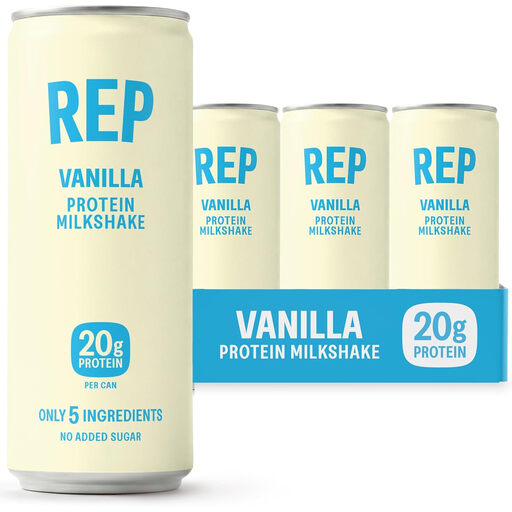 Image unavailable
The 250ml portions offer an individual-format option for a train drink, but this is a protein shake rather than a six-pint milkshake. Check the supplied label for ingredients, allergens and storage instructions before travel.
 Image unavailable
Each 330ml portion is an individual-format protein nutrition shake, not a six-pint milkshake. Check the supplied label for storage directions; the listing says it is not intended for under-18s without prior consultation with a qualified health professional.
Yes. National Rail says passengers can bring their own food and drink on the train. If you plan to use onboard catering instead, check the information for your operator.
No: the six-pint bottles listed by Sainsbury's and Asda are fresh milk, not ready-to-drink milkshakes. Tesco lists milkshakes in smaller formats, including 330ml and 1-litre bottles.
Follow the storage instructions on the particular drink. Asda says its six-pint milk should be refrigerated below 5°C, and East Lancashire Hospitals NHS Trust advises using a cool bag and ice pack for packed food that needs keeping cool.
Do not choose between them on bottle size alone. Check the particular product's ingredients, allergen information and nutrition figures, including sugars per 100ml, while taking the child's age and dietary needs into account.