Care-home catering teams
Teams ordering milk for drinks, cereal and cooking need to confirm both the fat level and the bottle or carton size. A six-pint listing for whole or semi-skimmed milk does not fulfil an order for skimmed milk.


Do not assume a six-pint bottle will be available in skimmed milk: Tesco, Sainsbury’s, Waitrose and M&S list smaller skimmed formats, while Sainsbury’s six-pint listings are whole or semi-skimmed. Choose a confirmed skimmed format only where it fits residents’ assessed needs and the home’s storage arrangements; a different milk type should follow individual care plans, not a bottle-size substitution.
Teams ordering milk for drinks, cereal and cooking need to confirm both the fat level and the bottle or carton size. A six-pint listing for whole or semi-skimmed milk does not fulfil an order for skimmed milk.
Milk choice needs to reflect each resident’s assessed needs. East Lancashire Hospitals NHS Trust describes full-fat and fortified milk approaches for residents with weight-loss or malnutrition concerns; these are not a reason to change everyone’s milk.
Check the current care plan and pack label before serving milk to someone with an allergy, a preference or another documented dietary requirement. The Food Standards Agency identifies milk as an allergen.
Start with the milk type required for residents, then confirm the format and how the home will store and use it.
| Priority | What to check | Your needs |
|---|---|---|
| Milk type and volume | Check that the listing says skimmed and states the intended volume. Tesco and Waitrose list skimmed milk in sizes up to four pints; Sainsbury’s six-pint listings shown are whole or semi-skimmed. | I need the ordered milk to match both the menu’s specified fat level and the format the kitchen can use. |
| Individual nutrition plans | Check each resident’s current plan before treating skimmed milk as the default. East Lancashire Hospitals NHS Trust discusses full-fat and fortified milk for residents with weight-loss or malnutrition concerns. | A smaller skimmed carton may work for routine service, but residents with different assessed needs must receive the milk specified in their plans. |
| Storage and turnover | Check fridge space, the pack’s date and storage instructions, and how opened containers are identified. The Food Standards Agency’s food-safety guidance calls for suitable refrigerated storage and temperature monitoring. | I want a format the kitchen can store and use within its food-safety procedures, rather than choosing a larger container on volume alone. |
| Allergens and alternatives | Check the actual pack label against the resident’s current records. Milk is an allergen identified by the Food Standards Agency; follow documented requirements for an alternative where applicable. | Before serving, I need to know whether dairy milk is appropriate for that resident. |
Sainsbury’s lists six-pint whole and semi-skimmed milk alongside smaller skimmed formats. Bottle size alone does not identify the milk type.
Write both the fat level and volume on the order. If skimmed milk is required, check an explicitly labelled smaller format rather than substituting another milk type for its size.
East Lancashire Hospitals NHS Trust describes full-fat and fortified milk approaches for residents with weight-loss or malnutrition concerns. One milk choice will not necessarily match every resident’s nutrition plan.
Follow individual care plans and refer concerns about weight loss or nutritional risk through the home’s clinical pathway.
A container’s volume needs to fit the home’s refrigerated storage and expected use. Opened-pack instructions can differ between products, including filtered and ordinary milk.
Check the specific label, identify opened containers and use the home’s documented chilled-food procedures.
The Food Standards Agency identifies milk as an allergen, and a resident’s current requirements may call for a different drink or ingredient.
Check the pack label and care record before service, and use the resident’s agreed alternative where applicable.
These listings illustrate why milk type and container size need checking together; they do not establish what every supplier stocks.
Tesco Groceries lists British skimmed milk in one-, two- and four-pint formats.
Sainsbury’s search results list two- and four-pint skimmed milk and six-pint whole and semi-skimmed milk.
Waitrose lists Essential British Free Range skimmed milk in one-, two- and four-pint formats.
M&S describes fresh cow’s milk in one- to four-pint sizes and lists a four-pint Scottish skimmed milk.
Waitrose lists a 2L Cravendale filtered semi-skimmed milk.
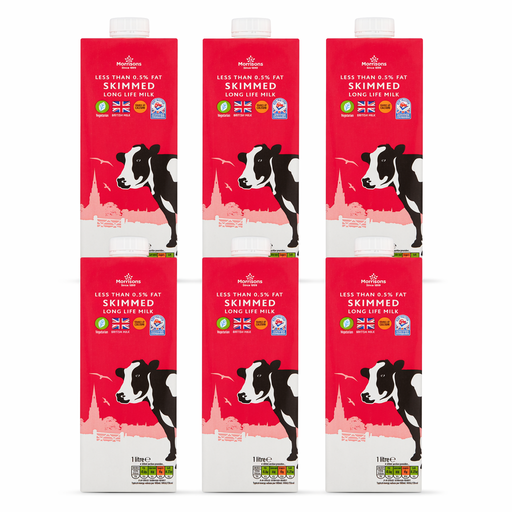
These are UHT skimmed-milk cartons for a kitchen considering smaller units instead of one six-pint fresh-milk bottle. The six-pack contains six separate 1-litre cartons, not a single six-pint container.
 No image available
Six separate 1-litre skimmed-milk cartons may suit a kitchen ordering smaller units, but they are not one six-pint bottle.
The product information specifies cool, dry storage before opening, then refrigeration and use within three days of opening. Check each resident’s care plan and the pack label before service.
 No image available
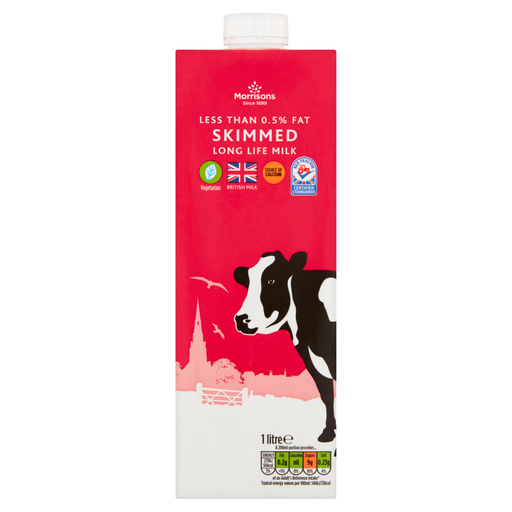
This single 1-litre skimmed-milk carton is a smaller-unit option, not a six-pint bottle.
The product information specifies cool, dry storage before opening, then refrigeration and use within three days of opening. Check each resident’s care plan and the pack label before service.
The Tesco, Sainsbury’s, Waitrose and M&S listings cited here show skimmed options in smaller formats, including four pints. Sainsbury’s six-pint listings are whole and semi-skimmed. Check the chosen supplier’s exact product before ordering; these listings do not rule out other suppliers.
No single milk type should override an individual nutrition plan. East Lancashire Hospitals NHS Trust describes full-fat and fortified milk approaches for residents with weight-loss or malnutrition concerns; follow the resident’s assessed plan and the home’s clinical pathway.
Follow the specific pack’s storage and date instructions alongside the home’s documented food-safety procedures, including suitable refrigeration and temperature monitoring. The Food Standards Agency’s residential-care-home food-safety supplement is intended for small residential homes that prepare food for residents, not nursing homes.
No. The Food Standards Agency identifies milk as an allergen. Check the current pack label and the resident’s care record before service, and provide the agreed alternative where the resident’s requirements call for one.