
24/7 Customer Support

Free returns

Same-day & Next-day Delivery

Quality Guaranteed

Unlock Your Welcome Offers: FREE Delivery | Up to 80% OFF | Free 30-day JoyPlus trial
Download the APP
Buying a size 5 basketball for a child or beginner can appear straightforward, but product listings often leave out details that affect everyday use. A ball may have an appealing design yet feel uncomfortable to handle, lose air quickly or become heavily scuffed after a few sessions on a UK driveway.
The most common buying traps are:
A standard size 5 basketball has a circumference of approximately 27.5 inches, or 70 cm. It is commonly used for youth and junior basketball, particularly for children around ages 9–12. However, age guidance is not universal, so check the rules of the child’s school, club or local league before ordering.
For a quick comparison:
Hand size and playing confidence also matter. A child who is still learning to dribble and pass may benefit from the manageable circumference of a size 5 ball, while a competitive player should follow the specification used by their team.
The outer cover affects grip, comfort and resistance to wear.
A rubber basketball is usually a practical choice for concrete, tarmac, playgrounds and driveways. Its textured surface can provide a secure hold during outdoor practice, and rubber is generally easier to wipe clean after contact with dust or damp ground.
Composite leather, PU or microfibre leather covers often provide a softer touch. These materials may suit indoor courts and controlled training environments, although buyers should confirm that the specific ball is designed for outdoor use before regularly playing on rough surfaces.
If the ball will move between a sports hall and a driveway, look for reinforced construction, deep channels and wording that clearly states indoor-outdoor suitability.
A textured grip basketball should have visible pebbled dimples or a similarly tactile surface. Deep channels can make it easier to position the fingers for passing, shooting and dribbling.
Do not rely solely on phrases such as “anti-slip”. Check whether the listing explains the surface pattern and whether the ball is intended for wet conditions. A grippy surface can help with handling, but it does not remove the need for safe play in poor weather. Wet courts can still be slippery, particularly in autumn and winter.
A size 5 basketball should be inflated to the pressure recommended in its product instructions. One listed model specifies 7–9 PSI, but buyers should always follow the supplied guidance rather than assuming every basketball uses the same pressure.
Check whether the ball arrives inflated or deflated. Deflated delivery is common, but a separate pump and needle can add inconvenience. Some rubber models include a hand pump, two air needles and a carry bag, which may be useful for children travelling to practice or families storing the ball in a car.
Claims about air retention should be treated as product specifications rather than guarantees of identical real-world performance. Temperature, valve condition and how often the ball is used can all affect pressure.
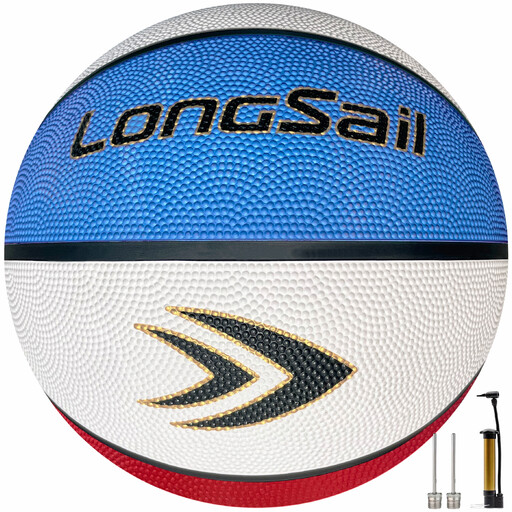
Why This Fits Their Persona: A practical option for beginners, families and casual users who want one ball for the garden, driveway, park or occasional indoor session.
The listing specifies a textured, dimpled rubber cover for indoor and outdoor use and includes a hand pump, two needles and a carry bag.
27.5-inch size 5 format; complete inflation and storage kit supplied.
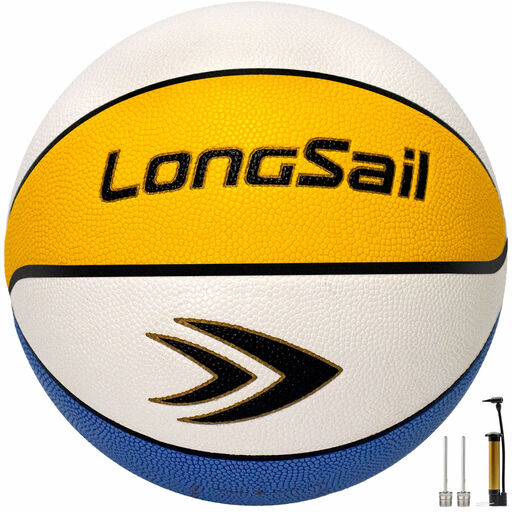
Why This Fits Their Persona: Suitable for a youth player who spends more time training indoors and prefers a softer PU or microfibre leather feel.
Its listing identifies a PU or microfibre leather cover, reinforced construction and deep channels, rather than relying only on a decorative colourway.
Soft-touch composite cover; available in youth size 5 with a rubber bladder.
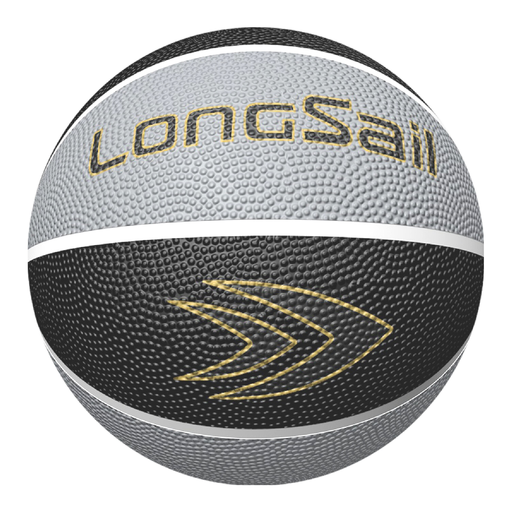
Why This Fits Their Persona: A considered choice for clubs, schools and families expecting frequent practice on outdoor courts as well as casual indoor use.
The product details specify a high-density rubber cover, pebbled dimples, deep channels and a butyl bladder for regular outdoor handling.
Rubber construction for rougher surfaces; pump, needles and carry bag included.
We have compiled a complete, real-time list of products that fully satisfy these strict selection criteria and UK safety regulations.
It is commonly used for children around 9–12, but the correct choice depends on the school, club or league. Check the competition rules and compare the ball’s circumference, which is approximately 27.5 inches or 70 cm.
Not always. Several listed models are supplied deflated for transport. If the product includes a pump and needle, inflate it before play according to the stated pressure instructions.
Yes, provided the model is described as suitable for outdoor use. Rubber covers generally make a practical indoor outdoor basketball for tarmac, concrete and playgrounds. Dry the ball after use and store it indoors to limit wear caused by rain, mud and temperature changes.