
24/7 Customer Support

Free returns

Same-day & Next-day Delivery

Quality Guaranteed

Unlock Your Welcome Offers: FREE Delivery | Up to 80% OFF | Free 30-day JoyPlus trial
Download the APP
Finding suitable Size 7 nappies and nappy pants can be difficult when children are growing quickly, becoming more active or beginning potty training. Pack labels may look similar, yet the products can serve very different purposes: taped nappies for everyday use, pull-up pants for wriggly toddlers or absorbent night-time pants for older children.
The product descriptions can also make large promises about dryness, comfort and leak protection. A more practical approach is to check the details that affect daily use: weight range, fastening style, absorbent construction, skin-related certifications and pack size.
Size numbers are not identical between manufacturers. One Size 7 product may be listed for 15kg+, while another is intended for 17kg+ or approximately 15–25kg. Age guidance is useful, but weight and fit should take priority.
A nappy that is too small may leave red marks, gaps around the legs or frequent leaks. One that is too large can shift during sleep or play. Always check the product’s stated weight range before buying a large pack.
Traditional disposable nappies use side tabs and can be adjusted while your child is lying down. Baby nappy pants pull on like underwear, which is convenient for standing changes but may be less suitable for a child who still needs frequent lying-down changes.
Pull-up products are useful for active toddlers, childcare routines and potty training. However, they are not automatically the right choice for every child or every night-time situation.
A larger pack can reduce how often you reorder, but it is poor value if the fit is wrong or the product does not match your child’s routine. Consider the cost per pant, the expected number of changes and whether the product is intended for daytime, overnight or occasional use.
For example, a 16-pack of night pants may suit occasional bedwetting, while a 58-pack of taped nappies may be more practical for regular daytime and overnight changes.
Look for the manufacturer’s stated weight range, such as 15kg+, 17kg+ or 15–25kg. Then check whether the waistband sits comfortably and whether the leg cuffs lie flat without digging in.
Useful fit features include:
For overnight nappies, look for an absorbent core, wetness-locking layers and a close fit around the legs and back. Product descriptions may state protection “up to 12 hours”; this is a maximum product claim rather than a guarantee for every child or sleeping pattern.
A wet or soiled nappy should still be changed promptly. No disposable nappy is a substitute for regular checks, particularly where a child has sensitive skin.
Families seeking sensitive skin nappies may wish to check whether the product is dermatologically tested, fragrance-free or certified under OEKO-TEX Standard 100. These details describe product testing or formulation features; they should not be treated as medical guarantees.
For lower-impact choices, check the actual materials and sourcing statements rather than assuming that “eco-friendly nappies” are biodegradable. Some products use FSC- or PEFC-certified pulp, bamboo viscose or recyclable packaging, while still containing plastic films and superabsorbent polymers.
Used disposable nappies and pants should be wrapped and placed in household waste. Never flush them, as their absorbent cores can contribute to blocked drains.
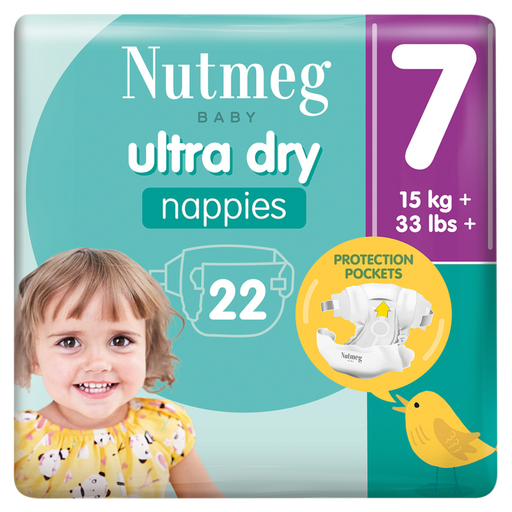
Why This Fits Their Persona: A taped Size 7 option for families wanting adjustable everyday nappies for children weighing 15kg and above.
The 15kg+ guidance avoids relying on the Size 7 label alone, while flexible side tapes allow the fit to be adjusted.
22-pack; channel absorption technology and gentle anti-leak leg cuffs are listed in the product details.
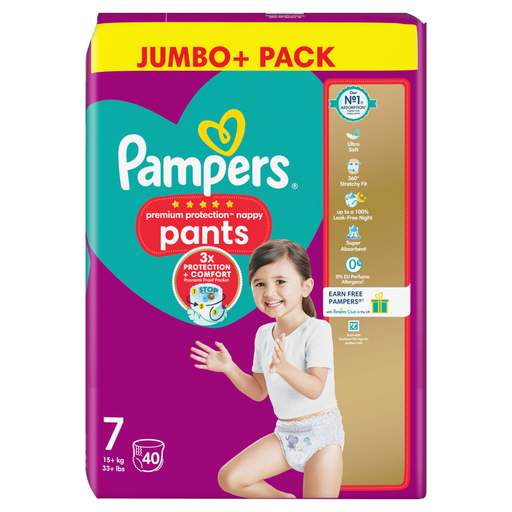
Why This Fits Their Persona: Suitable for active toddlers who need a pull-up design and a visual wetness indicator during busy UK days.
It combines pull-up convenience with tearable sides, helping carers remove the pants without pulling them down after an accident.
40-pack; 360° waistband, wetness indicator and OEKO-TEX Standard 100 certification are specified.
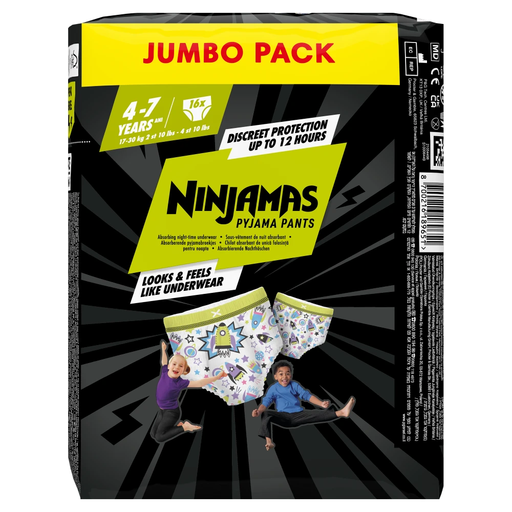
Why This Fits Their Persona: Designed for older children aged 4+ who need dedicated overnight or bedwetting protection.
Its stated purpose is night-time use, so it is not being presented as a general replacement for daytime toddler nappies.
16-pack; 360° FormFit waistband, quiet material and OEKO-TEX Standard 100 certification are listed features.

Why This Fits Their Persona: A Size 7 pull-up option for children weighing 17kg+ who are learning to recognise wetness and use the potty.
The product is specifically positioned for daytime training, rather than implying that training pants eliminate the need for potty routines.
18-pack; tearable waistband and a wetness indicator that disappears when wet are specified.
We have compiled a complete, real-time list of products that fully satisfy these strict selection criteria and UK safety regulations.
There is no single universal range. Products in this selection begin at approximately 15kg+ or 17kg+, while some training pants cover around 15–25kg. Check the specific pack before ordering.
Some are designed for day and night, but dedicated overnight nappies or pyjama pants may be more appropriate for extended sleep or bedwetting. Check the product’s stated purpose, absorbency features and recommended age range.
Compare the price per nappy rather than the pack price, choose a pack size that matches your child’s likely use and avoid stocking up heavily before confirming the fit. A product with fewer leaks and fewer unsuitable changes may offer more practical value, even when its pack price is higher.