
24/7 Customer Support

Free returns

Same-day & Next-day Delivery

Quality Guaranteed

Unlock Your Welcome Offers: FREE Delivery | Up to 80% OFF | Free 30-day JoyPlus trial
Download the APP
Buying sketchbooks and notebooks can appear straightforward until the first page buckles, ink shows through or the format does not suit your everyday routine. Product descriptions often focus on attractive covers and inspirational artwork, while practical details such as paper weight, page count and portability receive less attention.
Three common buying traps are worth avoiding:
The right choice depends on how you intend to use it, where you will carry it and which materials you plan to apply.
Paper weight is measured in gsm, meaning grams per square metre. It provides a useful indication of thickness, although it is not the only factor affecting performance.
Paper weight does not automatically make a pad suitable for wet media. For washes or repeated water application, check that the product is specifically described as a watercolour paper pad and review the manufacturer’s guidance.
The most useful format is the one you will actually carry or keep within reach.
A high page count is useful for regular writing or daily drawing, but only if the binding opens comfortably. Spiral binding is convenient for folding a book back on itself, while hardbound formats can offer a more structured surface and protection in a bag.
Also check whether pages are blank, lined or printed with guides. A blank notebook is flexible for mixed use, whereas a fashion design sketchbook may include pre-printed silhouettes and prompts. For creative children aged six and over, inspect age guidance and small-part warnings before purchase.
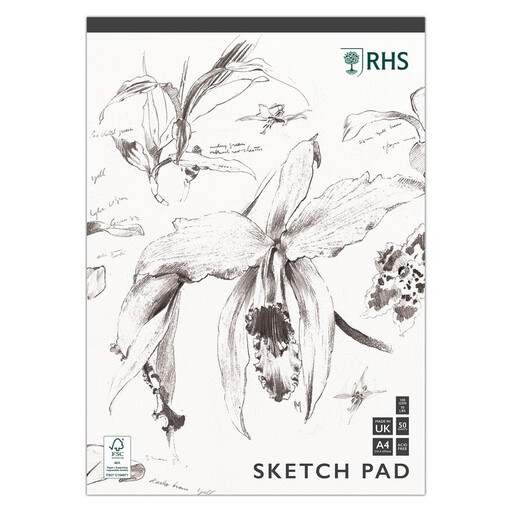
Why This Fits Their Persona: A practical A4 option for students, beginners and anyone wanting generous space for pencil sketches, planning or everyday creative practice.
The stated 100gsm weight and 50-sheet count make the specification clear, rather than relying only on cover appearance.
A4 format; 100gsm paper; 50 sheets for repeated practice.
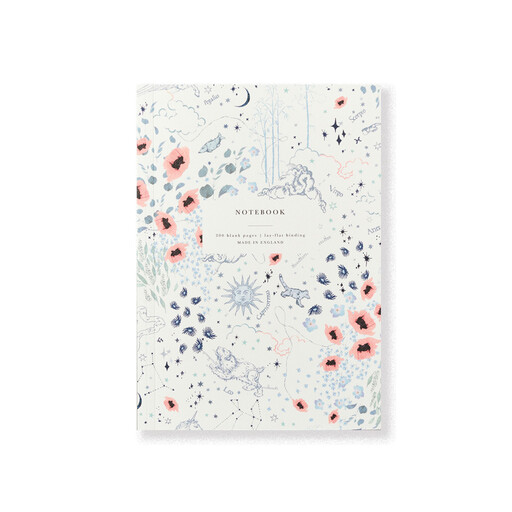
Why This Fits Their Persona: Designed for stationery enthusiasts, writers and gift shoppers who want a refined notebook for journalling, notes, sketches or idea development.
Its blank-page format and stated 100gsm specification offer flexibility without pretending that a decorative cover defines performance.
A5 portability; 300 blank pages; textured cover; 100gsm inner paper.
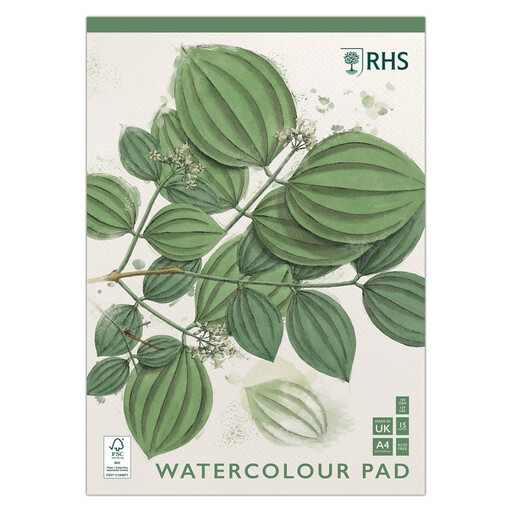
Why This Fits Their Persona: A suitable direction for illustrators, gardeners and crafters who need A4 space and a heavier paper format for selected watercolour and mixed-media projects.
It is identified specifically as a watercolour pad and states 190gsm and 15 sheets, helping buyers compare use and quantity accurately.
A4 working area; 190gsm paper; 15 sheets; intended for watercolour use.
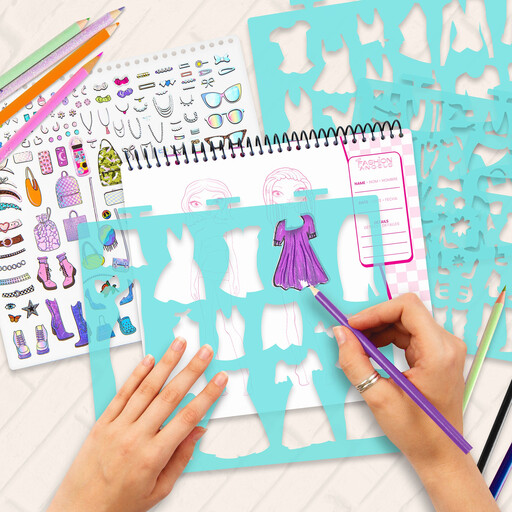
Why This Fits Their Persona: A structured fashion design sketchbook for children aged six and over who enjoy drawing outfits, accessories and character looks.
The kit provides pre-printed model silhouettes, four removable stencils and 100-plus stickers, so the contents are clearly defined.
40 sketch sheets; spiral binding; 4 stencils; suitable from age six; portable format.
For scrapbooking, card-making and botanical-themed projects, loose sheets may be more useful than a bound artist sketchbook. The RHS Melons Paper Pad 180gsm 6" x 6" and 12" x 12" versions offer different working areas for layered designs, while the RHS Geissler Paper Pad 180gsm 6" x 6" includes 32 sheets with three designs.
These pads are intended for paper crafts rather than unrestricted wet painting. Before cutting, folding or gluing, check the sheet dimensions and quantity so you can estimate how many projects the pad will cover. They can also work as thoughtful stationery gifts for gardeners, scrapbookers and people who enjoy botanical illustration.
For a portable artist sketchbook, the Speedball Drawing Journal range provides 140gsm acid-free artist-grade paper, 64 sheets, cloth binding and a clear storage envelope. The 5.5 x 8.25-inch landscape and portrait versions suit different compositions, while the 3.5 x 5.5-inch portrait format is easier to carry.
We have compiled a complete, real-time list of products that fully satisfy these strict selection criteria and UK safety regulations.
For pencil, pen and markers, 110–140gsm is a useful starting range. A drawing journal with acid-free paper may be preferable for work you plan to keep. For heavier paint applications, select a pad specifically labelled for watercolour and check its recommended techniques.
An A5 notebook is suitable for small studies, notes, journalling and travel sketches. It is easier to carry than A4, but offers less room for large compositions. If you draw figures, outfits or detailed botanical subjects, an A4 sketchbook may be more comfortable.
Keep paper products flat or upright in a dry indoor area, away from excessive moisture and direct sunlight. Avoid overfilling bound books with bulky materials, as this can strain the spine. For children’s kits containing stickers or stencils, follow the age guidance and supervise younger users around small parts.