First-person run recorders
If you want conventional clips of your descents without extensive editing afterwards, pay particular attention to stabilisation, recording controls and a mount compatible with your equipment.


Choose a conventional action camera if you want fixed-view footage of your ski runs with less reframing afterwards. Choose a 360 camera if capturing companions and scenery before deciding on the final angle matters more to you than a quicker editing workflow. Whichever format you prefer, check the mount, cold-weather battery guidance and recording storage before travelling.
If you want conventional clips of your descents without extensive editing afterwards, pay particular attention to stabilisation, recording controls and a mount compatible with your equipment.
If you plan to film throughout a long day, compare the conditions behind battery claims and consider how you will carry and charge compatible spares.
If you want to capture companions and scenery before choosing an angle, 360 footage offers that editing approach. Allow time to reframe it and take care of the exposed lenses.
Choose it when: You want to aim the camera before a run and work with fixed-view clips afterwards.
Trade-off: An angle you miss while filming cannot be selected later from the same fixed-view recording.
Choose it when: You want to record the surrounding scene and decide how to frame it after the run.
Trade-off: Reframing takes more editing, and protruding lenses need protection from bumps and drops.
| Concern | What to check | Who this matters to |
|---|---|---|
| Stable, simple footage | Check stabilisation in the recording mode you intend to use and whether your chosen mount fits your equipment. | If I want to review clips of my descents without extensive editing, a steady fixed viewpoint comes first; around 42% of consumers put simple first-person footage first. |
| Cold-weather continuity | Compare the temperature and recording settings behind runtime claims, then check compatible spare-battery options. | When I hope to film across a cold ski day, I need a plan for battery changes rather than relying on one stated runtime; roughly 33% of consumers prioritise recording continuity. |
| Reframable footage | Check the 360 recording mode, memory-card requirement, editing-device suitability and lens-protection options. | If I cannot predict where friends or scenery will be during a run, choosing the angle afterwards matters more to me; around 25% of consumers place reframing first. |
Runtime depends on conditions and settings. DJI Store states a 3.6-hour result at −20°C for Osmo Action 5 Pro under its test conditions; GoPro says it gives HERO13 cameras and accessories no formal low-temperature rating.
Compare the stated temperature and recording settings with your plans, and check the availability of batteries made for the exact camera model.
Spare batteries and a charger add items to carry and time to spend charging.
Card requirements differ by model. DJI identifies U3/V30-rated cards for Osmo Action 5 Pro, while Insta360 specifies UHS-I V30 or higher for X5.
Check the requirements for the camera you choose, whether a suitable card is included, and its in-camera formatting instructions before departure.
Recording a whole scene leaves the final framing to be done afterwards. Insta360 recommends suitable lens protection for X5 and avoiding bumps or drops.
Choose 360 capture if you will use the wider recording and are prepared to protect the lenses and reframe the footage.
Lens protection and the time needed to process footage can add to your trip preparation.
The UK Civil Aviation Authority directs passengers to carry spare batteries and power banks in the cabin and to check airline-specific rules.
Pack spare camera batteries in cabin baggage, protect them against damage and short circuits, and confirm your airline’s current limits before flying.
The HERO13 Black is a conventional fixed-view option for first-person ski footage.
The Osmo Action 5 Pro is a conventional-camera option to examine if battery planning is central to your ski trip.
The X5 offers a 360 approach for filming a scene before choosing the final viewpoint.
These choices include fixed-view action cameras for filming ski runs and 360 cameras for choosing the framing afterwards. Compare the exact bundle, battery arrangements and mounting options against your plans.
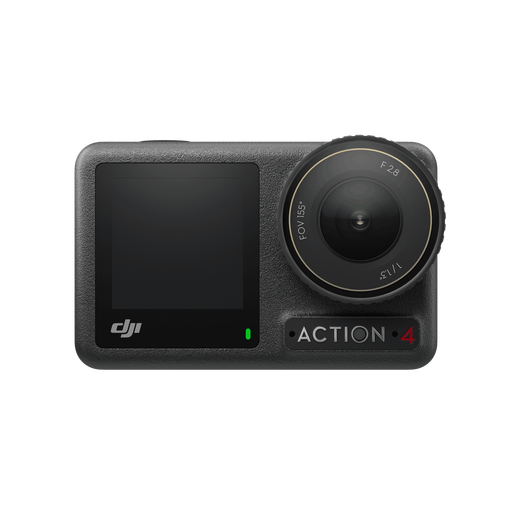 No image available
A fixed-view choice to consider if you want battery changes available during a ski day. The title lists 4K/120fps recording, a 1/1.3-inch sensor and a 155° field of view. Check the conditions behind its stated runtime, the card requirement and whether your intended mount fits.
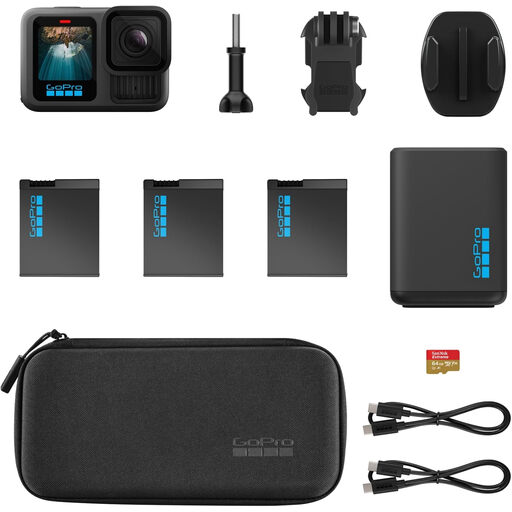 No image available
Consider this fixed-view bundle if you want to plan battery swaps alongside conventional ski footage. GoPro lists up to 5.3K60 and HyperSmooth stabilisation for HERO13 Black. GoPro gives the camera and accessories no formal low-temperature rating, so check the bundle contents, memory card and mount against your trip plans.
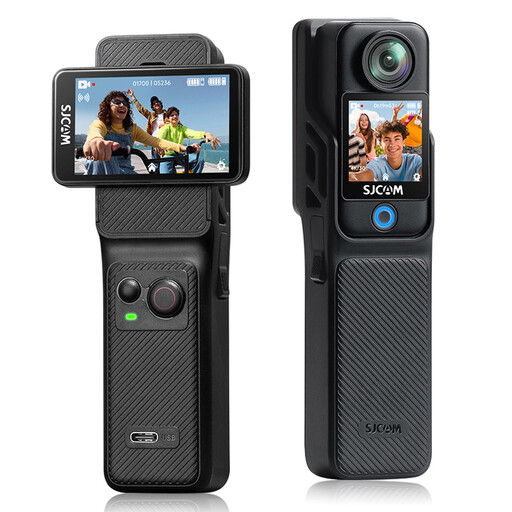 No image available
A fixed-view option if you want to assess a wide-angle camera for moving footage. Its title specifies six-axis electronic image stabilisation, a 154° lens and waterproofing to 30 m with the case. The stated 437-minute recording figure depends on the handle and auxiliary battery; check those conditions, cold-weather guidance and mount fit before choosing it.
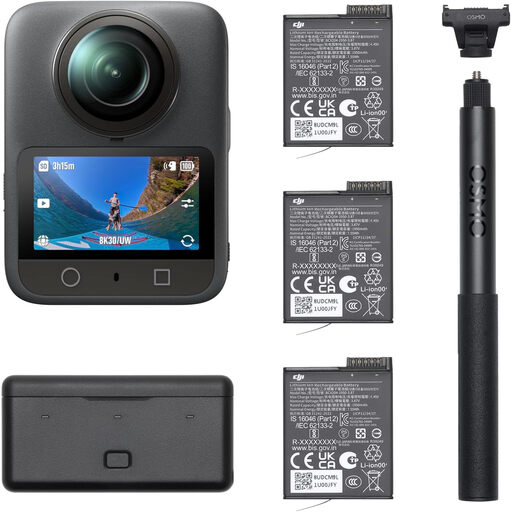 No image available
Consider this 360 camera if you want to choose the view of a run after recording it. Its title lists 8K 360 video and an Adventure Combo with three batteries. Plan for reframing and check the card, weather-use guidance, cold-weather battery conditions and ski-mount fit.
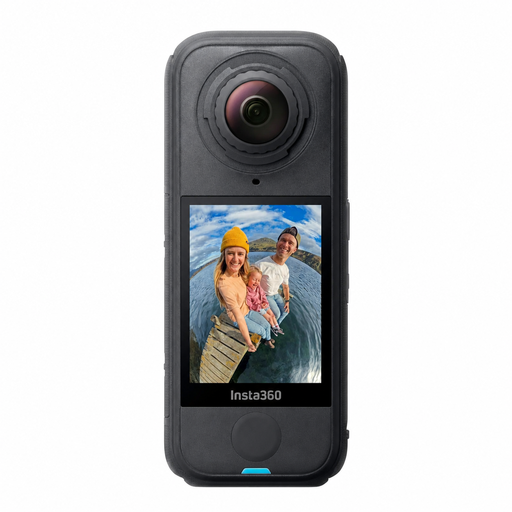 No image available
This is a 360 choice for capturing a scene and framing it later; its title specifies 165 g, 8K capture and replaceable lenses. Allow for the editing workflow, and check compatible lens protection, battery guidance, card requirements and mount fit for your trip.
A compatible spare is worth considering if you plan to film throughout the day. Check the exact camera model and the settings behind any runtime claim rather than assuming one battery will last for every cold-weather recording session.
The UK Civil Aviation Authority directs passengers to carry spare batteries in cabin baggage, not checked baggage. Protect them against damage and short circuits, and check your airline’s current requirements before travelling.
Choose a card that meets your exact camera model’s requirements. DJI identifies U3/V30-rated cards for Osmo Action 5 Pro, while Insta360 specifies UHS-I V30 or higher for X5; check the requirement again if you choose a different model.
Protect its lenses from impacts and drops, and check which guards fit your model. Insta360 recommends suitable lens protection for X5; a protective accessory does not remove the need to handle exposed lenses carefully.