What matters when choosing a format?
Read the recipe’s milk instruction before choosing between a carton and powder. Then consider storage and whether the bread must be made without milk.
| Priority |
What to check |
Your needs |
| Recipe format |
Check whether the recipe specifies liquid skimmed milk or dried skimmed milk. For a liquid quantity, compare fresh, filtered and UHT cartons rather than replacing the milk with the same quantity of powder. |
My recipe measures milk in millilitres, so I need a liquid option that fits its instructions. |
| Dough balance |
For powder, follow the formula’s stated amount and water quantity. BCcampus Open Education gives 2% to 8% skimmed milk powder by flour weight as guidance for fermented dough, not as a conversion for every liquid-milk recipe. |
If I use milk powder, I want to keep the dough’s water balance in line with the recipe. I also need to know that its lactose does not replace fermentable recipe sugar, although it can contribute to crust browning. |
| Storage |
Check the unopened storage conditions, label date and instructions after opening. Tesco and Waitrose list UHT skimmed milk; their product descriptions distinguish it from fresh and filtered skimmed milk. |
I bake occasionally and would rather keep an unopened long-life carton until I need liquid milk for a loaf. |
| Milk allergen |
Check both the milk product and the other recipe ingredients. The Food Standards Agency identifies milk as an allergen and includes milk powders among ingredients that contain it. |
The bread must be suitable for someone avoiding milk, so I need a recipe and ingredients chosen for that requirement rather than assuming baking removes it. |
Which brand ranges illustrate the options?
These retailer examples show how differently labelled skimmed-milk formats can fit a recipe; a brand name alone does not establish a bread-baking advantage.
Tesco
Tesco lists pasteurised fresh, filtered and UHT skimmed milk, as well as instant dried skimmed milk. The relevant choice is between liquid milk for a recipe measured by volume and powder for a formula that specifies it.
- Several formats allow you to match the recipe’s ingredient instruction.
- Check the selected pack’s ingredients and storage directions, which can differ by format.
Cravendale
Tesco lists Cravendale Filtered Fresh Skimmed Milk in a 2L format. It is a liquid option where a bread recipe calls for skimmed milk.
- The listing identifies both its filtered format and pack size.
- Its filtered description does not establish a bread-baking advantage over another suitable liquid skimmed milk.
Waitrose
Waitrose lists filtered fresh skimmed milk and Essential Long Life UHT skimmed milk, alongside Duchy Organic pasteurised skimmed milk.
- The listed products offer fresh and UHT liquid formats for different storage plans.
- Filtered and organic descriptions do not establish that either product produces a different loaf from comparable liquid skimmed milk.
Joybuy UHT skimmed milk options
These Morrisons UHT skimmed-milk listings are liquid options for a bread recipe that specifies skimmed milk, particularly if you want an unopened long-life carton. One listing is a six-pack and the other is a single carton; neither is dried milk powder.
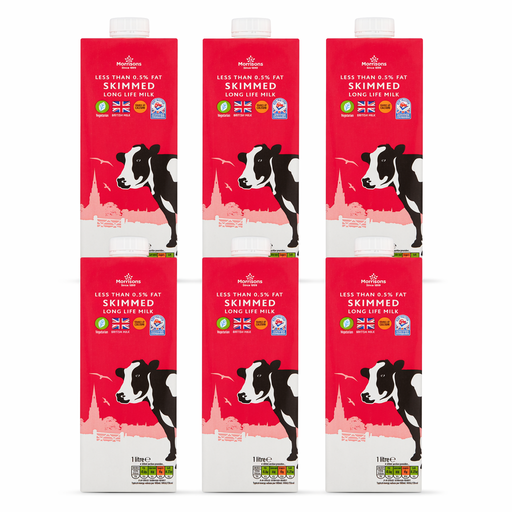 Image unavailable
Morrisons British UHT Skimmed Milk, 1 litre × 6
A six-pack of liquid UHT skimmed milk for recipes that call for skimmed milk rather than milk powder. Check the carton’s storage and date instructions when planning several bakes; this is a milk-containing product.
View on Joybuy
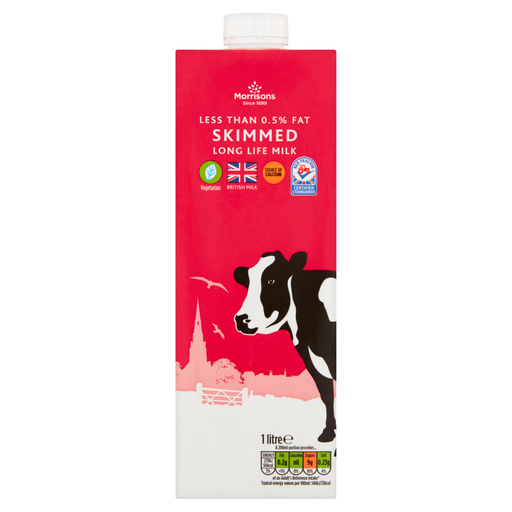 Image unavailable
Morrisons British UHT Skimmed Milk, 1 litre
A single liquid UHT skimmed-milk carton for a recipe measured with liquid milk. It does not replace a specified quantity of milk powder without a conversion that accounts for water; check the pack’s storage directions after opening.
View on Joybuy
Bread-baking questions
Do I need ‘mature’ skimmed milk for bread?
Choose by recipe format instead of maturity. The Tesco and Waitrose skimmed-milk examples distinguish fresh, filtered and UHT liquid products, while dried skimmed milk is a separate option for recipes that specify powder.
Can UHT skimmed milk stand in for fresh skimmed milk?
UHT skimmed milk is a liquid option when the recipe calls for liquid skimmed milk, not for dried milk powder. Follow the carton’s storage instructions and label date, particularly after opening.
Can I replace liquid skimmed milk with powder without changing the recipe?
No: powder adds milk solids without the water in liquid milk. Follow a recipe written for powder or use a tested conversion that adjusts the dough water; BCcampus Open Education’s 2% to 8% powder-by-flour-weight guidance for fermented dough is not a universal liquid-milk conversion.
Is bread made with skimmed milk suitable for someone with a milk allergy?
Do not assume baking removes the milk-allergen concern. The Food Standards Agency identifies milk as an allergen, including milk in powdered form; choose a recipe and ingredients appropriate for the person who will eat the bread.
Can I bake with skimmed milk after its use-by date?
Do not disregard a use-by date because the milk will be baked. Follow the pack’s date and storage instructions; the Food Standards Agency warns that food stored too long or at the wrong temperature can present a food-safety risk.


