What should you check before choosing?
Start with the recipe and ingredient label, then choose a pack you can store and use as directed.
| Priority | What to check | Your needs |
|---|
| Milk type and flavour |
Check that the product is plain skimmed milk and read its ingredient list for additions. Treat fresh, filtered and UHT as format descriptions, not measures of flavour in baked bread. |
I want the milk called for in my recipe without adding another flavour. If mildness matters, I can compare small loaves made with the same recipe. |
| Recipe fit |
Use the recipe’s stated milk quantity. Keep any separately specified butter, oil or other fat in the formula unless you are deliberately testing a substitution. |
I’m baking a richer milk bread, so I won’t expect a change of skimmed-milk brand to replace the other ingredients that give the recipe its character. |
| Storage and pack size |
Read both unopened and opened-pack instructions. Sainsbury’s states that its British Skimmed Milk should be kept below 5°C and used within three days of opening; check filtered and UHT cartons individually. |
I bake occasionally and would rather choose a pack size and storage format that fit the time between bakes. |
| Milk allergen |
Check the current product label when baking for someone else. The Food Standards Agency identifies milk as an allergen; skimmed cows’ milk is still milk. |
If someone eating the bread has a milk allergy, I need a recipe and ingredients appropriate for them, not a lower-fat cows’ milk. |
| Sourcing claims |
Check the specific pack for British, free-range, organic or farm-sourcing wording. These descriptions do not compare bread flavour or baking results. |
I prefer a particular sourcing description and want to confirm it applies to the carton I’m buying. |
Which brands offer relevant options?
These brand and retailer examples show formats and sourcing descriptions to look for; they do not rank milk by mildness or indicate which products Joybuy sells.
Tesco
Tesco’s skimmed-milk range lists standard British, filtered and organic free-range options.
- The range gives shoppers several format and sourcing descriptions to compare.
- Those descriptions do not establish which milk will taste milder in bread.
Cravendale
Tesco lists Cravendale Filtered Fresh Skimmed Milk as a filtered fresh option.
- Its listing identifies the milk format.
- The brand’s freshness wording is not a bread-flavour comparison.
Sainsbury’s
Sainsbury’s has separate British fresh skimmed milk and UHT long-life skimmed milk products.
- The fresh product states refrigeration below 5°C and use within three days of opening.
- Check the long-life carton’s own instructions rather than applying the fresh product’s storage directions to it.
M&S
M&S offers fresh skimmed milk and describes its milk as sourced from M&S Select Farms.
- The sourcing description may matter if you prefer that stated approach.
- A sourcing claim does not demonstrate a milder flavour or a different baking result.
Waitrose
Waitrose lists standard fresh, filtered fresh and UHT skimmed milk products.
- The distinct formats let shoppers check storage instructions against how often they bake.
- Compare the instructions on the particular pack; format alone does not establish bread flavour.
Joybuy long-life skimmed milk options
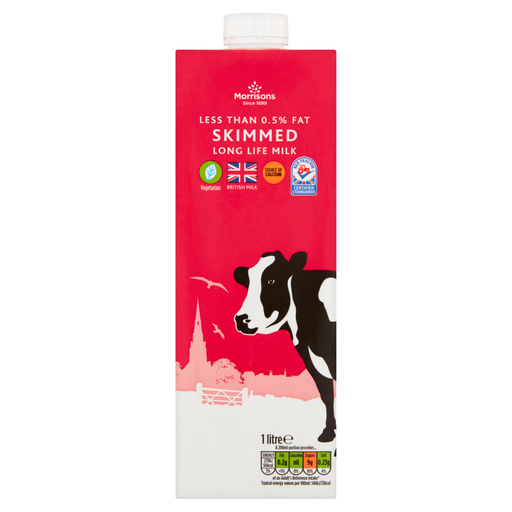
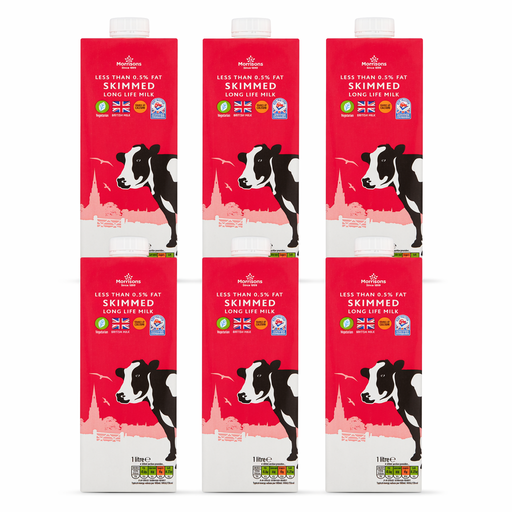
These Morrisons UHT skimmed milk options suit a recipe calling for skimmed milk when you want an unopened cupboard backup. Choose between one 1-litre carton and six 1-litre cartons according to how often you bake and how much you can use within the dates on the packs.
 No image available
Morrisons British UHT Skimmed Milk, 1 litre
The single carton is an option for an occasional bake that calls for skimmed milk. Store it as directed before opening; once opened, refrigerate and use within three days. It contains milk, and the product listing warns that it is not suitable for children under five. Its UHT format does not establish how mild it will taste in bread.
View on Joybuy
 No image available
Morrisons British UHT Skimmed Milk, 6 × 1 litre
Six separate cartons may suit several planned bakes; check their best-before dates against when you expect to use them. Refrigerate each carton after opening and use it within three days. The milk contains milk, and the product listing warns that it is not suitable for children under five. The larger pack does not establish a flavour difference from the single carton.
View on Joybuy
Questions about baking with skimmed milk
Does skimmed milk work in bread dough?
Use skimmed milk when the recipe calls for it, in the quantity specified. BakeInfo, published by the Baking Industry Research Trust, says milk can help keep a loaf moist and give buns a soft crust; skimmed milk does not replace butter or other fat listed separately in a richer formula.
Is filtered skimmed milk better for bread than ordinary fresh milk?
Filtering alone does not establish a flavour or texture advantage in bread. Choose a filtered product if its stated storage instructions better fit your baking schedule, and check the particular pack for its opened-life.
Can I use UHT skimmed milk for bread baking?
UHT skimmed milk is an option when a recipe calls for skimmed milk. It can be convenient as an unopened cupboard backup, but its format does not establish that it makes milder bread than fresh milk; follow the carton’s storage instructions after opening.
How should I store skimmed milk after opening it?
Follow the instructions on that carton, including refrigeration and the stated period for use after opening. For example, Sainsbury’s British Skimmed Milk specifies storage below 5°C and use within three days of opening; do not assume a filtered or UHT product has the same directions.
Is skimmed cows’ milk suitable for someone with a milk allergy?
No: removing most of the fat does not remove milk as an allergen. The Food Standards Agency identifies milk as an allergen. Check all ingredient labels when baking for someone with a milk allergy and seek appropriate professional advice about their dietary needs.


