What to check before buying
Start with how quickly your household uses an opened carton, then compare the exact packs’ storage instructions and nutrition panels.
| Priority | What to check | Your needs |
|---|
| Fat and nutrition |
Compare fat and saturates on like-for-like nutrition panels. Check protein and calcium on the exact variant rather than relying on the word “skimmed” alone. |
I want skimmed milk for cereal or hot drinks, but I also want to know what the particular carton contains. |
| Fresh-milk storage |
Sainsbury’s standard fresh skimmed milk says to refrigerate below 5°C and use within 3 days of opening. Waitrose & Partners’ filtered skimmed milk states up to one month unopened and 7 days opened, with refrigeration below 5°C; check the date and instructions on the bottle you buy. |
Some weeks we finish a bottle quickly; in others, I need its stated storage period to allow for less predictable breakfasts. |
| Cupboard reserve |
Sainsbury’s long-life skimmed milk is ultra-heat-treated and can be stored unopened in a cool, dry place. Its instructions require refrigeration and use within 3 days after opening. |
I would like a carton on hand for a morning when we run out of chilled milk. |
| Protein content |
Compare figures per 100ml: Waitrose & Partners lists 4.5g protein for Arla B.O.B, while Sainsbury’s lists 3.6g for its standard fresh skimmed milk. Check the variant and any other nutrition figures important to you. |
A different labelled protein amount would affect which skimmed milk I put on my breakfast shopping list. |
| Milk ingredients |
Read the allergen declaration, including when switching variants. The Food Standards Agency identifies milk as an allergen; removing fat does not remove the milk ingredient. |
If cows’ milk is unsuitable for someone in my household, I need to choose a suitable alternative rather than another skimmed-milk format. |
Joybuy long-life milk options
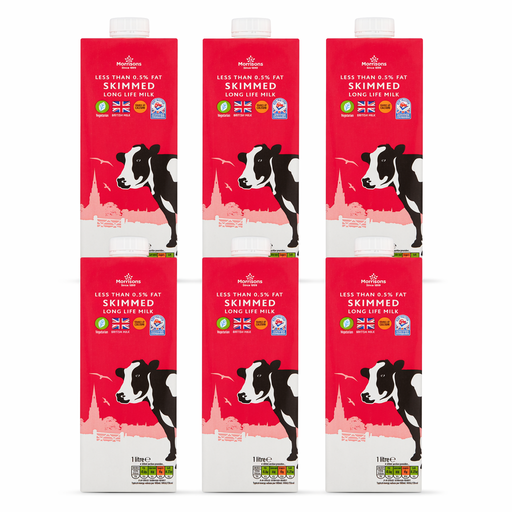
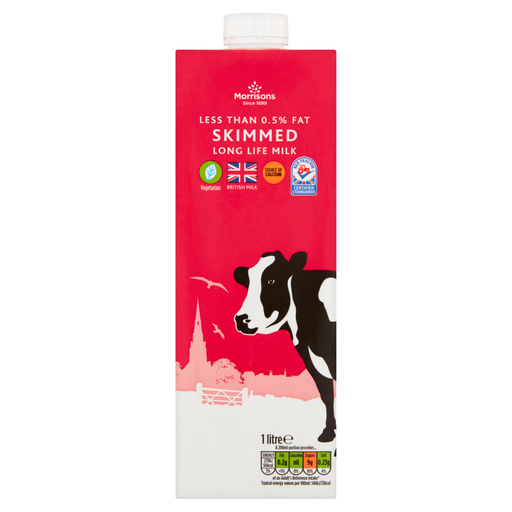
These Morrisons UHT skimmed-milk cartons represent the cupboard-reserve choice for weekday breakfasts. Choose between a single 1-litre carton and a six-pack according to how many unopened cartons you want to keep on hand.
 No image available
Morrisons British UHT Skimmed Milk, 6 × 1 litre
The six-pack suits a household wanting several unopened cartons in reserve for breakfasts. Store unopened cartons in a cool, dry place; refrigerate after opening and use within 3 days. Contains milk.
View on Joybuy
 No image available
Morrisons British UHT Skimmed Milk, 1 litre
This single carton suits a smaller cupboard reserve for cereal or hot drinks. Store it in a cool, dry place while unopened; refrigerate after opening and use within 3 days. Contains milk.
View on Joybuy
Frequently asked questions
Is skimmed milk a lower-fat choice for weekday breakfasts?
Yes. NHS guidance suggests lower-fat milks, including skimmed milk, for older children and adults looking to reduce fat. Compare the exact product’s nutrition panel if protein, calcium or saturates also matter to your purchase.
How long can fresh skimmed milk be kept after opening?
Follow the particular bottle’s instructions. Sainsbury’s standard fresh skimmed milk specifies 3 days after opening, whereas the filtered Waitrose and Cravendale products listed by Waitrose & Partners state 7 days when refrigerated as instructed.
When does long-life skimmed milk make sense?
It is useful when you want an unopened cupboard reserve for breakfast. Sainsbury’s long-life skimmed milk can be stored unopened in a cool, dry place, but must be refrigerated and used within 3 days once opened.
Should I choose filtered rather than standard fresh skimmed milk?
Consider filtered skimmed milk if its longer stated storage period matches how slowly your household uses a bottle. If you finish standard fresh milk within its instructions after opening, compare the actual packs’ dates, sizes and nutrition before deciding whether that difference matters.
Is skimmed milk suitable for someone who cannot have milk?
No: skimmed cows’ milk still contains milk. The Food Standards Agency identifies milk as an allergen that can pose a risk to people with a milk allergy or intolerance, so check the product’s allergen declaration and choose an appropriate alternative where needed.


