For a brunch happening soon, standard fresh skimmed milk makes sense if you expect to use the opened bottle promptly. Consider filtered fresh milk if plans may move or you expect leftovers: the Cravendale and Waitrose products described here state seven days after opening, compared with three days for Sainsbury’s standard fresh example. An unopened UHT carton works as a cupboard backup, but it needs refrigeration once opened; check the particular pack’s storage instructions and date.
Who is each format for?
Hosts serving several guests
Count the milk needed for drinks, cereal and cooking before choosing a pack size. The Agriculture and Horticulture Development Board identifies pack size and ease of use as practical milk-shopping considerations; the opened-life matters if you expect leftovers.
Shoppers particular about taste
If ordinary skimmed milk’s taste puts you off, Arla B.O.B is marketed as a skimmed option with a semi-skimmed-style taste. That description is a product claim, not a taste-test result; compare the exact pack’s nutrition information rather than assuming skimmed products are identical.
Hosts planning ahead
An unopened UHT carton can be kept in a cool, dry place under the storage directions for Sainsbury’s long-life example. Filtered fresh milk offers another planning option, but the Cravendale and Waitrose examples still require chilled storage.
What should you check before buying?
Start with when you will serve the milk, then work out how much you will open and whether any guests need an alternative to milk.
Standard fresh
Choose when: Brunch is soon and you expect to use the opened bottle promptly.
Bear in mind: Sainsbury’s standard fresh example says to consume it within three days of opening.
Filtered fresh
Choose when: You want chilled milk but may buy ahead or use leftovers after brunch.
Bear in mind: The longer stated life of the Cravendale and Waitrose examples depends on following their chilled-storage directions and pack dates.
Long-life UHT
Choose when: You want an unopened cupboard reserve without using fridge space beforehand.
Bear in mind: Sainsbury’s UHT example requires refrigeration and use within three days after opening.
| Priority | What to check | Your needs |
|---|
| Quantity |
Count drinks and food uses; compare the volume of each bottle or carton and how many you would need to open. |
I need enough for guests without opening more milk than we are likely to use. |
| Storage and timing |
Read the pack date, fridge temperature and instructions for unopened and opened milk. Sainsbury’s standard fresh and UHT examples say three days after opening; Arla Cravendale and Waitrose filtered examples state seven days under their specified chilled conditions. |
If plans change or there will be leftovers, I want a format whose stated storage life fits that timetable. |
| Nutrition label |
Check fat and any other nutrients you want to compare on the same per-100ml or per-100g basis; do not use lid colour as a substitute for the label. |
I want to confirm the particular product is skimmed milk and compare its stated nutrition on a like-for-like basis. |
| Guest requirements |
Check the physical pack’s ingredient and allergen information. The Food Standards Agency identifies milk as an allergen. |
Before serving, I need to know whether any guest requires a suitable non-dairy alternative. |
Common mistakes to avoid
-
Assuming every skimmed milk lasts equally long once opened
Sainsbury’s standard fresh example says three days after opening, while the Arla Cravendale and Waitrose filtered examples state seven days under their chilled-storage directions.
Match the opened-life on the particular pack to your brunch date and likely leftovers.
-
Choosing by lid colour or a vague “light” description
Skimmed products can have different stated nutrition values, so their labels are more useful than packaging cues for a specific comparison.
Read the exact pack’s fat and other relevant values, checking that the figures use the same per-100ml or per-100g basis.
-
Leaving an opened UHT carton in the cupboard
Sainsbury’s long-life skimmed milk permits cool, dry storage before opening but requires refrigeration and use within three days afterwards.
Put opened cartons in the fridge and follow their own date and storage directions.
-
Overlooking milk allergies when serving guests
Skimming does not remove milk as an allergen. The Food Standards Agency identifies milk as a potential risk for people with an allergy or intolerance to milk or its constituents.
Ask guests about their requirements, check the pack and arrange a suitable alternative where needed.
Brand and retailer references
Cravendale
Arla’s filtered fresh skimmed milk is relevant when you want a stated longer chilled life.
- Arla states that its 2L product keeps for up to three weeks unopened and seven days after opening at 0–5°C.
- It still needs refrigeration, and the stated life depends on the pack’s storage directions and date.
Tesco
Its skimmed-milk range offers different formats and pack sizes to compare for a group brunch.
- The Tesco range described includes standard and filtered skimmed milk.
- Check the particular listing and pack for current format, volume and storage instructions.
Sainsbury’s
Its standard fresh and UHT skimmed products illustrate the choice between a chilled main supply and an unopened cupboard backup.
- The standard fresh example is pasteurised; the UHT example can be stored cool and dry before opening.
- Both examples say to refrigerate after opening and use within three days; follow each pack’s full instructions.
M&S
Its 568ml fresh skimmed milk is a smaller-format option to consider when calculating brunch quantities.
- Marks & Spencer lists 0.3g fat per 100g for this product.
- The pack calls for storage at 0–5°C and consumption within three days of opening; 568ml may not cover every use at a group brunch.
Waitrose
Its 2L filtered skimmed milk is another chilled option for buying ahead and using leftovers.
- Waitrose states up to one month unopened and seven days after opening when kept below 5°C.
- Check the pack date and whether the product can be obtained before relying on it for brunch.
Joybuy UHT skimmed milk options
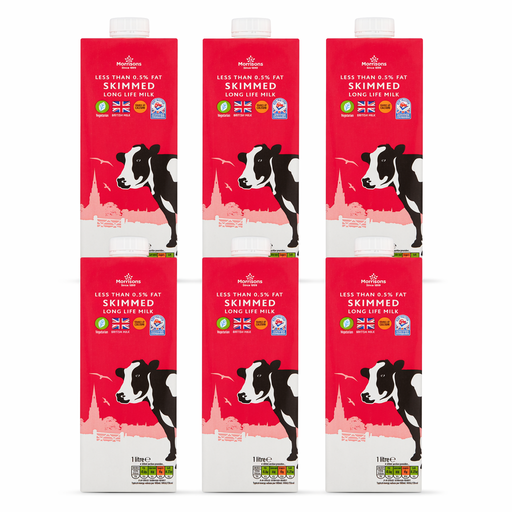
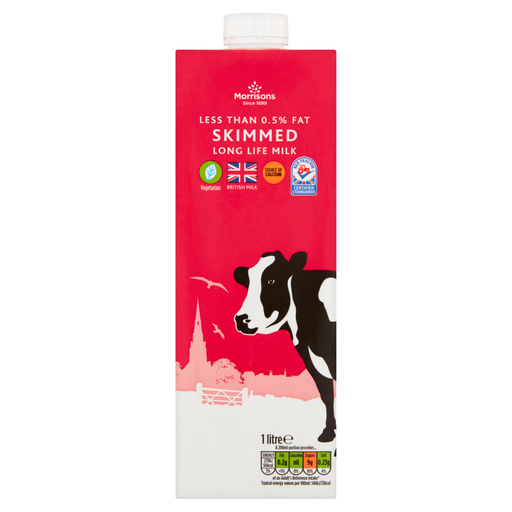
These Morrisons UHT cartons suit the unopened-backup route: choose between one 1-litre carton and a pack of six 1-litre cartons according to how much you expect to use.
 No image available
Morrisons British UHT Skimmed Milk, 6 × 1 litre
Six separate 1-litre cartons give you a cupboard backup for a brunch where you may need to open more than one carton. Store unopened cartons in a cool, dry place; refrigerate each carton after opening and use it within three days. Milk is an allergen. Check the carton advisory if serving children under five, and check availability before ordering.
View on Joybuy
 No image available
Morrisons British UHT Skimmed Milk, 1 litre
One 1-litre carton is an unopened reserve if you are unsure whether the main milk supply will cover brunch; it may not be enough on its own for a larger group. Store it in a cool, dry place before opening, then refrigerate and use within three days. Milk is an allergen; check the carton advisory if serving children under five.
View on Joybuy
Brunch milk questions
How much skimmed milk should I buy for brunch?
Add up what you expect to use in drinks, cereal and cooking before choosing the pack size. A larger bottle may suit several uses, while an unopened UHT carton can provide a reserve without opening extra fresh milk.
When is filtered skimmed milk worth considering?
Consider it when you may buy ahead or expect leftovers. Arla Cravendale and Waitrose state seven days after opening for the filtered products discussed here, compared with three days for Sainsbury’s standard fresh example; each product still has its own chilled-storage instructions and pack date.
Can an unopened UHT carton stay in the cupboard?
Sainsbury’s long-life skimmed example says to store it unopened in a cool, dry place. Once opened, it must be refrigerated and used within three days; follow the directions on the carton you buy.
Can I serve skimmed milk to a guest with a milk allergy?
Skimmed milk still contains milk, which the Food Standards Agency identifies as an allergen. Ask about guests’ requirements before brunch, check the exact pack and provide a suitable alternative where needed.


