What should you check before buying?
Start with the recipe’s dairy requirement, then match the milk’s format, pack size and storage instructions to the days on which you plan to bake.
| Priority |
What to check |
Your needs |
| Recipe and texture |
Check whether the recipe permits skimmed milk or specifies whole milk, cream or another dairy ingredient. King Arthur Baking says lower-fat dairy produces slightly less tender scones than richer dairy. |
I want the dairy in my scones to match the recipe’s intended texture, rather than making a substitution solely because skimmed milk is already in the fridge. |
| Opened storage period |
Compare the pack’s after-opening instructions with your baking dates. Sainsbury’s states three days for its 568ml fresh skimmed milk; Waitrose & Partners states seven days for the cited Cravendale and Waitrose filtered products, subject to refrigeration. |
My baking is spread across several days, so I need a pack I can use within its stated opened period. |
| Storage before opening |
Distinguish refrigerated filtered fresh milk from long-life UHT milk. Check the carton’s unopened storage and use-by instructions; a longer chilled period does not make filtered milk cupboard-stable. |
I’d like to keep milk ready for a later bake and need to know whether it belongs in the fridge or cupboard before opening. |
| Ingredients and allergens |
Read the current ingredients and allergen declaration for the person who will eat the bake. The NHS distinguishes lactose intolerance from food allergy; lactose-free does not, by itself, mean dairy-free. |
Before baking for someone else, I need to check whether the chosen ingredient meets their specific milk-related requirement. |
| Nutrition label |
Keep the stated measurement basis when comparing labels: Sainsbury’s lists less than 0.5g fat and 3.6g protein per 100ml for its cited milk; Arla Foods UK lists 0.4g fat and 4.6g protein per 100g for Arla B.O.B. Those figures do not establish equivalent baking results. |
Fat or protein figures matter to my purchase, but I want to compare the label values accurately without treating them as a texture test. |
Which brand ranges offer relevant options?
These product and retailer references help distinguish milk formats and label instructions; a brand name alone does not determine how a carton should be stored or used in a recipe.
Cravendale
A filtered fresh skimmed-milk option for baking spread across several refrigerated days.
- Waitrose & Partners states up to three weeks unopened and seven days after opening for the cited Cravendale skimmed milk.
- It remains refrigerated fresh milk, not UHT milk; follow the carton’s dates and storage instructions.
Tesco
Tesco Groceries lists standard fresh, filtered fresh and long-life UHT skimmed-milk options.
- The format labels give a useful starting point for matching a carton to fridge or cupboard storage.
- Check the individual pack for its size, storage instructions and recipe-relevant details.
Sainsbury’s
Its cited 568ml British Skimmed Milk is a standard fresh option for a smaller, near-term bake.
- Sainsbury’s lists it as pasteurised skimmed milk, with less than 0.5g fat and 3.6g protein per 100ml.
- The product instructions say to refrigerate below 5°C and consume within three days of opening.
M&S
The cited M&S skimmed milk provides label figures and a short opened-use period to check against a baking plan.
- M&S lists 0.3g fat and 3.6g protein per 100g for this product.
- Its instructions state refrigeration at 0°C to 5°C and consumption within three days of opening.
Waitrose
Waitrose’s cited filtered British free-range skimmed milk is a chilled option for planned use across several days.
- Waitrose & Partners states up to one month unopened and seven days opened when refrigerated.
- Keep it refrigerated below 5°C and do not exceed its use-by date.
Joybuy UHT skimmed-milk options
These Morrisons UHT skimmed-milk listings are options for keeping an unopened carton ready for a recipe that permits skimmed milk. They are not substitutes for a recipe’s specified richer dairy simply because they are convenient to store.
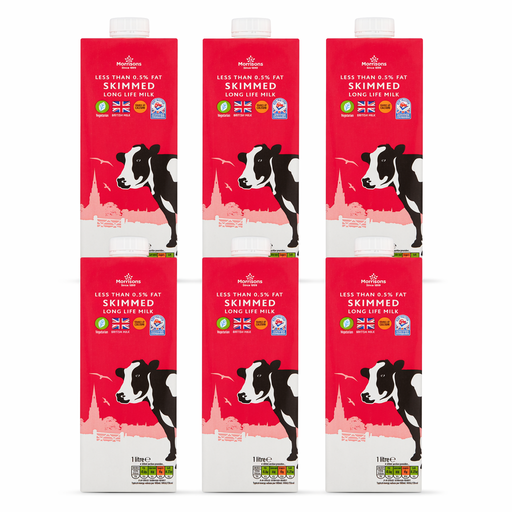 Image unavailable
Morrisons British UHT Skimmed Milk 1 litre (6 Packs)
The six-pack offers unopened UHT cartons for planned bakes that permit skimmed milk. The Morrisons product information says to refrigerate after opening and use within three days; check each carton’s use-by date and allergen declaration. The listing states that the milk is not suitable for children under five.
View on Joybuy
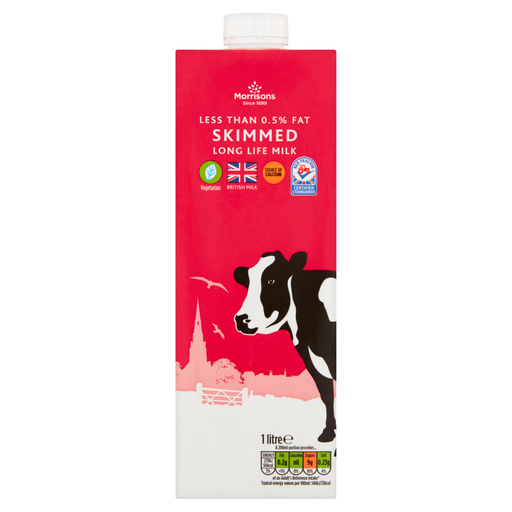 Image unavailable
Morrisons British UHT Skimmed Milk 1 Litre
This 1-litre UHT option suits a planned bake when the recipe permits skimmed milk and an unopened carton is useful to keep ready. Follow the carton’s after-opening and use-by instructions, and check its allergen declaration before baking for others. The listing states that the milk is not suitable for children under five.
View on Joybuy
Christmas baking questions
Can I use skimmed milk in every Christmas bake?
No. Use it where the recipe permits skimmed milk, but do not assume it will reproduce a bake designed around richer dairy. King Arthur Baking says scones made with lower-fat dairy are slightly less tender than those made with whole milk, yoghurt or cream.
What does “mature” tell me about skimmed milk?
“Mature” does not tell you which milk format to buy for baking. Look for a clear description such as standard fresh, filtered fresh or long-life UHT skimmed milk, then check the recipe and the carton’s storage instructions.
How long can I use fresh skimmed milk after opening?
Follow the particular carton. Sainsbury’s says to consume its cited standard fresh skimmed milk within three days of opening and keep it below 5°C. Waitrose & Partners states seven days after opening for the cited refrigerated Cravendale and Waitrose filtered milks; the use-by date still applies.
Is ordinary skimmed milk suitable for someone with lactose intolerance?
Do not assume it is. The NHS explains that lactose intolerance involves symptoms after consuming lactose, which is found in dairy products. Check the individual’s requirement and the product label before choosing an ingredient for their bake.
Does lactose-free milk also meet a milk-allergy requirement?
Not necessarily: lactose-free and dairy-free describe different things. The NHS distinguishes lactose intolerance from food allergy, so check the current ingredients and allergen information rather than relying on a lactose-free label for someone with a milk allergy.


