Bakers choosing a lower-fat milk
If your festive cake or biscuit recipe specifies skimmed milk, a standard fresh bottle fits that instruction. If it specifies whole milk, consider whether a change in texture would matter to the bake.


Choose standard fresh skimmed milk when a Christmas-baking recipe calls for it, or when using less milk fat matters more than retaining the texture intended with whole milk. An unopened UHT carton offers a cupboard backup; a lactose-free skimmed dairy drink addresses a different need and still contains cow’s milk. Check the recipe, storage instructions and ingredients before choosing.
If your festive cake or biscuit recipe specifies skimmed milk, a standard fresh bottle fits that instruction. If it specifies whole milk, consider whether a change in texture would matter to the bake.
An unopened UHT skimmed milk carton can stay in a cool, dry cupboard until an unplanned baking session. Once opened, follow its refrigeration and use-by instructions.
A lactose-free skimmed dairy drink may suit a recipe that needs dairy milk without lactose. It still contains cow’s milk, so it is not a choice for someone with a cow’s-milk allergy.
Start with the milk named in the recipe, then choose a format you can store and use within its pack instructions. Check dietary suitability separately from fat content.
| Priority | What to check | Your needs |
|---|---|---|
| Recipe texture | Check whether the recipe specifies skimmed or whole milk. Freshways’ 2022 baking guidance puts skimmed milk at around 0.2% fat, compared with around 2% for semi-skimmed and 4% for whole milk; it also identifies milk protein as a contributor to baking structure and texture. | I’m happy to use skimmed milk where the recipe calls for it, but I don’t want to assume it will give a whole-milk recipe the same result. |
| Milk format | Check the unopened and opened storage instructions. Sainsbury’s directs shoppers to refrigerate its fresh skimmed milk below 5°C; its UHT skimmed milk can be stored in a cool, dry place before opening. Both product listings instruct use within three days after opening. | If I’m baking over several days, I need a pack I can use in time. For an unplanned batch, an unopened cupboard carton is more practical. |
| Protein and flavour | Compare nutrition labels on the same per-100ml basis. Tesco lists Arla B.O.B as protein-enriched skimmed milk with 4.5g protein and 0.4g fat per 100ml; its semi-skimmed-like taste is Arla’s claim, not evidence of the same baking result. | I want to consider a protein-enriched skimmed option, while keeping the recipe’s texture requirements in mind. |
| Ingredients and allergens | Read the current ingredient and allergen label. Sainsbury’s lactose-free skimmed dairy drink contains cow’s milk and lactase enzyme. The NHS distinguishes lactose intolerance from food allergy. | For lactose intolerance, I need to check the dairy drink’s ingredients. For a cow’s-milk allergy, I need a suitable milk-free ingredient instead. |
Freshways’ baking guidance explains that milk contributes protein as well as liquid, while higher milk fat is associated with a moister bake. Replacing whole milk with skimmed milk can therefore change a recipe’s intended result.
Follow the stated milk type when texture is central to the recipe. If it calls for skimmed milk, use that instruction rather than treating a substitution as necessary.
A larger bottle still needs fridge space and must be used according to its opened-pack instructions. Sainsbury’s fresh skimmed milk, for example, instructs use within three days of opening.
Plan the baking sessions and other uses for the milk before choosing a pack size; check the instructions on the bottle you buy.
Milk left unused after its stated opened period may need to be discarded.
Sainsbury’s lactose-free skimmed dairy drink contains cow’s milk. The NHS distinguishes lactose intolerance from food allergy, and GOV.UK lists milk as an allergen that food businesses must declare when it is an ingredient.
Check the current label and the full recipe. Do not use a cow’s-milk product for someone with a cow’s-milk allergy.
These brand examples show formats and label details worth comparing; they are not a ranking of baking results.
Tesco lists own-label fresh and filtered skimmed milk alongside branded filtered options.
Sainsbury’s provides examples of fresh skimmed milk, UHT skimmed milk and a lactose-free skimmed dairy drink.
Tesco lists Cravendale Filtered Fresh Skimmed Milk in a 2L bottle.
M&S lists a fresh skimmed milk with nutrition and storage information on its product label.
Waitrose lists Essential fresh skimmed milk in more than one bottle size, as well as Essential Long Life Skimmed Milk.
These Morrisons UHT skimmed milk listings relate to the cupboard-backup option for Christmas baking. Check the pack details before ordering, especially if you need a particular number of cartons.
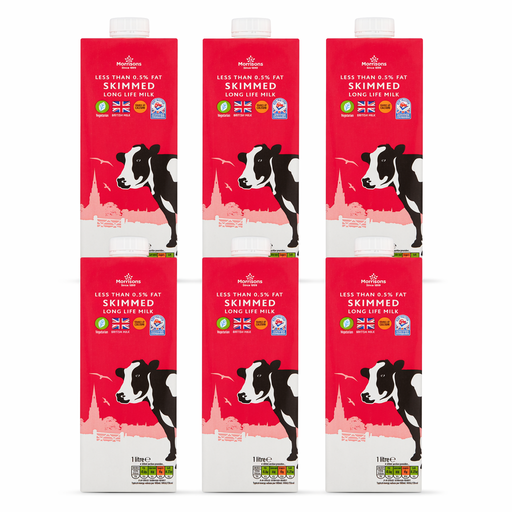 No image available
The UHT format suits an unopened cupboard backup when the recipe can use skimmed milk. Confirm the number of cartons before ordering: the listing describes the pack quantity inconsistently. Check current availability, as Joybuy has listed this SKU as out of stock. Follow the carton’s instructions for storage after opening.
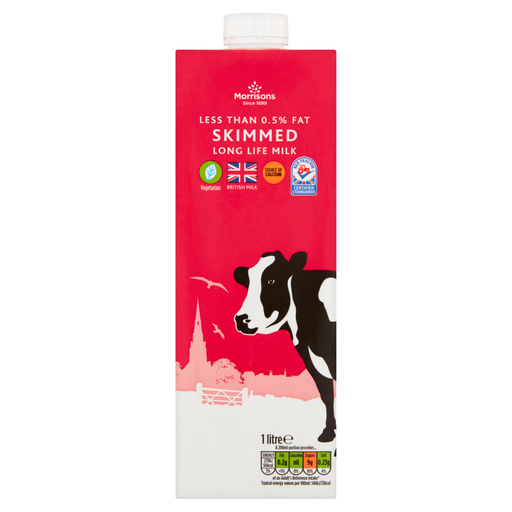 No image available
This 1-litre UHT skimmed milk is another option for a baking backup where skimmed milk fits the recipe. The listing advises refrigeration and use within three days after opening. Check the current carton’s storage and suitability instructions before serving.
You can use skimmed milk if the recipe permits the substitution, but do not assume the same texture. Freshways’ baking guidance links higher milk fat with a moister result, so a recipe developed for whole milk may turn out differently.
UHT skimmed milk works as an unopened cupboard backup; fresh skimmed milk needs chilling from purchase. Sainsbury’s instructs shoppers to store its UHT product in a cool, dry place before opening, then refrigerate it and use it within three days. Check the instructions on whichever pack you choose.
No. Sainsbury’s lactose-free skimmed dairy drink contains cow’s milk. The NHS distinguishes lactose intolerance from food allergy, so check for a suitable milk-free ingredient instead.
Check the current milk label and every other recipe ingredient for allergens. GOV.UK lists milk among the allergens that food businesses must declare when present as an ingredient; neither a low-fat nor a lactose-free description means a dairy product is milk-free.